This article has been reviewed according to Science X's editorial process and policies. Editors have highlighted the following attributes while ensuring the content's credibility:
Researchers and clinicians at WashU Medicine are helping reshape how hepatitis C virus (HCV) is treated during pregnancy, with a new study showing that a commonly used antiviral regimen can be used safely and effectively in pregnant patients in real-world care.
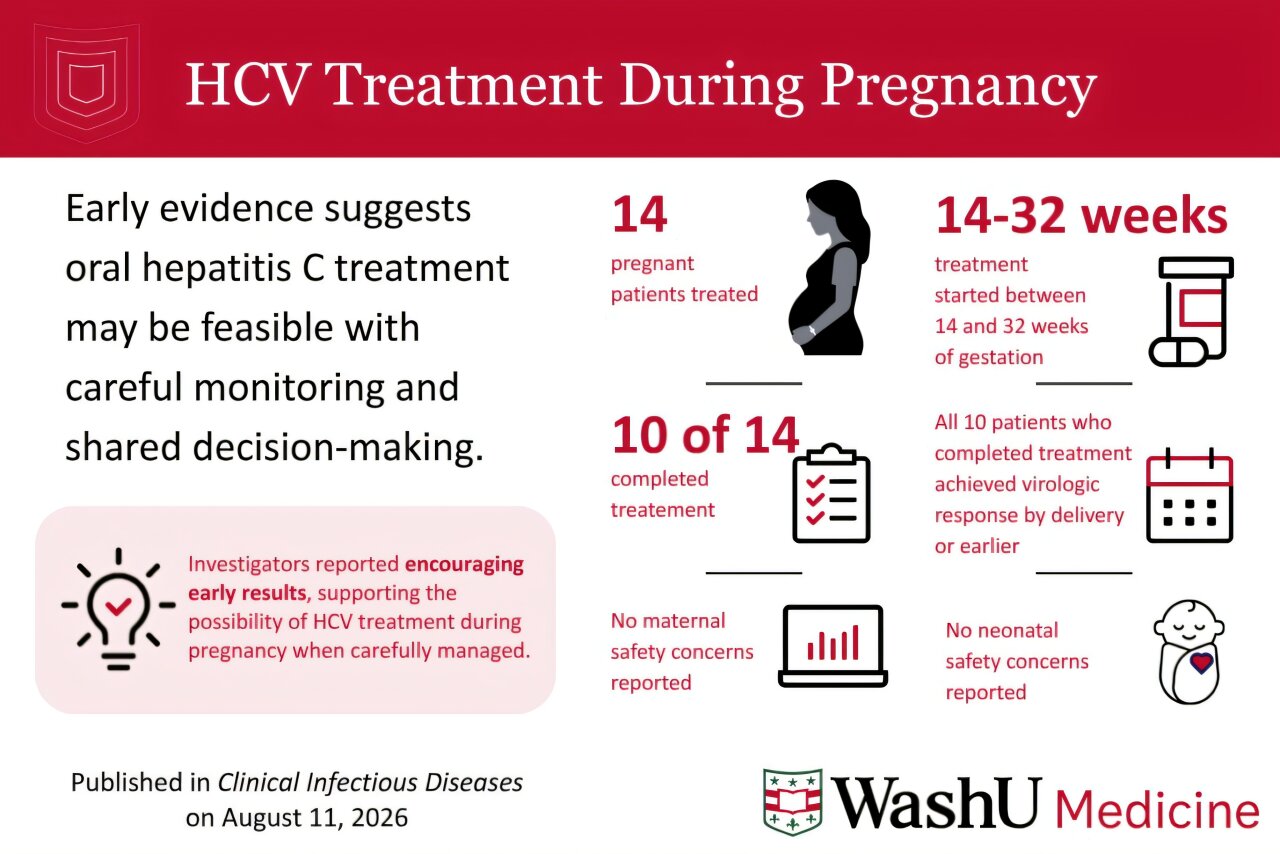
The study, led by Laura Marks, M.D., Ph.D., and Madeline McCrary, M.D., examined the use of glecaprevir-pibrentasvir, an oral HCV treatment, in 14 pregnant patients treated between 14 and 32 weeks of gestation. Of the 14 patients prescribed the medication, 10 completed the treatment. All 10 of those patients achieved virologic response by the time of delivery or earlier.
Investigators reported no maternal or neonatal safety concerns, adding to growing evidence that HCV treatment during pregnancy may be feasible when carefully managed through shared decision-making. Their findings were published Aug. 11 in Clinical Infectious Diseases.
The findings are especially meaningful because, until now, there had been no clinical trial data and no real-world experience published for glecaprevir-pibrentasvir treatment in pregnancy. The study helps fill an important gap for clinicians caring for pregnant patients with HCV, a population that has historically had limited treatment options during pregnancy despite the potential benefits of reducing maternal infection and preventing transmission to infants.
The work is part of a broader effort led by WashU Medicine teams in infectious diseases and maternal health to improve care for patients across the region.
Source link