This article has been reviewed according to Science X's editorial process and policies. Editors have highlighted the following attributes while ensuring the content's credibility:
Northwestern Medicine scientists have identified a stem-like state in small-cell lung cancer that distinguishes a group of patients with exceptionally poor outcomes following chemoimmunotherapy, according to a study published in Cell Reports Medicine.
The findings could pave the way for new biomarkers and treatment strategies for one of the deadliest forms of lung cancer, said Anish Thomas, the Roswell Park professor of hematology and oncology and senior author of the study.
Small-cell lung cancer (SCLC) accounts for roughly 15% of lung cancer cases, according to estimates from the Centers for Disease Control and Prevention, and is characterized by rapid growth, early spread and frequent recurrence after treatment. Despite recent advances, clinicians have few tools to help determine which patients are most likely to have more aggressive cancers.
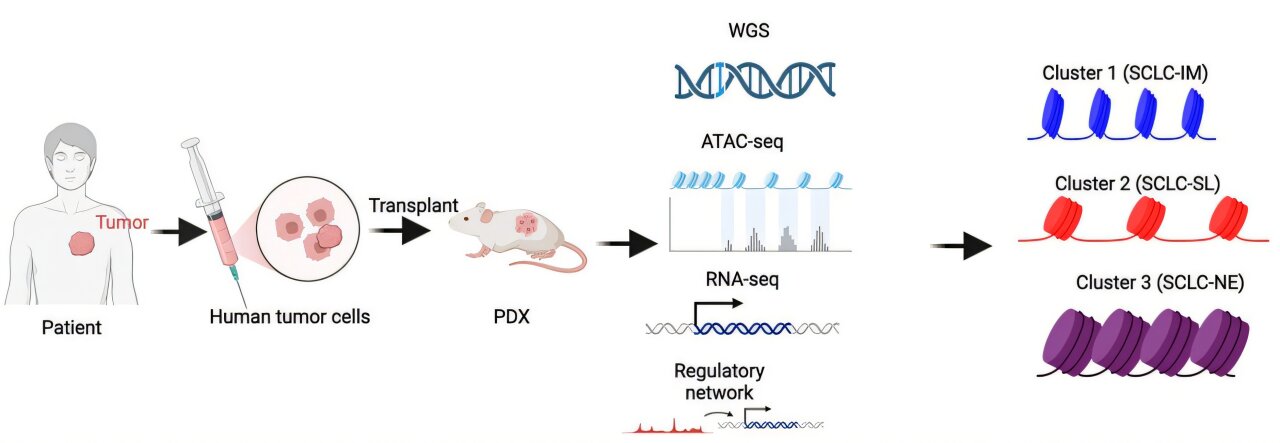
In the study, Thomas and his collaborators analyzed the chromatin landscape of SCLC, examining which regions of the genome were accessible to the tumor cells. The approach revealed a previously unrecognized tumor state, dubbed SCLC-SL, that appears particularly adaptable and is associated with poor treatment outcomes.
"We identified a previously unrecognized stem-like regulatory state of small-cell lung cancer by examining how DNA is packaged and which regions of the genome are accessible to the tumor cell," said Thomas, who is also a member of the Robert H. Lurie Comprehensive Cancer Center of Northwestern University.
Source link