This article has been reviewed according to Science X's editorial process and policies. Editors have highlighted the following attributes while ensuring the content's credibility:
Researchers in Adelaide and Singapore have uncovered new clues as to why some people with chronic myeloid leukemia (CML) respond better to treatment than others, finding that mitochondrial function in cancer cells could be targeted to improve responses.
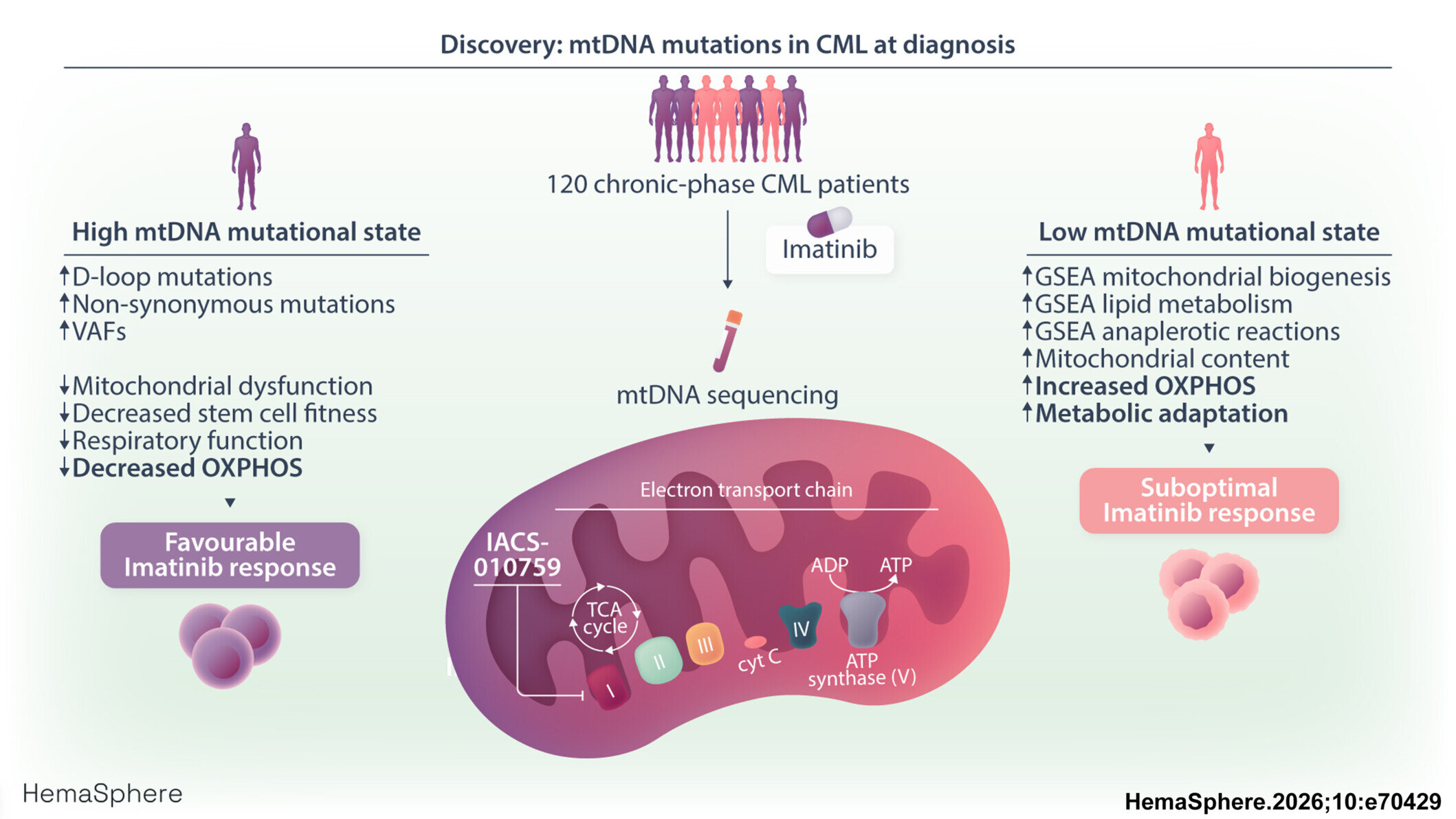
Published in HemaSphere, the study, led by Dr. Ilaria Pagani and Associate Professor David Ross, examined mitochondrial DNA mutations in 120 patients with chronic-phase CML, revealing a relationship between mitochondrial genetics, cancer cell metabolism and responses to treatment.
Pagani says that mitochondria may play a much greater role in determining treatment success than previously thought.
"We found that mitochondrial DNA mutations aren't simply incidental findings—they appear to be linked to how well patients respond to frontline treatment," Pagani said.
"The cells from patients with poorer responses appeared to have fitter, more active mitochondria. This may provide them with the energy and flexibility they need to survive treatment pressure."
Chronic myeloid leukemia is typically treated with tyrosine kinase inhibitors (TKIs), such as imatinib, which have brought patients' survival rates close to those of the general population. While most patients respond well to these therapies, some achieve slower or less effective responses, and researchers have long sought to understand why.
The study found that leukemia cells from poorer responders relied more heavily on mitochondrial energy production, revealing a potential vulnerability that could be targeted therapeutically.
To explore this possibility, researchers treated CML stem and progenitor cells with a mitochondrial inhibitor.
Source link