This article has been reviewed according to Science X's editorial process and policies. Editors have highlighted the following attributes while ensuring the content's credibility:
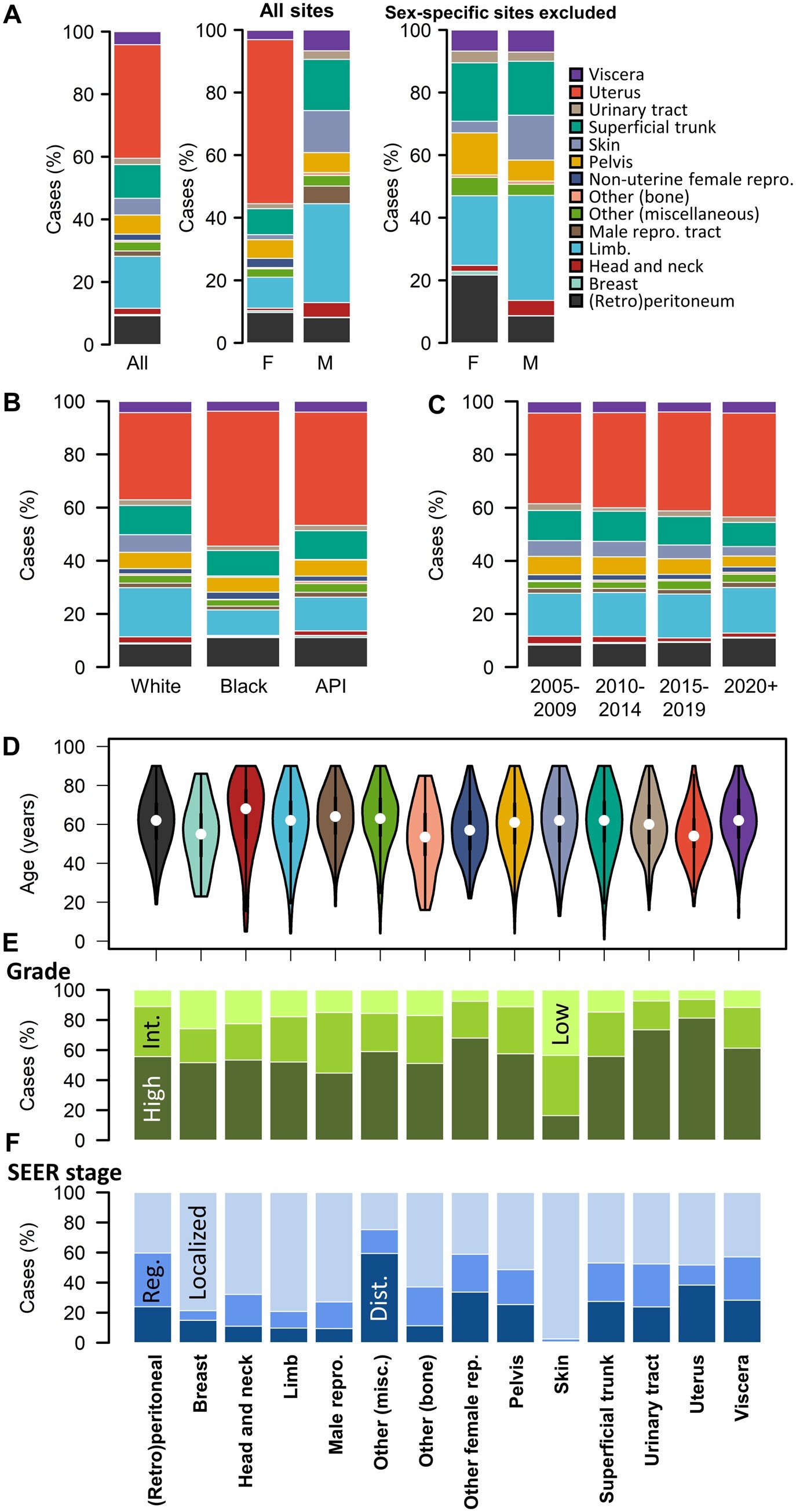
A rare, aggressive cancer, commonly found in the uterus, limbs and abdomen, behaves differently depending on where it is found in the body, according to new research.
Scientists studied cases of leiomyosarcoma—which affects smooth muscle cells, found in the walls of hollow organs like the stomach, intestines, uterus and blood vessels—and found major differences in patient outcomes between tumor sites.
Leiomyosarcomas of the uterus, urinary tract and trunk had the poorest survival rates, compared with cancers of the limbs, head and neck, and male reproductive tract.
The findings indicate that tumor location could provide clinically meaningful information on disease risk for those with leiomyosarcoma, beyond cancer stage and grade, experts say.
Leiomyosarcoma is the most common type of soft tissue sarcoma—cancer that starts in tissues such as muscle, fat and blood vessels—but has limited treatment options and poor outcomes for many patients.
It affects smooth muscle cells, also known as involuntary muscles, which cause organs to contract without conscious control. Although tumors can develop throughout the body, they are commonly grouped simply as uterine or nonuterine disease.
University of Edinburgh scientists studied 11,700 patients with the condition, providing the most comprehensive assessment to date of survival across leiomyosarcoma arising at different locations in the body.
They also found that Black patients, those from lower-income households and widowed individuals experienced significantly poorer outcomes, highlighting the important contribution of socioeconomic factors to survival differences.
Source link