This article has been reviewed according to Science X's editorial process and policies. Editors have highlighted the following attributes while ensuring the content's credibility:
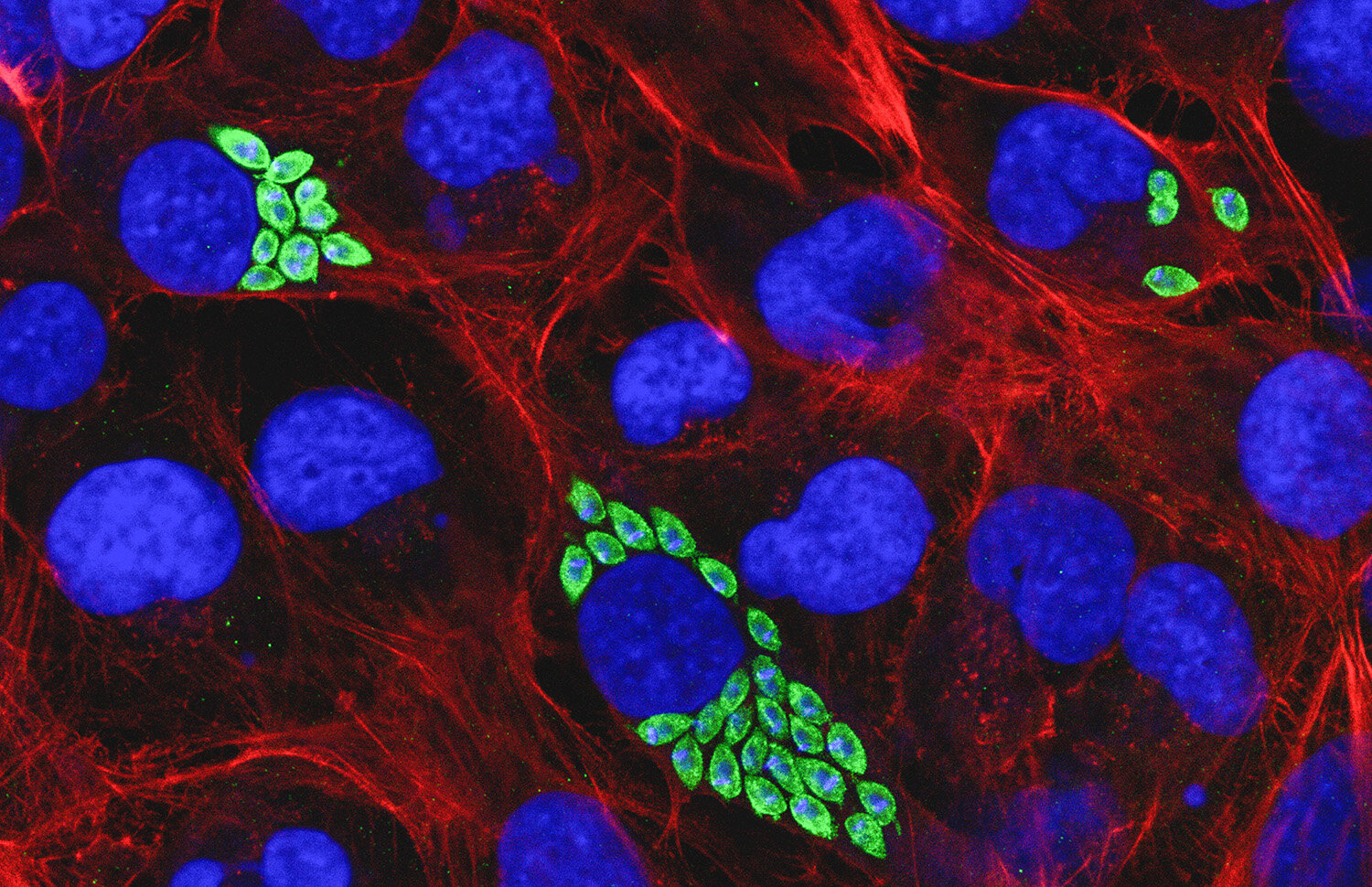
In Brazil, researchers at the University of São Paulo (USP) and their collaborators have identified a promising target for developing new Chagas disease treatments. In laboratory tests, the group succeeded in interrupting the infection cycle of the Trypanosoma cruzi parasite by reducing the production of one of its proteins.
Without adequate levels of this molecule, the pathogen lost its ability to differentiate into its infectious form within human heart cells, severely impairing its development. The discovery was detailed in an article published in August in the journal Communications Biology.
"We developed a version of the parasite deficient in the IP6K protein. It enters the cell and replicates, but with difficulty. Its differentiation into infectious forms is impaired, which leads to a reduction in blood forms with each new cycle of intracellular infection," explains Thaise Lara Teixeira, co-author of the study, which was conducted during her postdoctoral fellowship at the Institute of Chemistry (IQ) at USP.
Teixeira is currently a visiting professor in the Graduate Program in Applied Immunology and Parasitology at the Federal University of Uberlândia (PPGIPA-UFU).
According to the researchers, evidence that IP6K plays an important role in the life cycle of T. cruzi was the difficulty in producing laboratory strains of the parasite that did not express the protein.
"When both copies of the gene that codes for the IP6K protein were deleted through gene editing, the parasites simply didn't survive long enough for tests to be performed on cardiac cells.
Source link