This article has been reviewed according to Science X's editorial process and policies. Editors have highlighted the following attributes while ensuring the content's credibility:
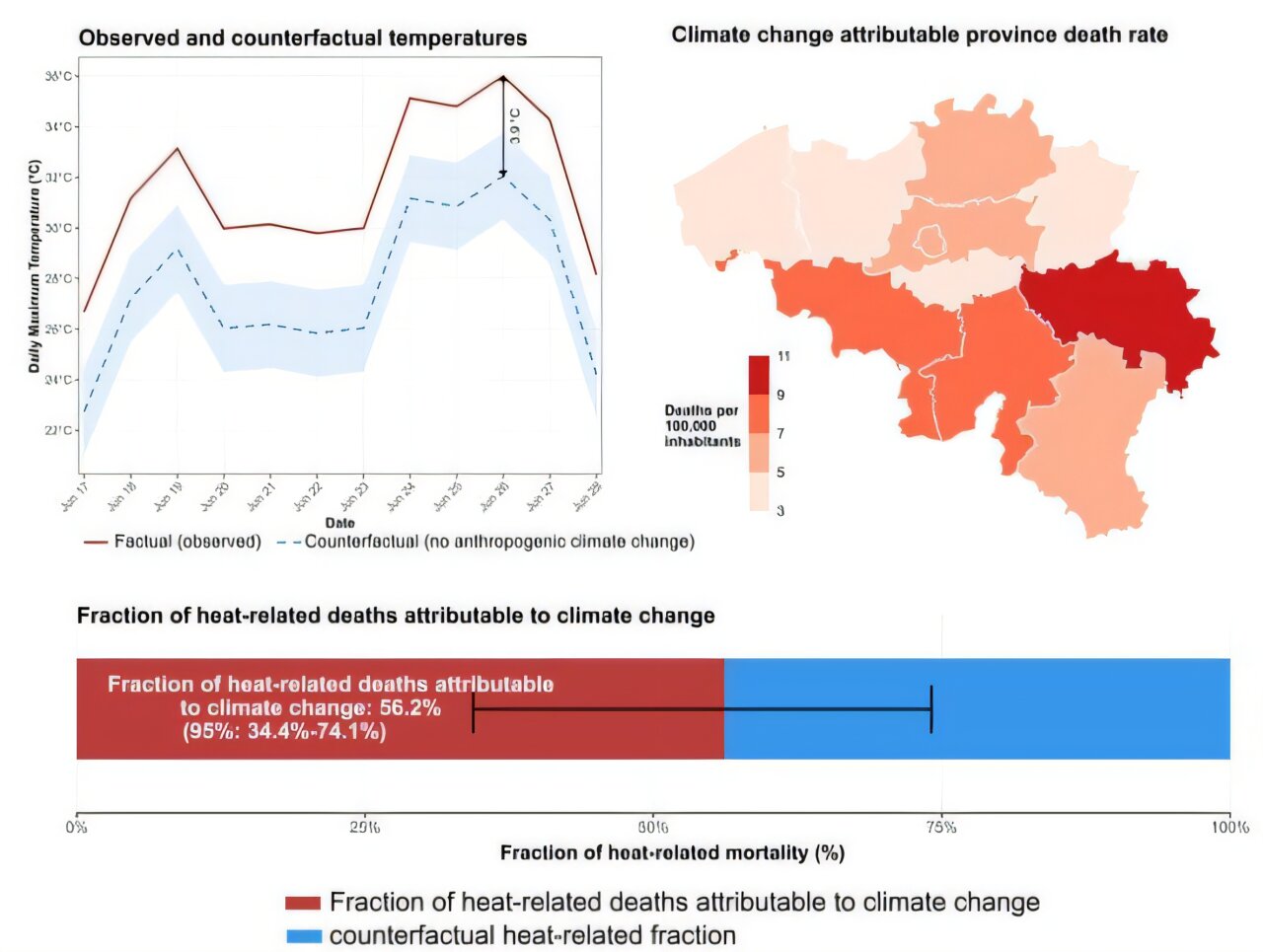
A new rapid attribution study by Vrije Universiteit Brussel (VUB) finds that human-induced climate change made the June 2026 heat wave in Belgium 3.9°C hotter and more than doubled the number of heat-related deaths. Of the estimated 1,181 deaths statistically linked to the extreme temperatures recorded between June 17 and 28, 2026, 665—or 56%—would not have occurred without anthropogenic climate change. This is the first time heat-related deaths during a specific Belgian heat wave have been attributed to human-induced climate change.
The June 2026 heat wave was Belgium's deadliest on record. Over its 12 days, maximum temperatures in Uccle peaked at 35.5°C (95.9 degrees Fahrenheit) on June 26. On the night of June 24–25, the temperature did not fall below 24.1°C (75.4 degrees Fahrenheit)—the highest overnight minimum ever recorded during a Belgian heat wave since records began in 1892.
Emergency services were overwhelmed: calls to the 112 emergency number reached nearly twice the usual daily volume on June 26, and geriatric wards reached full capacity. According to provisional figures, June 27 was the second-deadliest day of the 21st century in Belgium.
The study, published in Zenodo as a rapid attribution report by researchers at VUB's Department of Water and Climate, is the first attribution of heat-related deaths to human-induced climate change for a specific Belgian heat wave.
It uses established, peer-reviewed methods combining epidemiological models—which link daily maximum temperatures to mortality risk—with extreme event attribution methods that estimate how much warmer the heat wave was made by human-induced climate change.
Source link