This article has been reviewed according to Science X's editorial process and policies. Editors have highlighted the following attributes while ensuring the content's credibility:
A traumatic brain injury (TBI) can turn a person's life upside down, leaving lasting effects on memory, thinking, physical abilities and overall quality of life. TBI remains one of the leading causes of death and disability worldwide. Yet, paradoxically, the same injury that harms the brain may sometimes appear to benefit a broken bone by speeding up healing. In a recent study published in Nature Neuroscience, researchers explored whether the reverse is true.
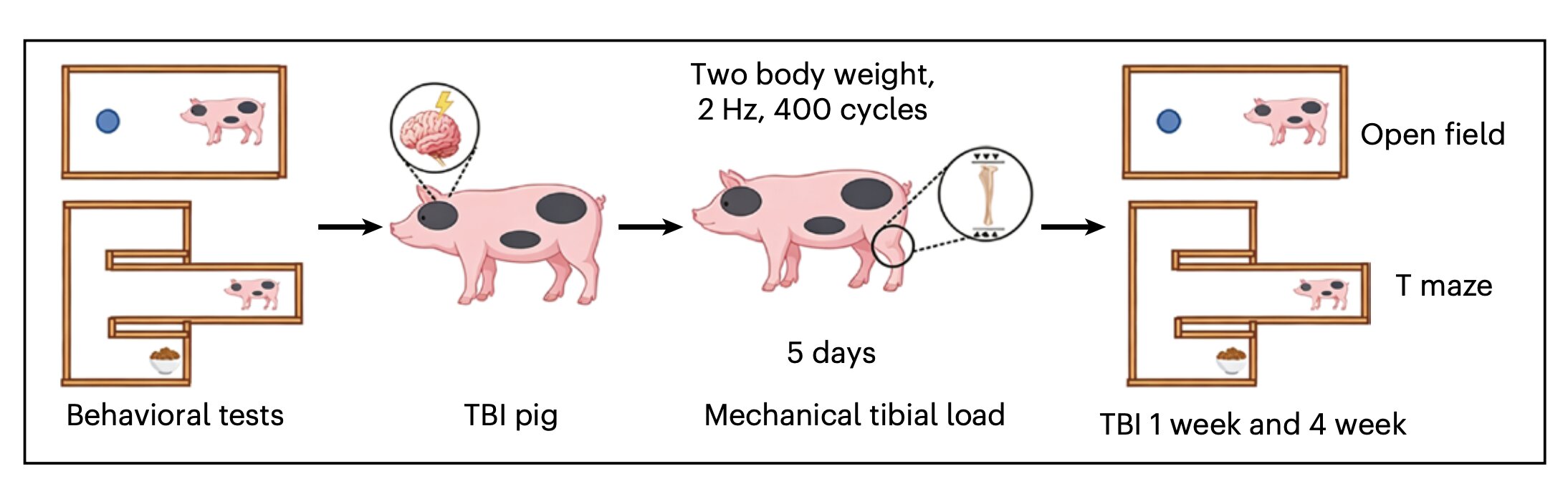
To test whether bones could influence recovery after brain injury, the researchers induced TBI and stroke in mice and pigs. Then, using a small biomechanical device, they applied gentle, rhythmic compression to the animals' shinbones (tibias) for five days. This technique is called dynamic compressive tibial axial loading (DCTAL).
The results revealed a direct bone–brain axis. Applying mechanical pressure to the leg bones helped the brain heal after stroke and TBI while also improving movement and memory. In mice with TBI, DCTAL reduced brain cell loss, eased chronic inflammation and promoted the growth of new neurons. In severe brain injury models, bone compression also had a striking effect on survival, raising 14-day survival rates from 20% to 90%.
The effects of TBI or a stroke often unfold in waves. The immediate injury can affect thinking, movement and emotional well-being, while secondary damage can cause a gradual loss of brain cells over hours, days or even months.
Source link