This article has been reviewed according to Science X's editorial process and policies. Editors have highlighted the following attributes while ensuring the content's credibility:
Children with intellectual disabilities face greater mental health difficulties when they are from a disadvantaged background, finds a new study led by UCL researchers.
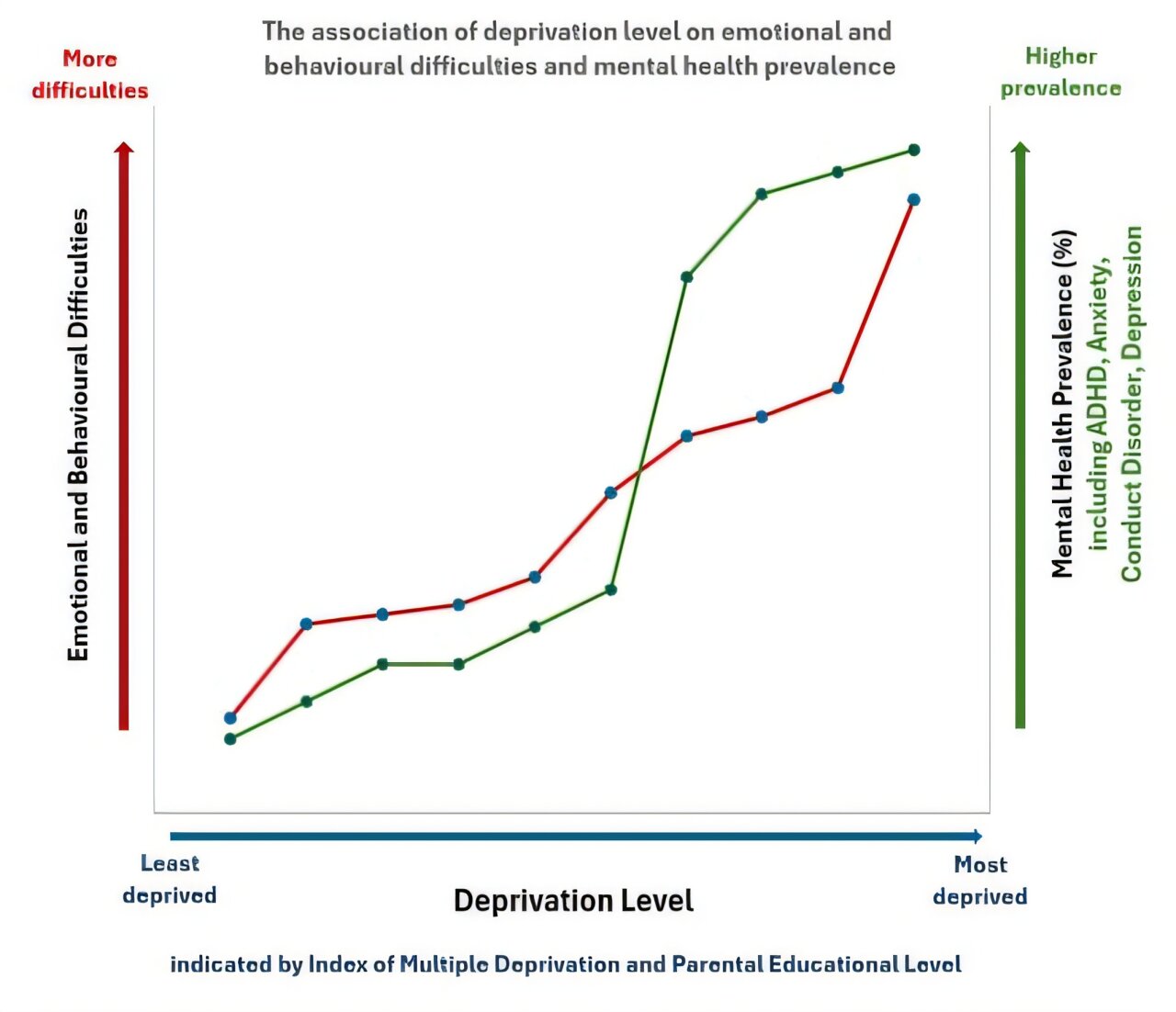
The study, published in JCPP Advances, found that children and young people with intellectual developmental disabilities (IDD) from more socioeconomically disadvantaged backgrounds experience greater emotional and behavioral difficulties and are more likely to report mental health conditions.
Lead author, honorary research fellow Irene O Lee (UCL Great Ormond Street Institute of Child Health), said, "Children with intellectual developmental disabilities can face significant mental health challenges, and families experiencing socioeconomic disadvantage may have additional difficulties in accessing the support they need.
"Our findings highlight the importance of looking beyond a child's disability and recognizing how family circumstances may be associated with their mental health. Improving access to appropriate mental health and social care support is an important step toward reducing these inequalities."
The research team examined 2,778 children and young people between the ages of 4 and 25 across the U.K. from the U.K.-wide 'Intellectual Disability and Mental Health: Assessing the Genomic Impact on Neurodevelopment' (IMAGINE-ID) cohort, who had intellectual developmental disabilities caused by genetic conditions—such as 16p11.2 microdeletion syndrome, Prader-Willi or Angelman syndrome—some of whom had inherited variations.
Parents or caregivers completed detailed questionnaires about their child's health, development and behavior.
Meanwhile, socioeconomic disadvantage was measured using three main indicators: neighborhood deprivation (according to the Index of Multiple Deprivation), eligibility for free school meals and parental education level.
Source link