This article has been reviewed according to Science X's editorial process and policies. Editors have highlighted the following attributes while ensuring the content's credibility:
We now take for granted the idea that a genome-wide association study, or GWAS, can help identify genetic variants associated with complex traits. Such studies have identified loci associated with everything from breast cancer to heart disease to diabetes.
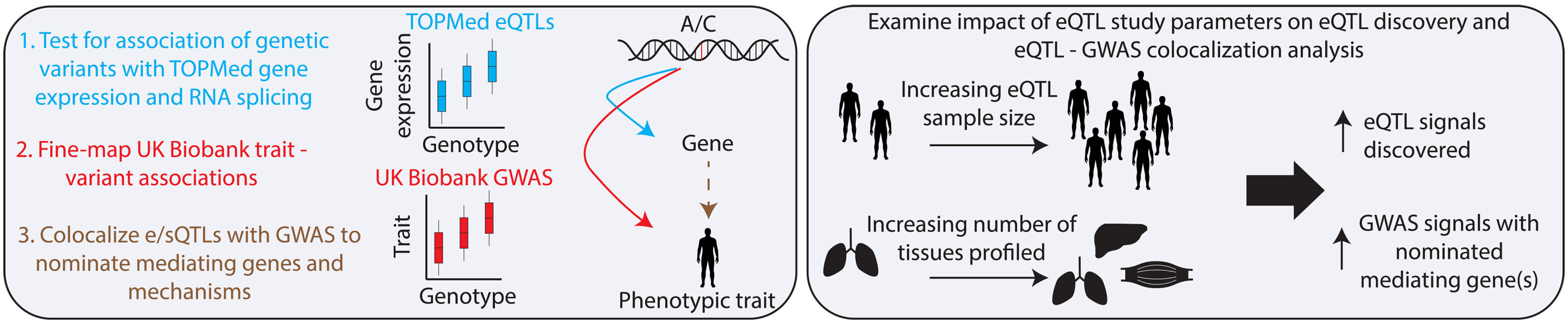
However, most GWAS do not reveal the actual genes associated with those traits but variations that fall within areas that control gene expression.
And truly understanding the connection between genetic variants and disease and complex traits requires understanding how gene expression and splicing are controlled.
And to do that, you need a lot of data, more than previous studies have used, finds a recent study published in Science.
Many previous studies used Genotype-Tissue Expression, or GTEx, data to map genetic variants from GWAS to expression quantitative trait loci, or eQTL, and splicing quantitative trait loci, or sQTL—areas of the genome associated with gene expression and splicing, respectively—and quickly reached a limit to how many such loci they could find for each gene.
The new study, led by Peter Orchard, Ph.D., and Steve Parker, Ph.D., of the Gilbert S. Omenn Department of Computational Medicine and Bioinformatics at the University of Michigan (U-M); Laura Scott, Ph.D., of U-M; Laura Raffield, Ph.D., of UNC Chapel Hill; and Francois Aguet, Ph.D., of the Broad Institute, reveals that the limit may be in the size of the data set.
"An individual can have one of three possible genotypes, based on which alleles they get from Mom and Dad," explained Parker.
Source link