This article has been reviewed according to Science X's editorial process and policies. Editors have highlighted the following attributes while ensuring the content's credibility:
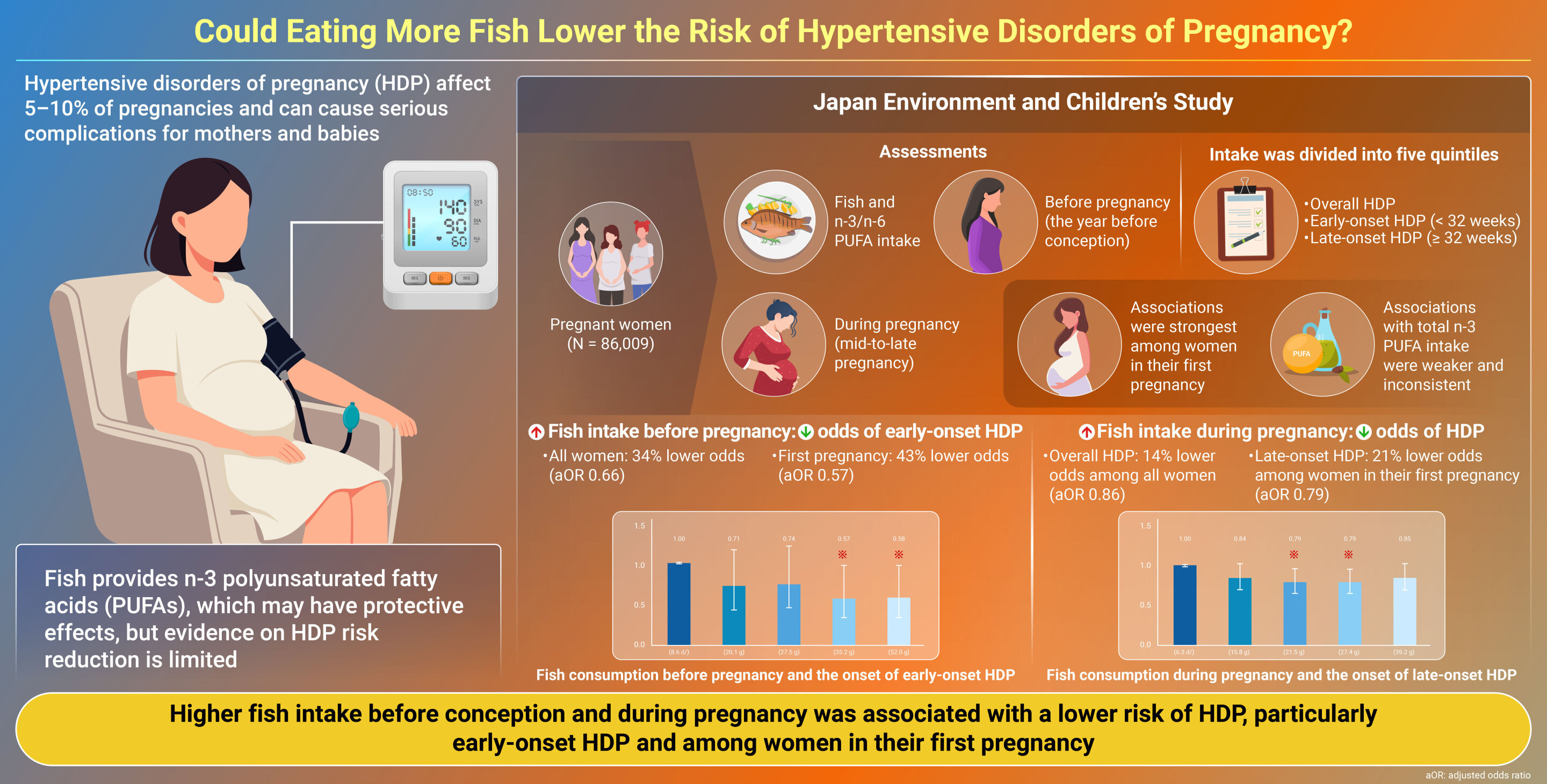
A new prospective study from Japan explored whether fish consumption before and during pregnancy is linked to hypertensive disorders of pregnancy, including gestational hypertension and preeclampsia. Researchers analyzed data from women in Japan, examining fish consumption and n-3 and n-6 polyunsaturated fatty acid (PUFA) intake across different stages of pregnancy. The results reveal a pattern that may have implications for preconception and prenatal nutrition.
The study was published in the European Journal of Nutrition on Sept. 8, 2026.
Hypertensive disorders of pregnancy (HDP) are among the most common complications of pregnancy, affecting approximately 5%–10% of pregnancies worldwide. Conditions such as gestational hypertension and preeclampsia can have serious consequences for both mothers and babies. As diet is a potentially modifiable factor, understanding whether specific dietary patterns are associated with HDP risk could help inform preconception and prenatal care.
Fish is an important source of long-chain n-3 polyunsaturated fatty acids (PUFAs), which have been associated with cardiovascular and vascular health, partly through their anti-inflammatory effects. However, evidence linking fish consumption with the risk of HDP remains limited.
To explore this relationship, a team of researchers led by associate researcher Takuya Inouye from the Department of Obstetrics and Gynecology, Gunma University Graduate School of Medicine, Japan, along with professor Eiji Yoshioka from the Department of Public Health, Faculty of Medicine, University of Toyama, Japan, and professor Kei Hamazaki from the Department of Public Health, Faculty of Medicine, Gunma University Graduate School of Medicine, examined whether fish consumption before and during pregnancy was associated with the risk of HDP.
Source link