This article has been reviewed according to Science X's editorial process and policies. Editors have highlighted the following attributes while ensuring the content's credibility:
Research published today identifies potential new ways to treat the most common type of colorectal cancer in Ireland. The study, conducted by an international research team led by RCSI University of Medicine and Health Sciences and The Institute of Cancer Research, London, provides a roadmap for repurposing existing drugs and developing new ones to create more effective, personalized treatments for thousands of patients who currently have limited options.
Microsatellite-stable (MSS) colorectal cancer accounts for 80%–85% of the 2,500 new colorectal cancer cases diagnosed annually in Ireland but remains challenging to treat, with limited response to many newer therapies. Trials combining chemotherapy with newer targeted drugs or immunotherapies have delivered only modest improvements over current standard treatments.
Now, researchers have discovered vulnerabilities in these tumors and have identified drug combinations—including drugs already approved to treat other tumor types—that could be used to target them, leading to more effective treatments for colorectal cancer.
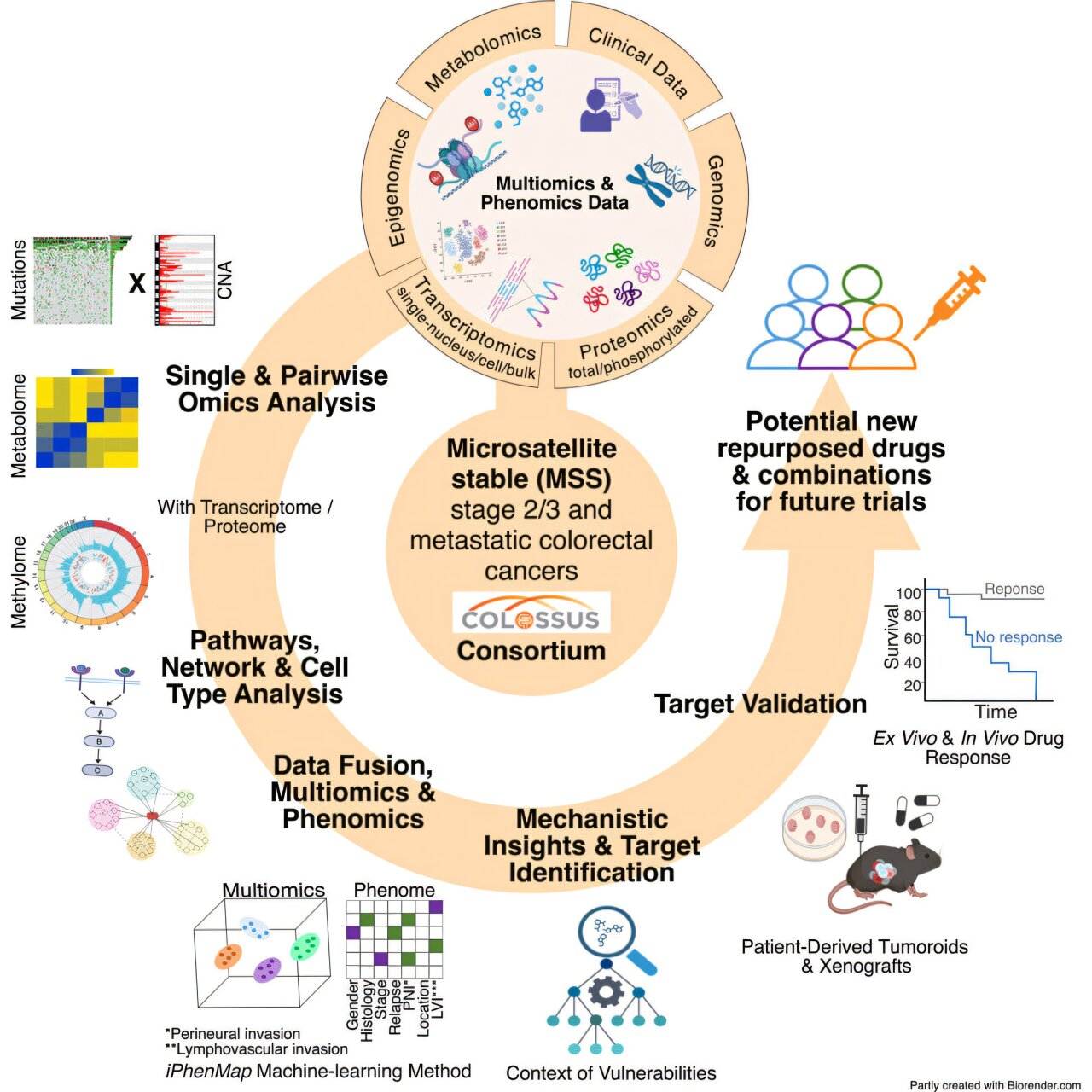
Using 2,000 patient tumor samples, the researchers analyzed genetic, metabolic, protein and clinical data with the help of artificial intelligence (AI) tools, revealing previously unrecognized ways in which the cancer cells divide, grow, adapt and interact with their environment.
To do this, the team developed an AI approach called iPhenMap, which can create a biological map of the tumor. Using this map, they were able to spot connections between the different elements of the tumor—such as the genetic and metabolic features—that have been missed in previous studies that looked at the data in isolation.
Source link