This article has been reviewed according to Science X's editorial process and policies. Editors have highlighted the following attributes while ensuring the content's credibility:
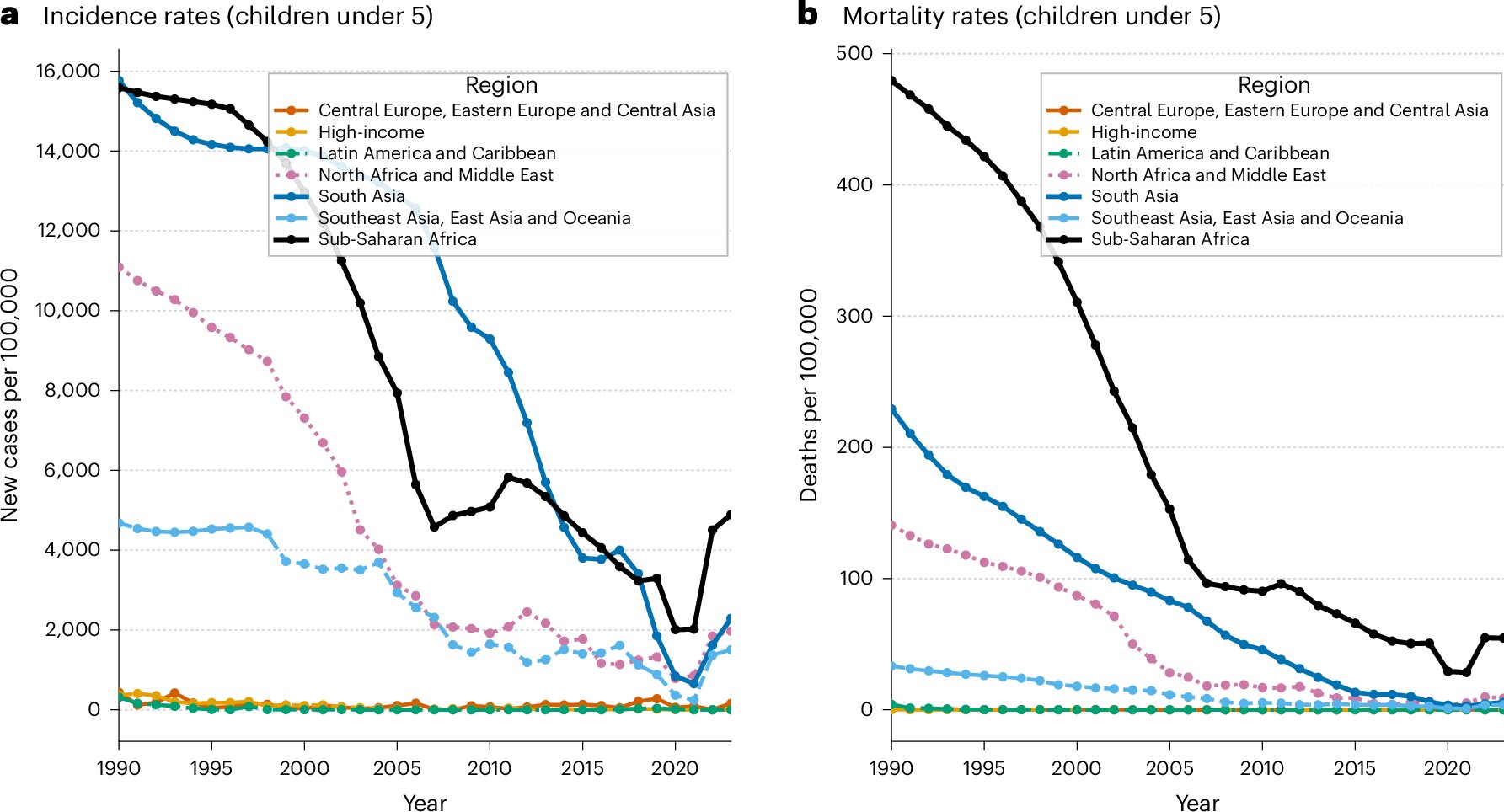
Routine vaccine program disruptions and under-resourced health systems are driving a global decline in childhood measles vaccination rates post-COVID-19, a new study has found. University of Queensland researchers examined measles cases, deaths and vaccine gaps in children under 5 across 204 countries and territories from 1990 to 2023, finding estimated cases rose 40% from 11.1 million in 2019 to 15.6 million in 2023. The findings are published in Nature Medicine.
Associate Professor Benn Sartorius, from UQ's Frazer Institute, said childhood measles immunization rates have been going backward since COVID-19.
"This has contributed to a global resurgence of measles in young children," Sartorius said. "It backtracks on decades of progress, where a nearly 80% decline in measles cases was recorded worldwide between 1990 and 2019.
"The resurgence coincides with COVID-19-related disruptions to immunization programs, health systems and funding—reflecting both the fragility of measles control and the vulnerability of children in lower-resourced areas.
"Our study shows urgent action is needed to restore routine immunization programs and build resilient health systems capable of sustaining high coverage during global crises."
Measles is a preventable yet highly contagious airborne disease that can lead to complications and death, especially in young children. The World Health Organization estimates one case can generate up to 18 secondary infections where immunity is low.
A study published in Lancet Global Health in 2023 estimated measles was fatal in as many as 3 out of every 100 infected infants under 1 year of age in 2019 across low- and middle-income countries.
Source link