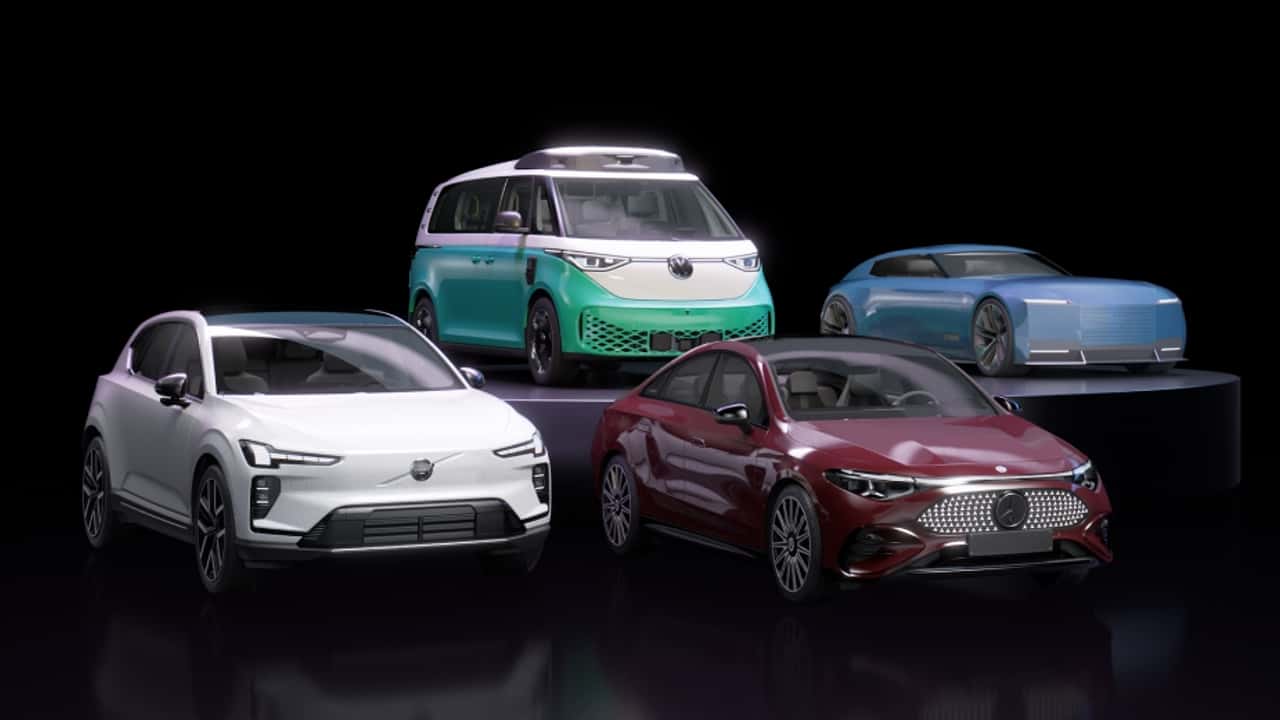
Nvidia used its GTC event in Berlin to show how far its self-driving push into Europe goes. Bolt, Lucid, Mercedes-Benz, Volkswagen Commercial Vehicles, Volvo Cars and Einride are all building on the company's Hyperion computing platform for planned robotaxis, vans and freight trucks.
Nothing here is running as a full commercial service on public roads yet. These projects cover development, testing and planned rollouts, and most still need regulatory approval.
Volkswagen Commercial Vehicles showcases flexible autonomous ID. Buzz platform at NVIDIA GTC Berlin
Hyperion is a shared set of computers and sensors that automakers can pair with Nvidia's Alpamayo Stack driving software or with their own code. A single hardware base and different software options make it easier to scale across fleets.
Bolt plans to use Alpamayo Stack for its European robotaxi program, starting with future Lucid vehicles built on Hyperion. The two companies want the software tuned for European roads and tied into Bolt's fleet tools and local-market knowledge.
Bolt's target is at least 25,000 level 4-capable Lucid vehicles across Europe. Data collection starts in Madrid in 2027 if regulators clear the first phase. Germany is next in line once that Madrid phase proves out.
Mercedes-Benz is extending its Hyperion and Alpamayo work toward Level 3 and Level 4 systems. Volkswagen Commercial Vehicles showed an autonomous ID.Buzz AD platform on the same base. Volvo Cars is adopting Hyperion and Alpamayo too, with an eye toward future vehicles that can manage complex routes door to door.
Einride is using Hyperion for the next version of its Einride Driver software for autonomous freight trucks.
Source link