Plug & Charge is a technology based on the ISO 15118 standard that enables EVs and chargers to communicate automatically and securely, eliminating the need for charging apps, RFID cards or other extraneous authentication methods. As the name implies, drivers simply plug in, and charging starts automatically (the same way Tesla Superchargers have always worked).
Deployment of Plug & Charge is rapidly spreading in Europe, in part due to the efforts of roaming specialist Hubject.
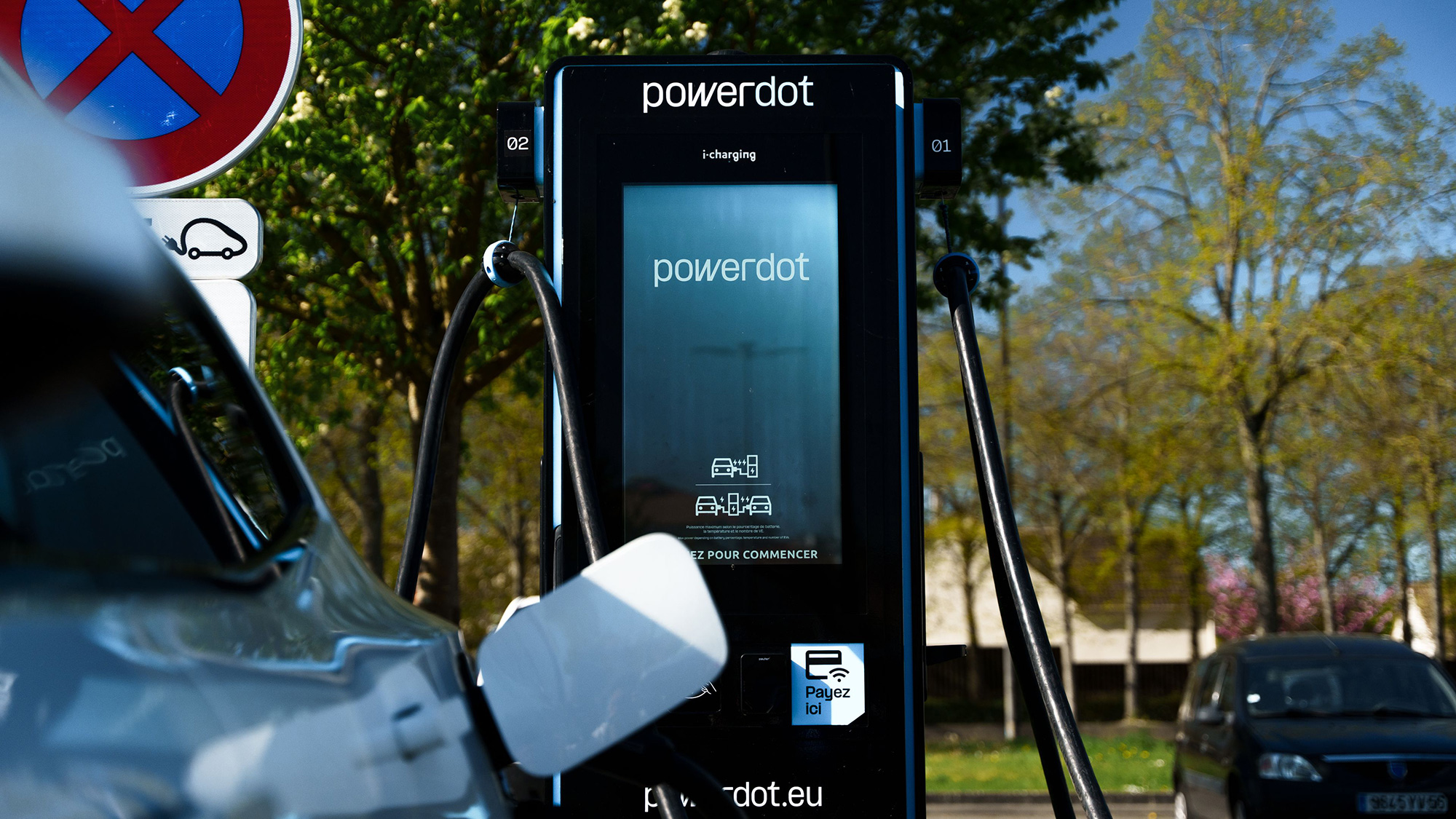
The latest CPO to integrate its charging network with Hubject’s Plug & Charge ecosystem is Portugal-based Powerdot, which operates a network of some 13,000 charging points at 2,400 locations in Europe.
More than 7,000 Powerdot charging points in France, Spain, Belgium and Poland (over half of Powerdot’s stations) are now compatible with Plug & Charge. The integration uses Hubject’s public key infrastructure to securely authenticate digital certificates exchanged among vehicles, charging infrastructure and mobility service providers.
Powerdot focuses on destination charging, installing infrastructure at long-dwell locations such as supermarkets, shopping centers, restaurants and other commercial destinations. Powerdot’s charging network is designed to work with an open charging ecosystem. The company integrates its infrastructure with mobility platforms, e-mobility service providers and vehicle manufacturers, and does not require the use of a proprietary Powerdot app.
Hubject CEO Christian Hahn said: “Every operator that brings Plug & Charge to its network moves the industry closer to mass EV adoption, and Powerdot’s reach across Europe is a meaningful step in that direction.”
Powerdot CEO Luís Santiago Pinto said: “Drivers should be able to arrive at a charging location, plug in and continue with their day.
Source link