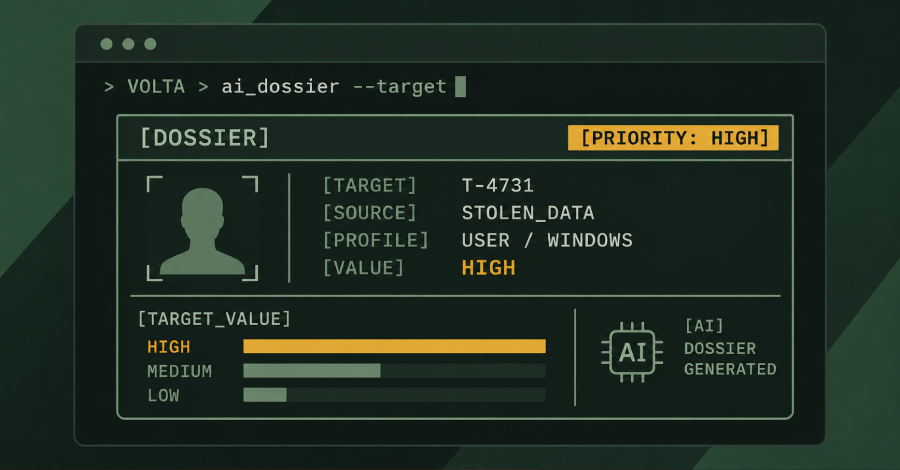
Cybersecurity researchers have discovered a new Windows infostealer malware called VOLTA-AUTODOXER (aka VOLTA) that makes use of a large language model (LLM) to rank a victim's stolen data by their monetization value.
Like other typical stealer families, VOLTA is equipped to harvest passwords and cookies from Chromium-based web browsers; data from Outlook profiles and Slack workspaces; payment cards; cryptocurrency wallet seed phrases; Discord, Telegram, Steam, and Roblox sessions; Microsoft OAuth tokens; SSH and cloud-provider keys; Wi-Fi profiles; and screenshots.
"VOLTA builds a structured evidence bundle about the person behind the machine," Cisco Talos researcher Ryan Fetterman said. "This bundle contains geolocation and home address, employer and employer domain, inferred birth year, card last-4 digits, Slack workspaces, document authorship metadata, iPhone backup indicators, and a live Roblox account valuation."
To make this information more valuable, the malware uses stolen session access to search the victim's Gmail account for receipts to corroborate the home address by extracting emails related to Amazon, DoorDash, Uber Eats, Grubhub, Walmart, and PayPal.
Once the necessary information is collected, the bundle is serialized and fed into an artificial intelligence (AI) system for analysis using OpenRouter, a unified LLM API gateway and routing service, along with a system prompt. The requests are defaulted to Anthropic's Claude Opus 4.6, failing which it falls back to Moonshot AI's Kimi K2 and Google's Gemini 2.5 Flash.
"VOLTA uses a multi-model architecture to fall back resiliently if it hits a model's refusal, checking each response for phrases like 'I can't' or 'I'm not able,' before passing on to a chain of up to three models," Talos said.
Source link