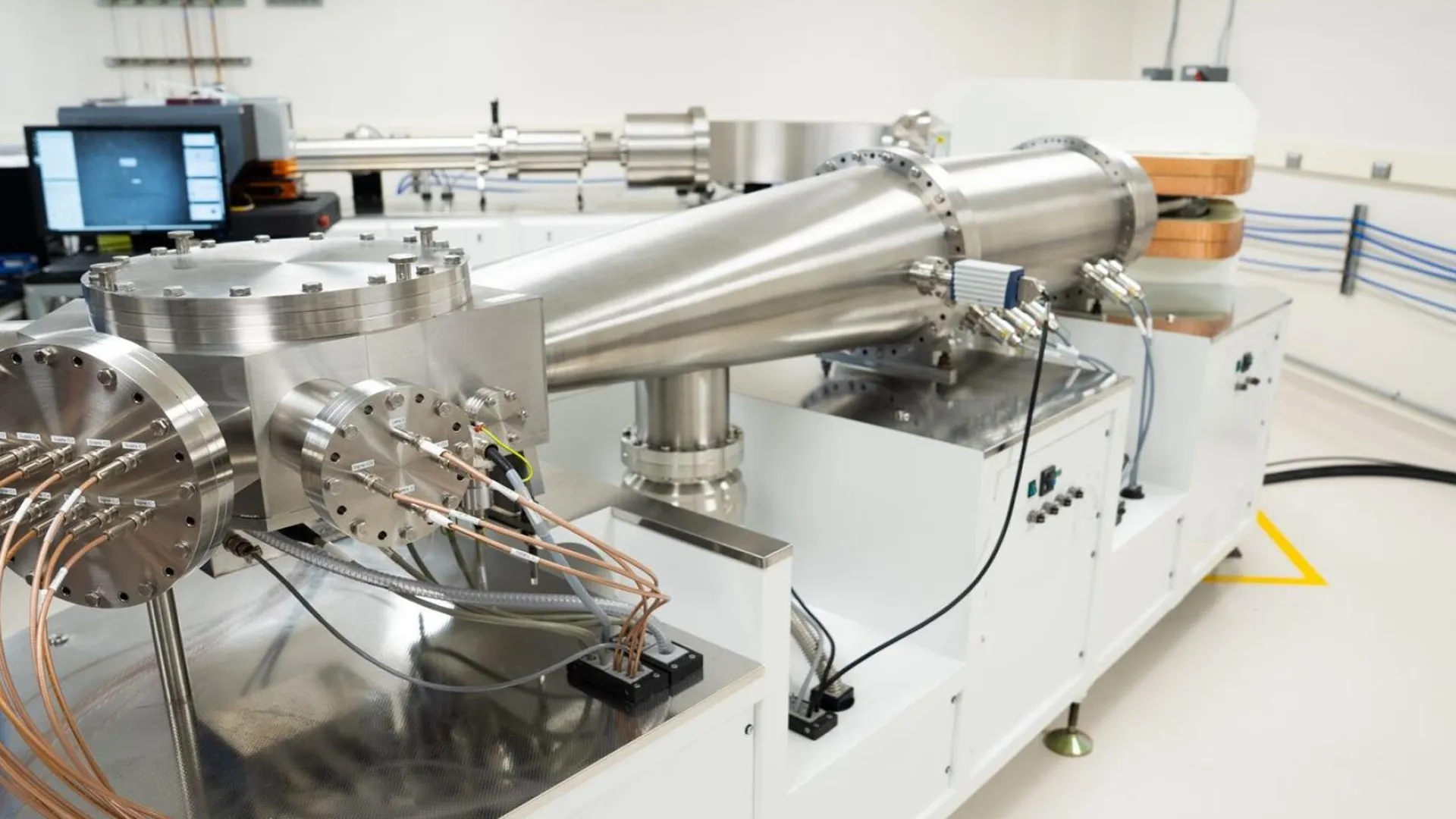
Researchers in the US have unveiled the world’s first mass spectrometer that can measure all uranium and plutonium simultaneously at extremely low levels, and potentially uncover hidden nuclear threats.
The first-of-its-kind instrument, also known as Sapphire 1700, was installed at the Pacific Northwest National Laboratory (PNNL) in 2025. It was made together with Wales-based manufacturer Nu Instruments, and has 22 detectors, among which 12 ion-counting detectors.
It is the only spectrometer in the world which is capable of measuring all uranium and plutonium isotopes at once. Additionally, it has nearly halved nuclear material analysis times while maintaining accurate results.
“We’ve only scratched the surface of what we can really do with this instrument,” Megan Nims, PhD, a chemist at PNNL, noted. “As we push to overcome some of these challenges, we’re only seeing the beginning of what’s possible.” Sapphire 1700 also supports the International Atomic Energy Agency (IAEA) in identifying potential misuse of nuclear materials and technologies.
Mass spectrometers identify substances by measuring the mass-to-charge ratios of small particles. Widely used in medicine, food safety, as well as environmental testing, they can struggle to detect small amounts of nuclear materials, especially when isotopes must be measured separately.
To address this, the PNNL team fitted the Sapphire 1700 with significantly more detectors than similar instruments. Its custom design enables the simultaneous measurement of uranium and plutonium isotopes. It also removed interference that could affect the accuracy of the measurements.
According to the team, the technology has delivered promising results following extensive testing and daily calibrations.
Source link