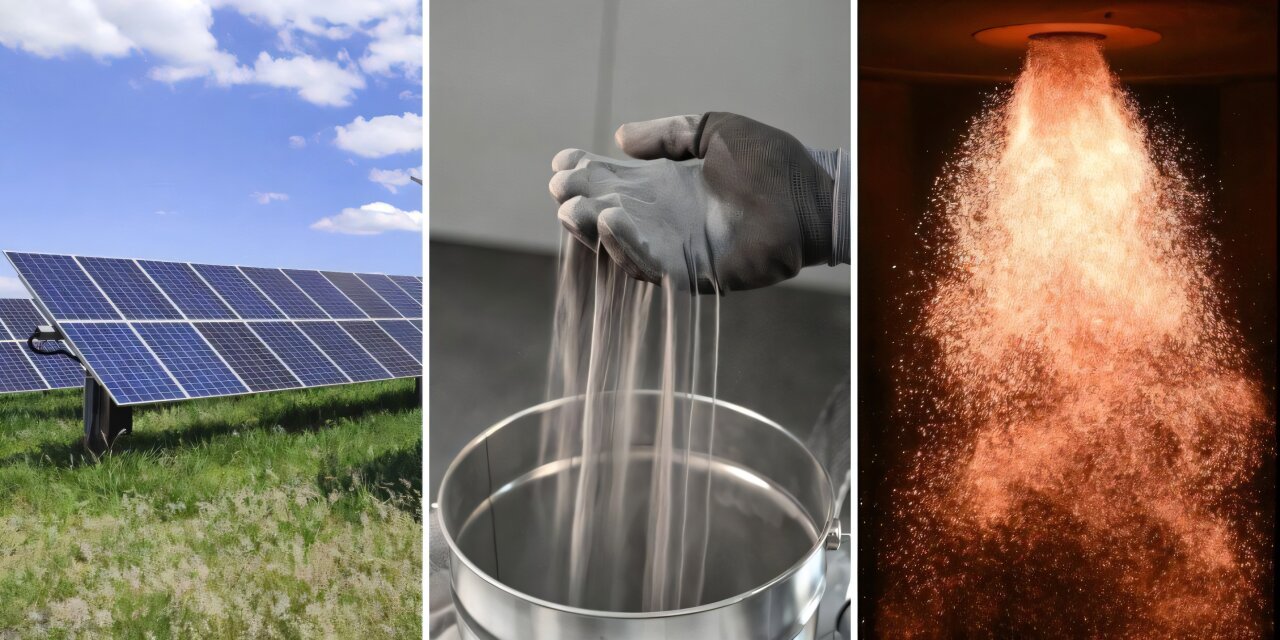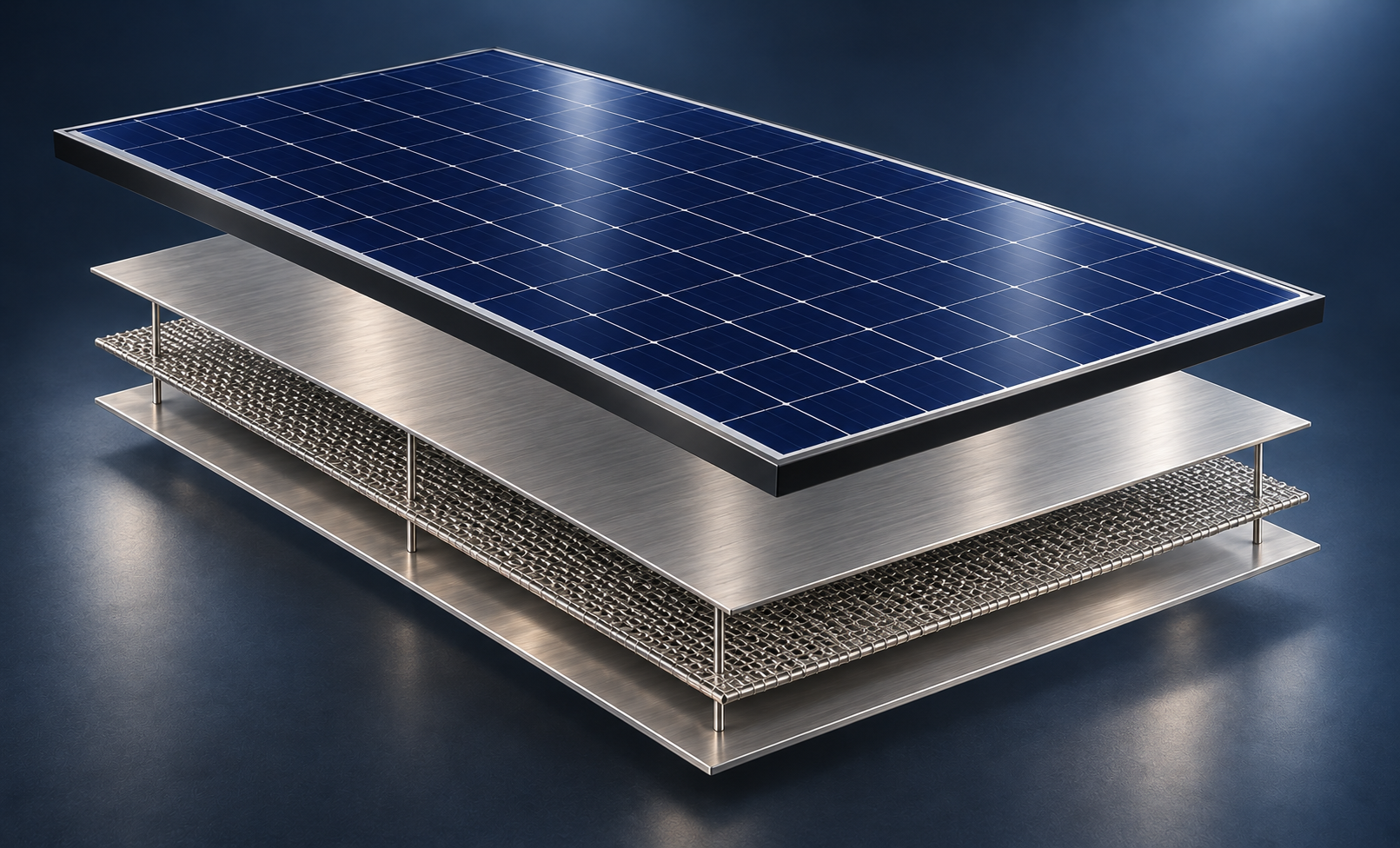
An international group of researchers has developed and experimentally evaluated five prototypes of planar heat pipes for active cooling of PV modules. These heat pipes are intended to spread heat on the rear surface and feed a compact, actively cooled water sink.
“Unlike conventional solutions that primarily target bulk heat removal, the proposed concept utilizes planar heat pipes as thermal spreaders for temperature homogenization and hot-spot mitigation,” the group said. “Heat is collected over a large module area and transferred to a localized cooling region, reducing temperature gradients and local peak temperatures.”
The researchers constructed five planar heat-pipe prototypes measuring 1,650 mm × 1,000 mm, each comprising stainless-steel plates enclosing approximately 2 mm-high cavities filled with distilled water. Internal mesh, wire inserts, and fence-like supports facilitated liquid return and reinforced the structure, while epoxy adhesive sealed the evacuated chambers.
The five configurations differed in internal structure, plate thickness, and water content. “Model 1500” used crimped mesh for capillary liquid distribution and wire inserts to maintain plate spacing. “Sandwich light” combined two mesh layers with fence-like supports that formed vapor channels, while “Sandwich” used the same arrangement with thicker 1 mm plates instead of 0.5 mm plates. “Hybrid 1” alternated crimped-mesh and fence structures to balance liquid return and vapor transport. “Hybrid 2” retained this design but halved the water filling from 0.9 to 0.45 liters. All other designs used 0.9 liters of water.
An automated rig used 32 heating pads to simulate uneven PV heating at 50- 100 C. Prototypes were tested under natural convection at 30° and 45°, and localized water cooling at 45°, against references without heat pipes.
Source link