This article has been reviewed according to Science X's editorial process and policies. Editors have highlighted the following attributes while ensuring the content's credibility:
When wind and sun are weak in winter, Europe needs power plants that can deliver energy at the push of a button—and in a climate-neutral way. So far, hydrogen and carbon capture and storage (CCS) are considered the favorites for this. Both require infrastructure that doesn't yet exist. An expert report by the Energy Economics Institute at the University of Cologne (EWI), commissioned by the Metal Energy Hubs project of TU Darmstadt and the DESERTEC Foundation, is now examining a third option: iron. TU Darmstadt and KIT have been collaborating on the Clean Circles project on iron as an energy source since 2021.
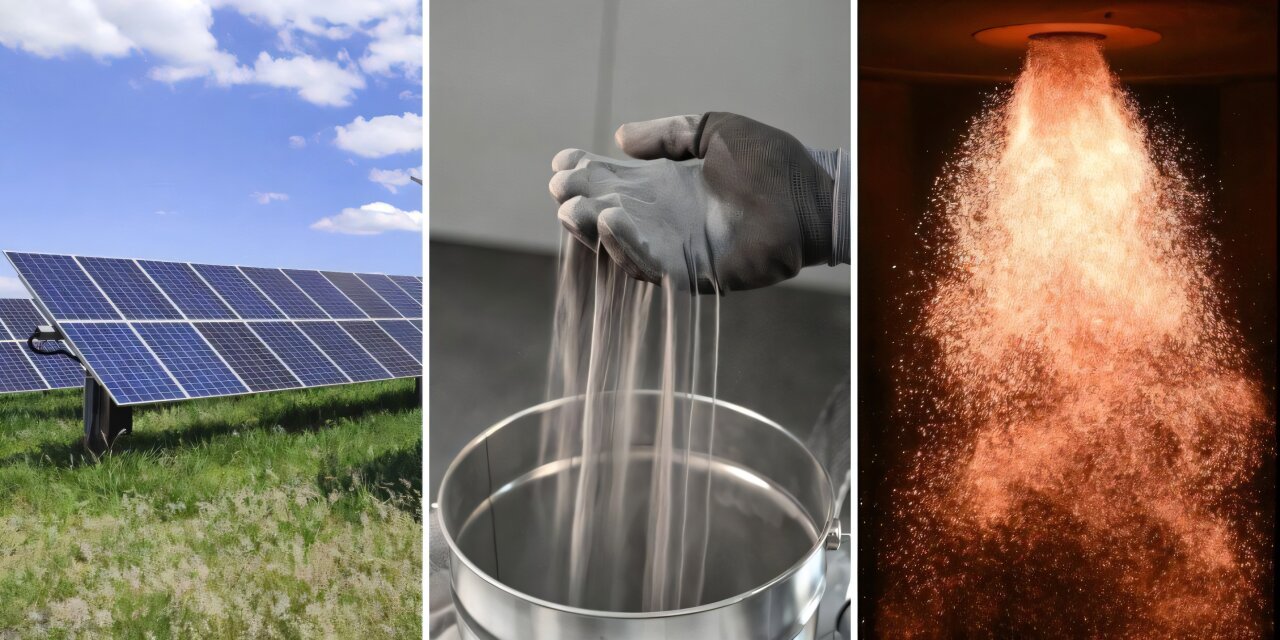
Finely ground iron powder burns without releasing CO₂; iron oxide remains. If the oxygen is removed from this oxide using green hydrogen, the iron is "charged"—the energy from the sun and wind is then chemically stored in the powder. It can be easily stored, transported by ship or rail, and used to generate electricity in converted coal-fired power plants or in district heating plants. The iron itself is not consumed in the process, but rather cycles between being "charged" and "discharged."
The study shows that the use of iron as an energy carrier offers considerable economic and energy potential. In the European model region, annual system costs could decrease by €15 billion between 2035 and 2045 compared to a scenario without iron.
Source link