This article has been reviewed according to Science X's editorial process and policies. Editors have highlighted the following attributes while ensuring the content's credibility:
Green hydrogen is a form of renewable energy that, if taken up widely, could reduce global greenhouse gas emissions. It is produced by splitting water molecules into hydrogen and oxygen using renewable power. This clean, zero-emissions fuel is mainly used by industries like steel manufacturing and chemical refining. Heavy transport sectors such as maritime shipping, aviation and long-haul trucking could also use it.
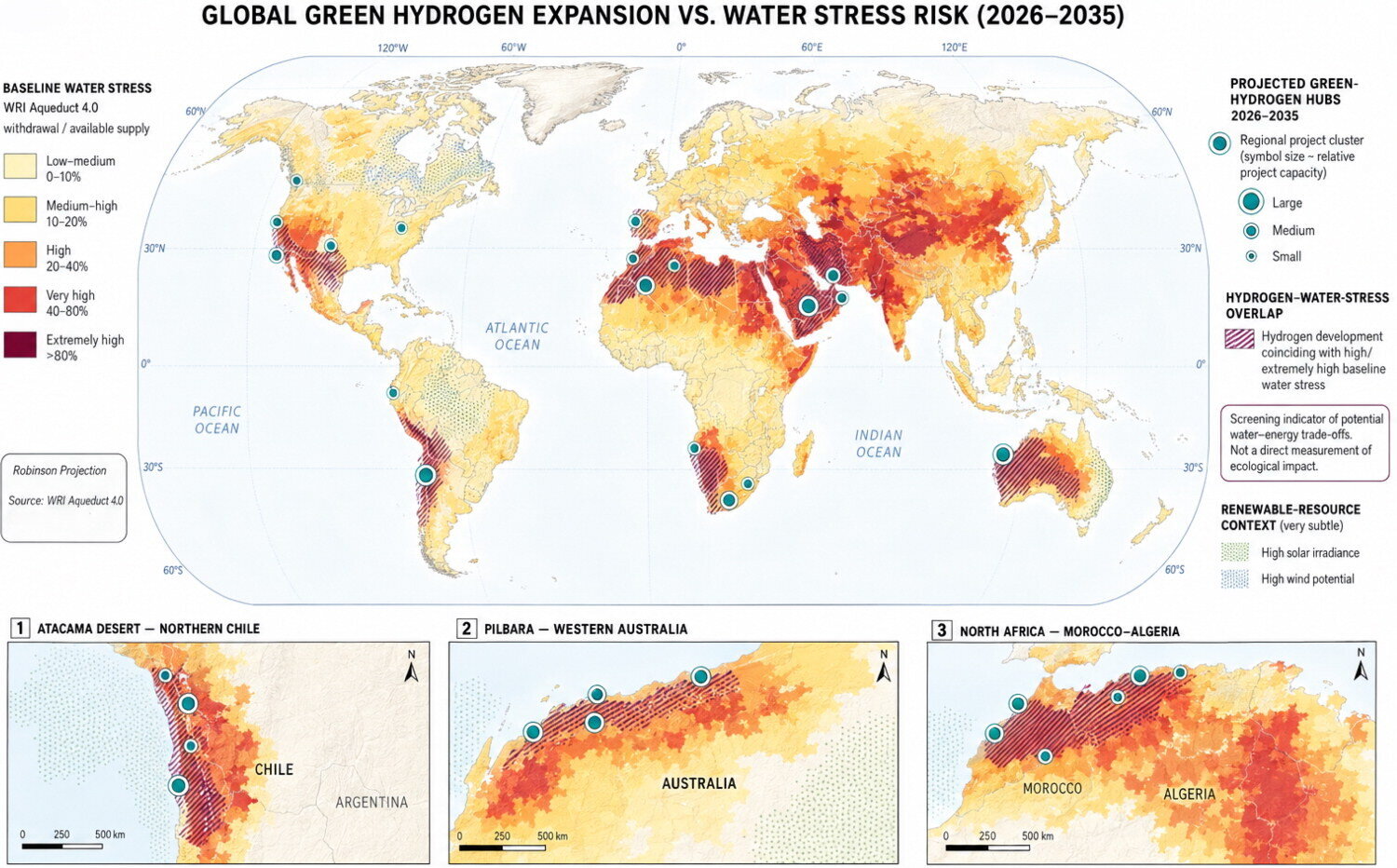
But green hydrogen comes at an environmental cost too: huge amounts of water are needed to produce it. In Africa, the regions that have the best solar and wind resources to produce this clean energy are also those with the least water on the planet.
The colder, Northern Hemisphere countries that lack the sunlight to produce solar energy are most in need of green hydrogen. Morocco, Algeria and Egypt are rapidly positioning themselves as primary suppliers for European clean energy markets.
The European Union aims to import 10 million tonnes of renewable hydrogen every year by 2030. The green hydrogen plants in North Africa aren't built yet, but dozens of megaprojects have signed memorandums of understanding to set up or are in early-stage development or the pilot plant stage.
Egypt has signed $40 billion worth of agreements with international developers to build green hydrogen and ammonia hubs in the Suez Canal Economic Zone . 47 million acres) of land for developers of green hydrogen projects.
Source link