This article has been reviewed according to Science X's editorial process and policies. Editors have highlighted the following attributes while ensuring the content's credibility:
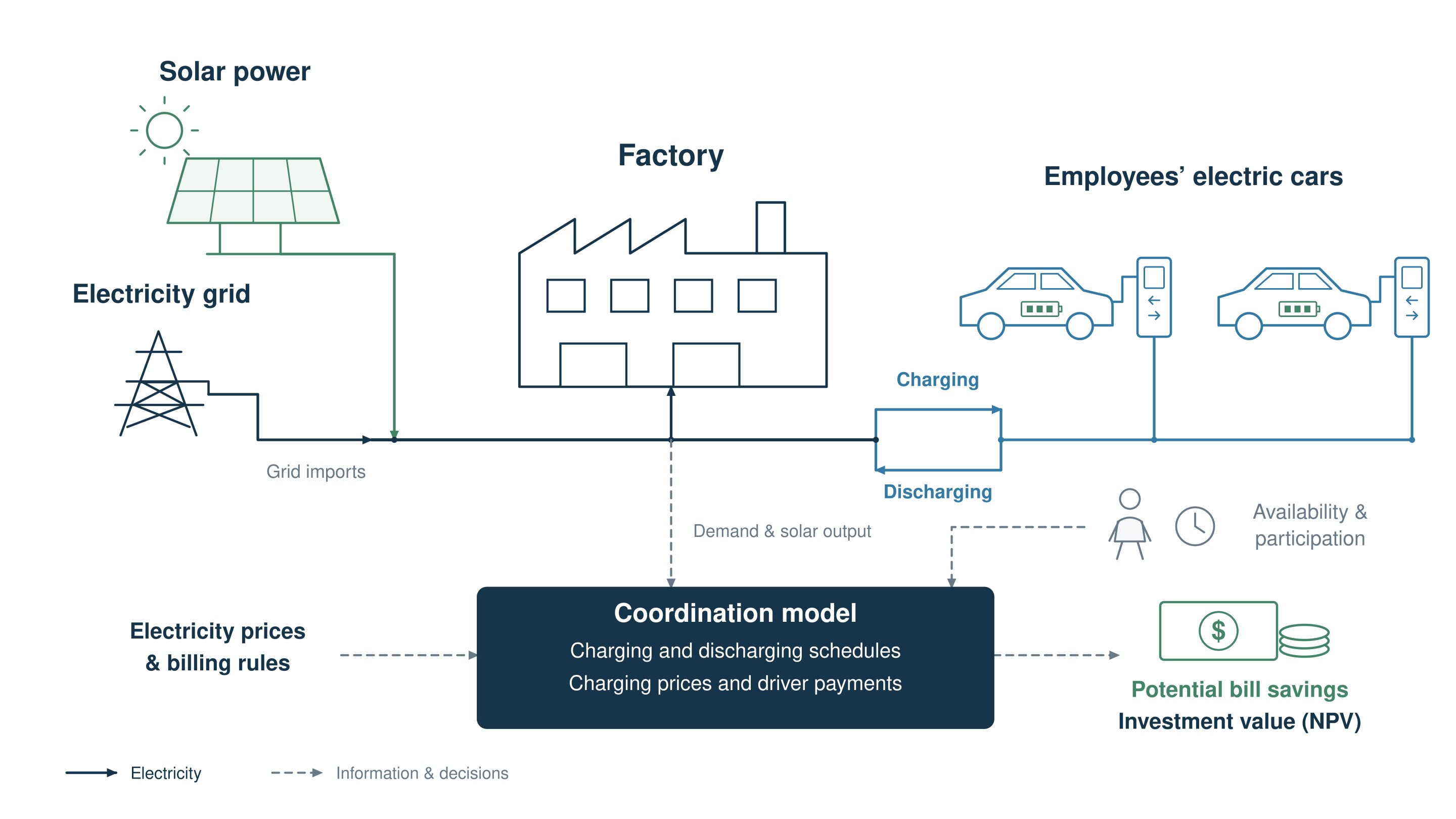
Researchers from Skoltech—a VEB.RF Group institution—have developed an optimization framework to help factories compare strategies for using onsite solar power and the electric vehicles of employees to reduce electricity costs. Evaluated in a Moscow case study, the approach accounts for industrial electricity billing rules, operating decisions and drivers' willingness to participate, helping businesses assess options before investing.
As the share of renewables in the global electricity mix is projected to keep growing, finding enough land for solar and wind farms and other generation facilities is becoming increasingly difficult. This challenge is compounded by the need for infrastructure upgrades where existing transmission lines cannot carry the additional output.
Generating electricity close to where it is consumed could provide part of the solution by cutting the need for long-distance transmission and making use of existing buildings or developed sites. Factories are prime candidates: Their large electricity demand can absorb on-site generation, and their roofs and industrial grounds mitigate the need for new land.
Businesses considering this route need to work out how to combine available resources into a financially worthwhile project. Cars parked at work sit idle for hours.
With bidirectional chargers , which allow electricity to flow into and out of car batteries, employees' electric vehicles could supply part of a factory's needs. Known as vehicle-to-grid technology, this approach can add flexibility to a factory's energy use.
Source link