This article has been reviewed according to Science X's editorial process and policies. Editors have highlighted the following attributes while ensuring the content's credibility:
Researchers in China have developed a hydrovoltaic generator that takes advantage of the vertical channels in lotus stems, along with a bacterial biofilm that enhances ionic conductivity and charge transport. The new study, published in the journal Device, reports that the devices were capable of powering small electronics like pocket calculators and lights and achieved a stable output for over 30 days.
Water evaporation–driven generators, or WEGs, harvest environmental heat as water evaporates, producing small amounts of power. However, many WEGs use materials like carbon nanotubes or nanofiber polymers that contain tangled pore networks. This hinders the movement and collection of electrical charge, resulting in a less efficient device.
Some approaches improved performance through engineered surfaces and structures, but often required complex processing. Still, if optimized, WEG technology offers a simpler, more sustainable way to supply power to remote sensors or other low-power electronics in places where replacing conventional batteries is difficult.
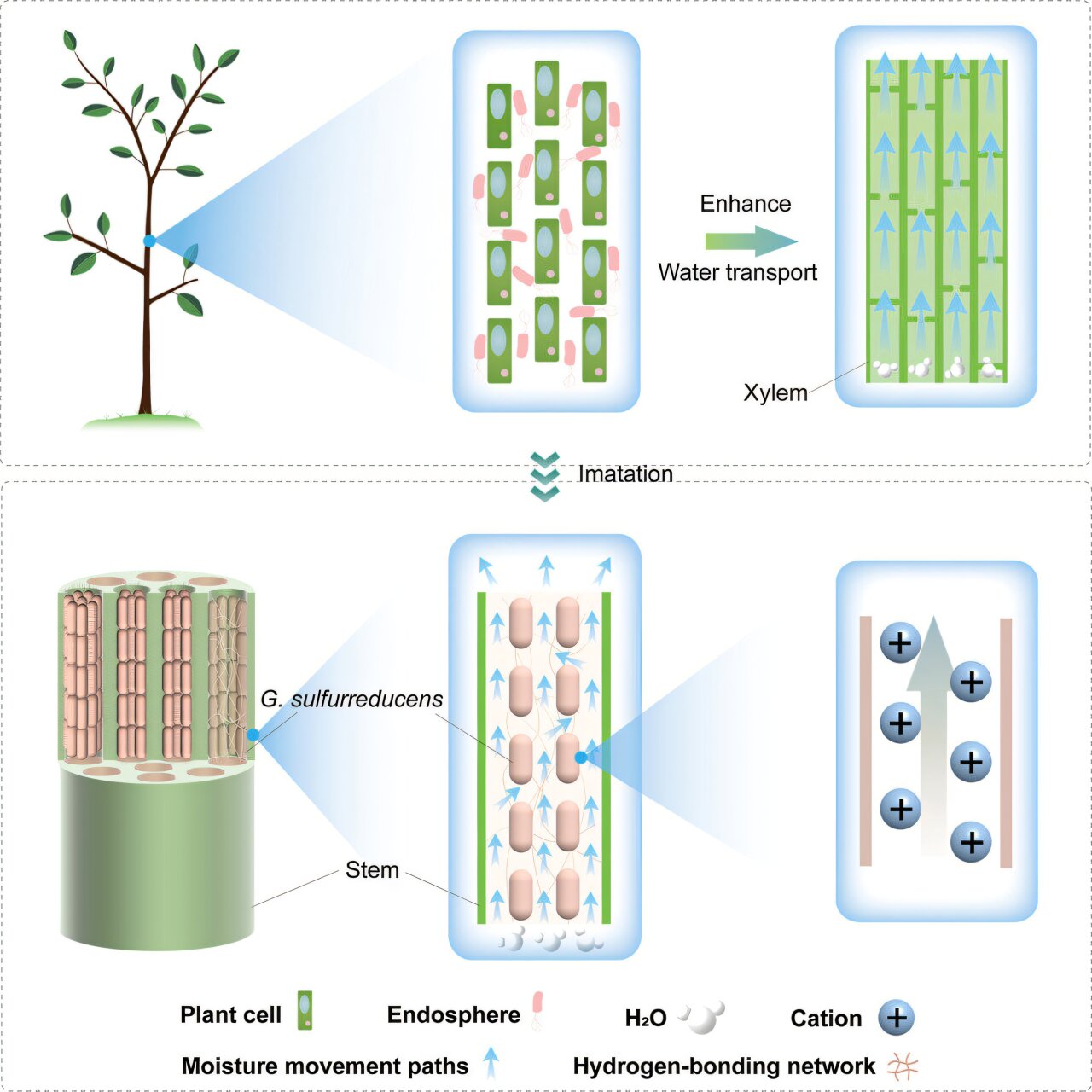
The team involved in the new study developed a design for a WEG, combining straight stem channels in the lotus plant with conductive bacterial films. Lotus stems contain naturally aligned channels that offer ready-made pathways for water transport. Previous work also showed that Geobacter sulfurreducens biofilms can generate electricity during water evaporation. The combination creates a pathway allowing for efficient directional ion transport and charge conduction.
To create a working WEG, the researchers soaked lotus-stem segments in a bacterial suspension, freeze-dried them and attached electrodes at both ends.
Source link