It’s an hour before Big Ivy’s food bank officially opens, but over a dozen families have congregated around the picnic tables outside the metal building. Children dart back and forth among the trees playing tag. Cars idle in the parking lot as the heat from the asphalt makes the air wobble in the August sun.
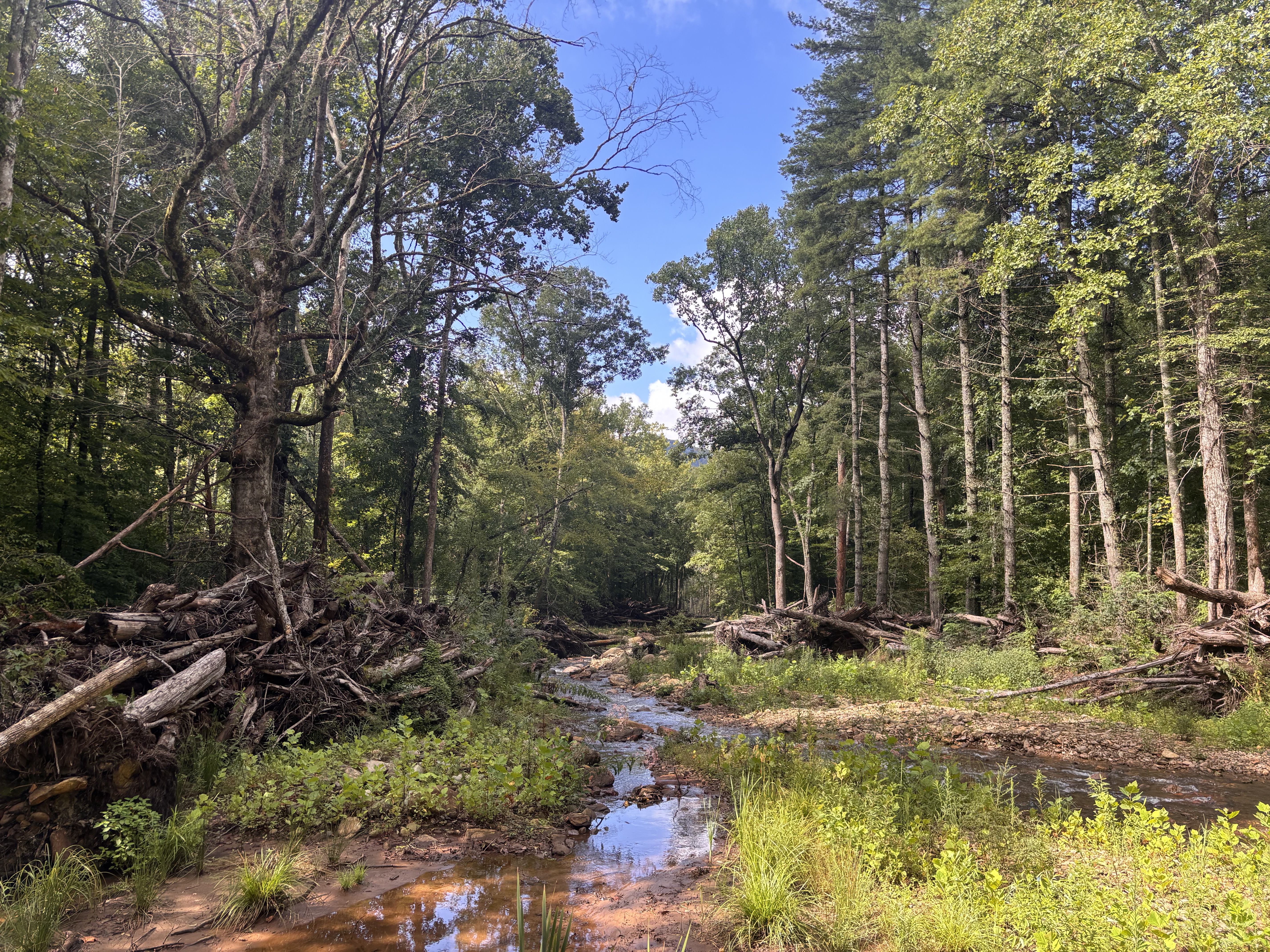
Two years ago, Hurricane Helene obliterated this Buncombe County community of a few hundred people, swelling Ivy Creek to a raging river and sending double-wides, campers, vehicles, animals and debris screaming down the mountain. Across the broader Barnardsville community, at least 50 homes and a trailer park were destroyed.
Like so many pockets of rural western North Carolina, signs of Helene are still everywhere. Along Dillingham Road, small clusters of storage sheds, the kind you see in Home Depot parking lots, serve as makeshift shelters. “That’s Mr. Carson’s property,” food bank director Sierra Clark explains when I ask about the five sheds a hundred yards away from where we’re standing.
Clark said 40 families still lack housing, and the number of those who don’t have a permanent water source is probably “way more.”
Since Helene, the Supplemental Nutrition Assistance Program (SNAP) has become one of the most vital lifelines in this part of the state. Micah Chrisman, spokesperson for the MANNA FoodBank network, said SNAP provides nine meals for every one the state’s food banks can provide. But after the latest round of major federal cuts, those benefits have become harder to access.
All of this has created a unique challenge for any political candidate seeking to represent this region in Congress.
Source link