This article has been reviewed according to Science X's editorial process and policies. Editors have highlighted the following attributes while ensuring the content's credibility:
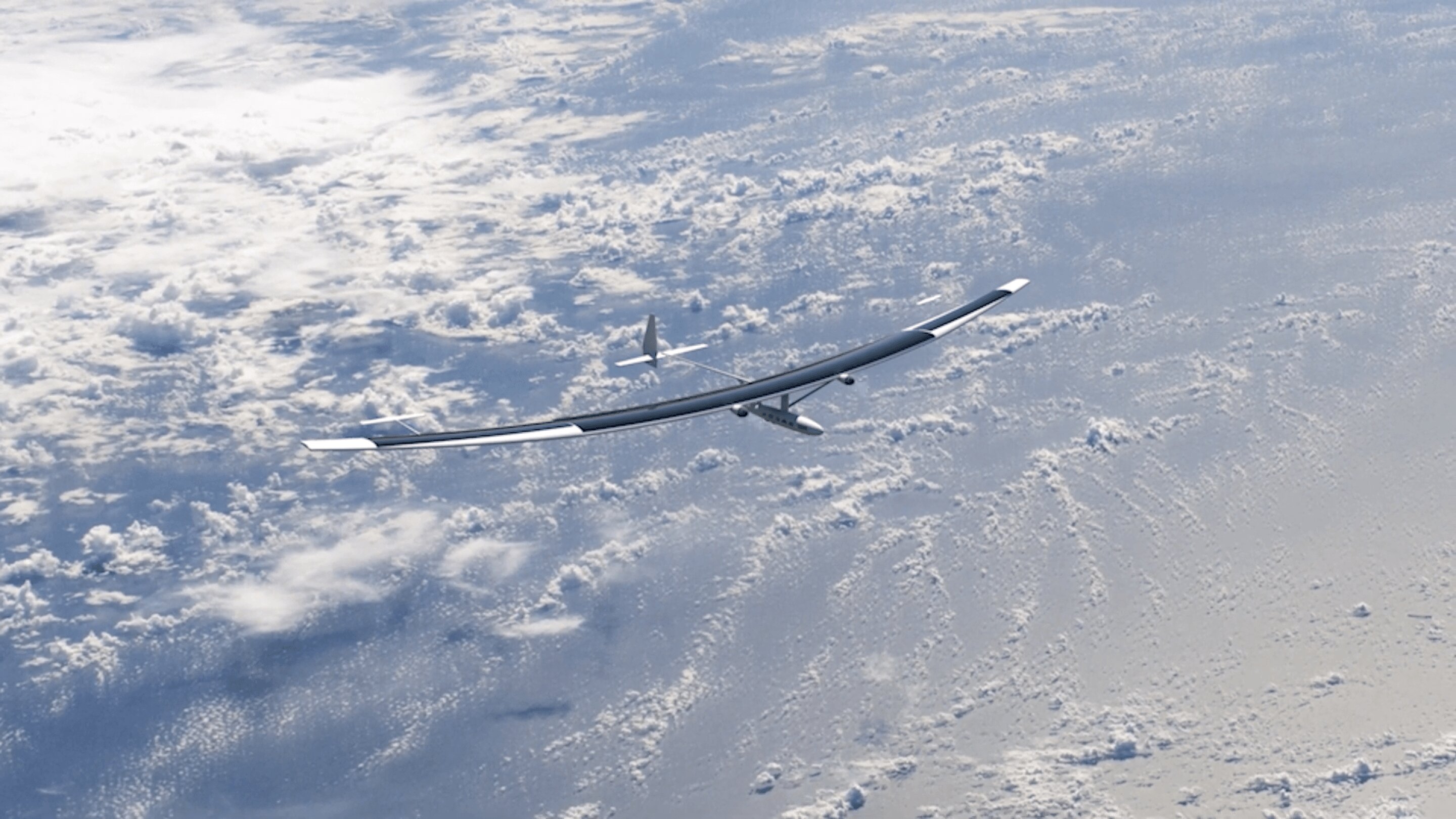
A sleek, pilotless, solar-powered airplane that soars through the atmosphere to monitor climate or track wildfires was once just an idea. Now, these high-altitude specialty aircraft are advancing from early prototyping demonstrations toward potential commercial applications, supported by decades of research and development involving Harvard scientists, aerospace engineers and industry collaborators.
In a new paper published in ACS Energy Letters, researchers in the John A. Paulson School of Engineering and Applied Sciences (SEAS), in collaboration with partners in industry and the University of Michigan, lay out a pathway to clearing the most significant hurdle still facing extended solar flight: battery performance.
Solar-powered, fixed-wing, long-endurance aircraft are designed to cruise for weeks or months at a time through the stratosphere—twice the 30,000-foot (9,100-meter) cruising altitude of commercial jets, and higher than most clouds and weather. These aircraft must use excess solar energy during the day to continuously charge their batteries, then rely on those batteries at night.
Harvard researcher Craig Mascarenhas, who leads engineering research on solar aviation through the laboratory of Jim Anderson, the Philip S. Weld Professor of Atmospheric Chemistry at SEAS, spearheaded the study that establishes performance targets for next-generation solar aircraft batteries.
"It's this circular mathematical relationship where you need more energy storage, but the batteries become heavier, so now you need more power to push it through the air to get more lift," explained Mascarenhas, who is now an engineer focused on wireless power-transfer systems for NASA lunar missions but maintains a collaboration with Anderson's lab.
Source link