This article has been reviewed according to Science X's editorial process and policies. Editors have highlighted the following attributes while ensuring the content's credibility:
The periodic table contains more than 100 elements. Combine them in different ways, and the possibilities quickly multiply. For researchers designing materials for advanced nuclear reactors, the abundance presents an opportunity: Could entirely new combinations of elements produce stronger alloys capable of withstanding the extreme heat, radiation and mechanical stress inside a nuclear reactor?
At Pacific Northwest National Laboratory (PNNL), materials scientist Osman El Atwani and his colleagues are exploring that question by designing new alloys from the ground up. Rather than starting with an existing commercial alloy and making incremental changes, his team is investigating combinations of elements that could provide the properties needed for future nuclear energy systems.
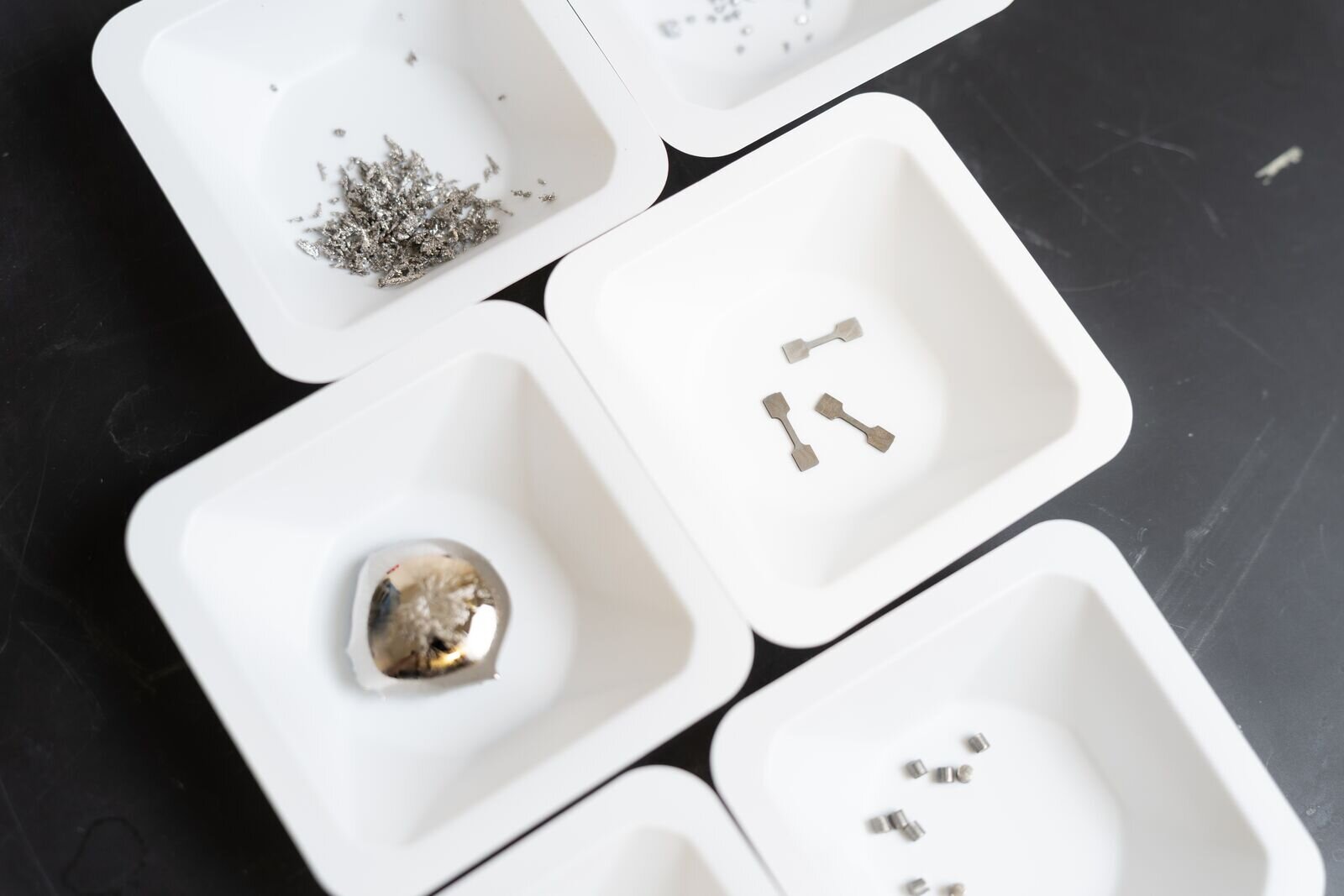
One result is V555, an experimental alloy identified through this approach and selected for initial laboratory evaluation. Researchers selected V555 from hundreds of compositions identified through a computational approach called robust alloy design (RAD), which PNNL developed to help systematically search for materials that meet multiple nuclear requirements.
"As we looked more into this, we began to understand how different material possibilities correlated with the design criteria," El Atwani said. "The work has developed into a pathway for the nuclear materials community to explore and evaluate a broader range of materials for future nuclear systems."
" The paper describes RAD, an eight-step approach for identifying and evaluating new alloys on the basis of the demands of their intended nuclear environment.
Source link