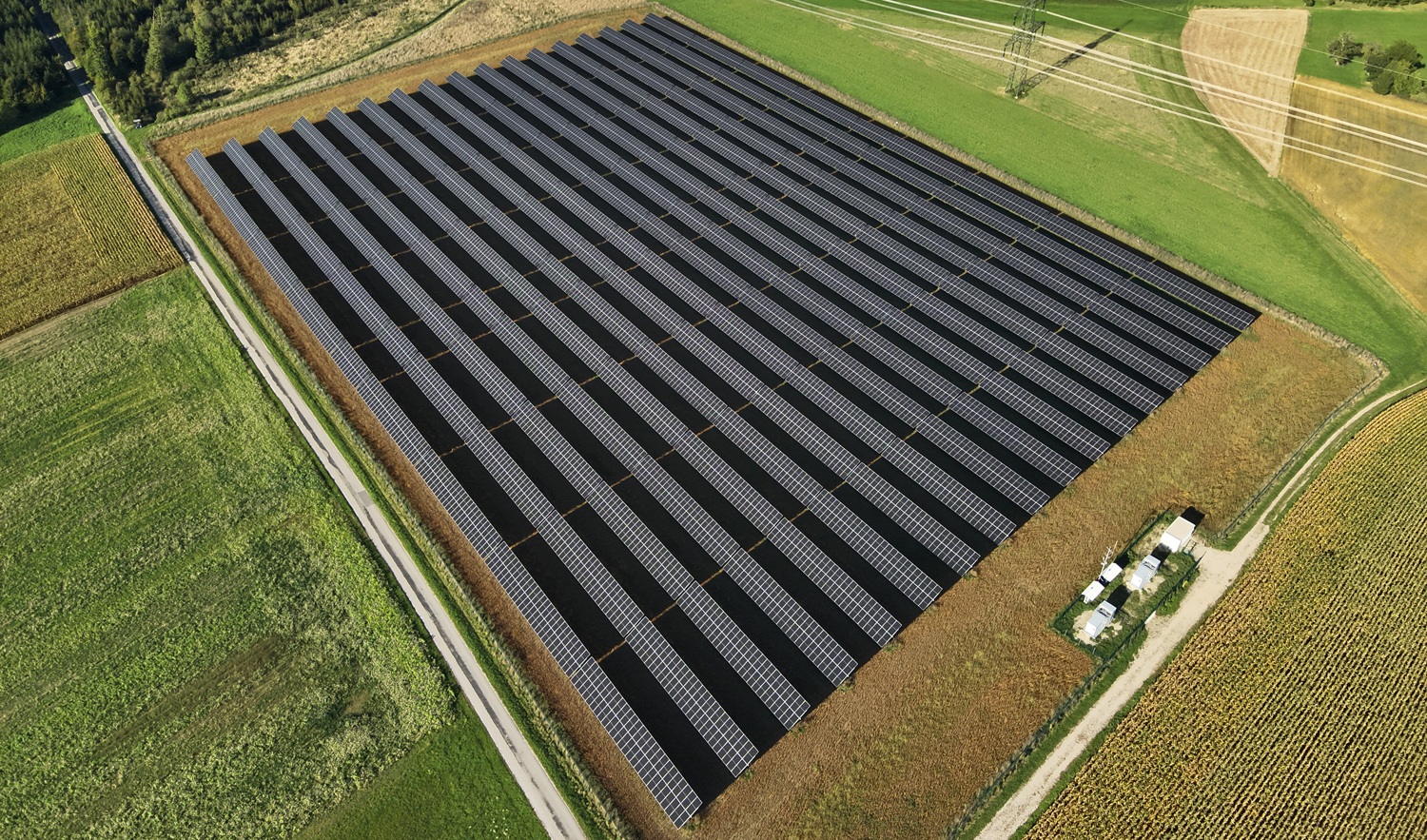
Austrian agrivoltaics specialist EWS has reported a 14% increase in winter wheat yield at its Sonnenfeld research site in Bruck an der Leitha compared with a control area without PV modules. The company attributes the result partly to shading and changes in the microclimate beneath its tracking PV arrays.
The result was recorded in the site’s 12-meter-wide cultivation strips during the dry summer of 2026, according to EWS. The company said partial shading from the PV modules can provide some protection for crops and soil during periods of high temperatures and affect factors including soil moisture and temperature.
The Bruck an der Leitha facility, built in 2022, is a research and demonstration project developed with the support of the University of Natural Resources and Life Sciences Vienna (BOKU). The agrivoltaic array incorporates different row spacings to assess their impact on electricity and agricultural production. EWS said the movable module tables are installed at center-to-center distances of 8 meters, 11 meters and 14 meters in different research zones, corresponding to cultivation widths of 6 meters, 9 meters and 12 meters.
Earlier results indicate that crop response can vary with the spacing between module rows. In 2024, winter wheat yields in the 6-meter and 9-meter cultivation zones were close to those of the unshaded control area, while the 12-meter zone produced around 10% more yield, according to results published by EWS.
The company has now reported a 14% yield increase for winter wheat in the 12-meter cultivation strips in 2026 compared with the control area without PV modules.
Source link