
This article has been reviewed according to Science X's editorial process and policies. Editors have highlighted the following attributes while ensuring the content's credibility:
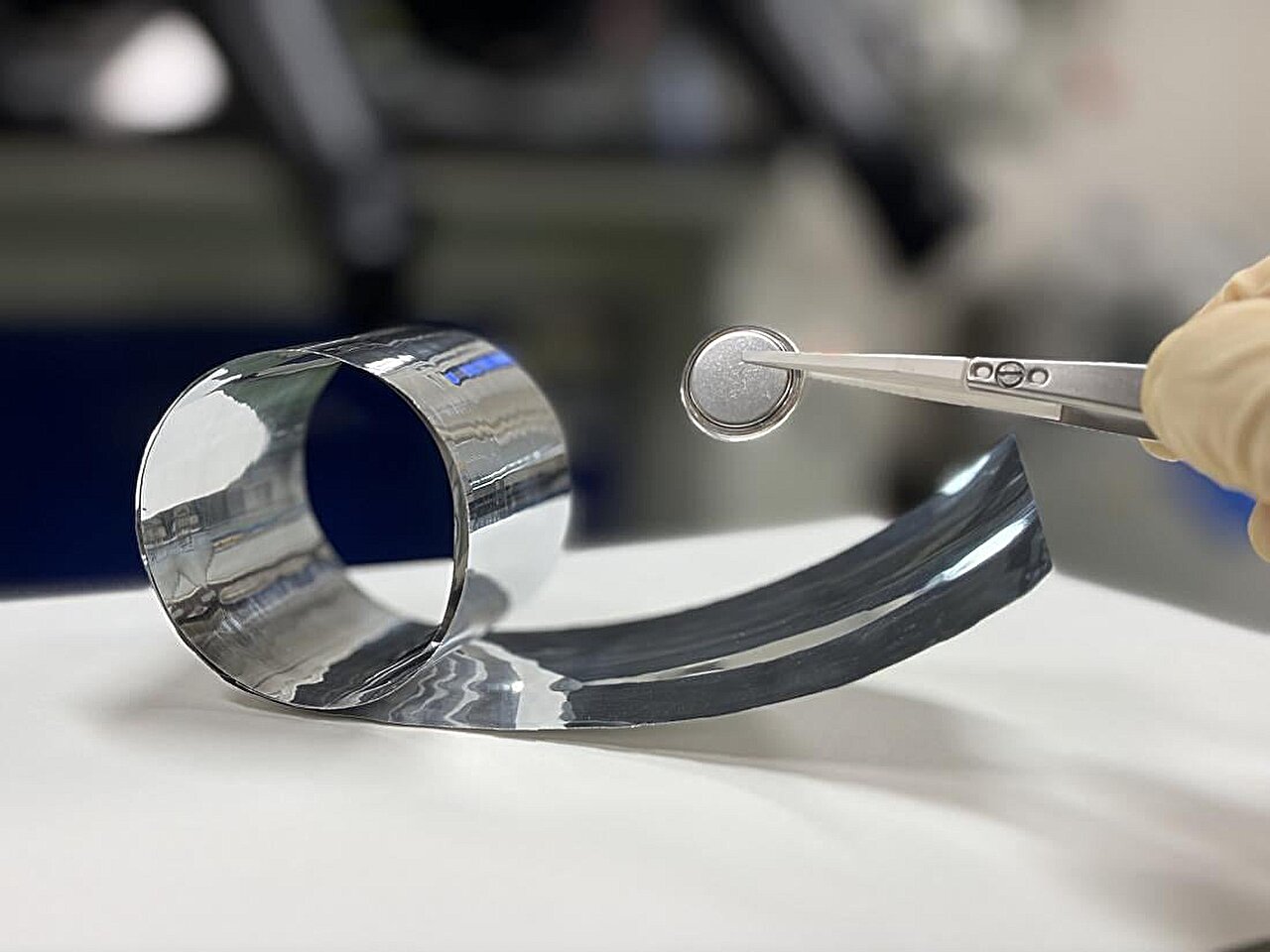
As electric vehicles become more widespread, researchers are looking for ways to make rechargeable batteries store more energy while reducing their cost and environmental impact. Aluminum is a promising candidate. It can store large amounts of lithium, and a single sheet of aluminum foil can serve as both the battery's active material and the component that carries electricity.
However, aluminum has a weakness: it does not last long enough during repeated charging and discharging. Now, researchers at Tohoku University and UACJ Corporation have found a way to mitigate this degradation by adding a small amount of manganese to the aluminum. Their approach improves the electrode's durability without sacrificing its ability to store lithium, addressing a major obstacle to the practical use of aluminum-foil anodes. The work is published in Communications Materials.
In conventional lithium-ion batteries, anodes are typically made by coating a material onto copper foil. Aluminum-foil anodes offer a much simpler alternative. Because the foil itself stores lithium and carries electricity, it could eliminate the need for copper current collectors, binding materials and energy-intensive coating processes. This could make batteries lighter, cheaper and more environmentally friendly to produce.
The challenge is that pure aluminum changes significantly as lithium moves in and out during charging and discharging. As lithium is removed, the material develops tiny gaps and becomes porous, weakening its structure. Repeated reactions with the battery electrolyte also create surface layers that interfere with performance.
Source link





