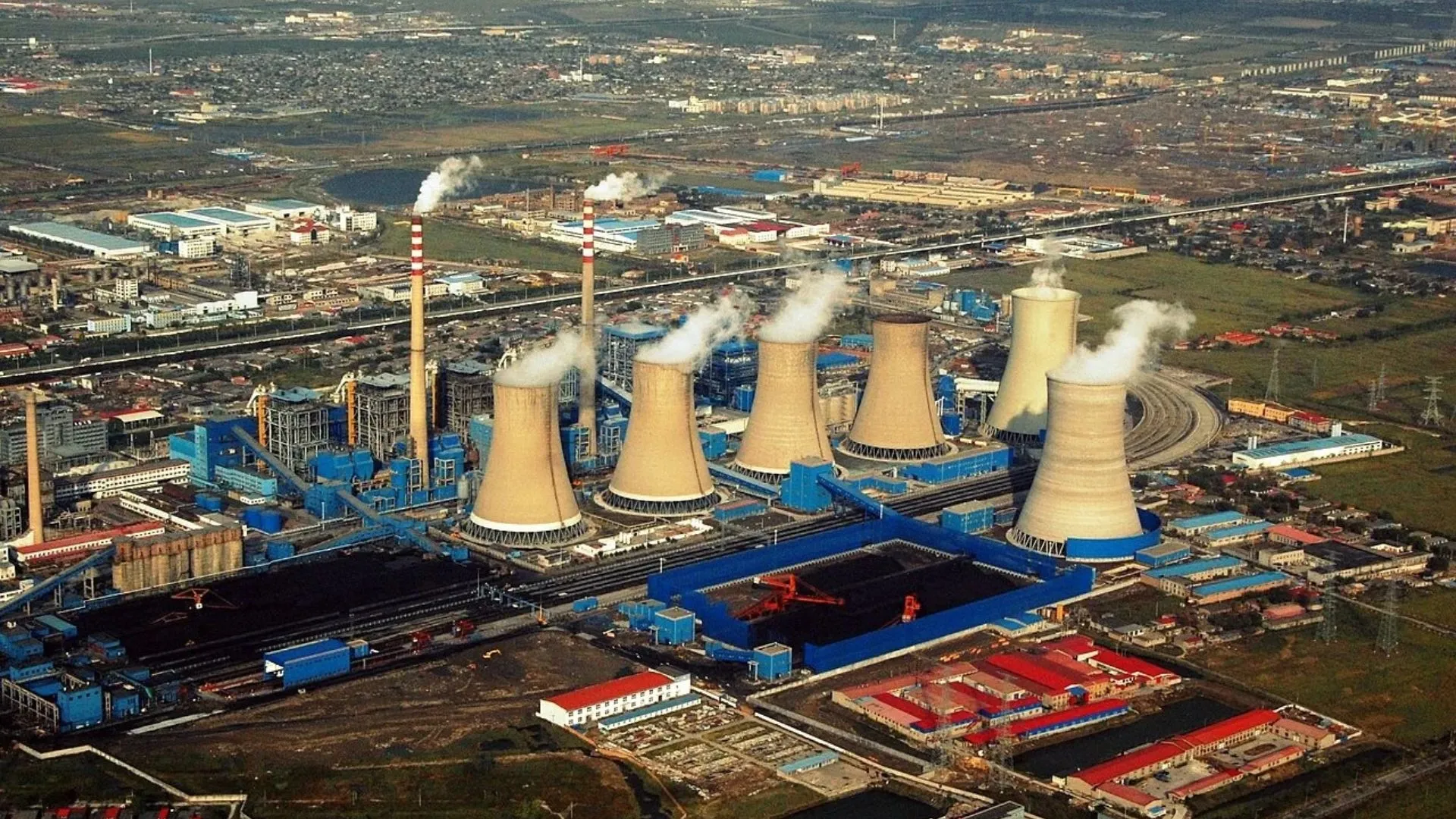
A 660-megawatt coal-fired unit began commercial operations Thursday in Golmud, in China’s northwestern Qinghai Province, after completing a 168-hour trial run, state broadcaster CCTV News reported. It is the first of two units at China’s highest-altitude ultra-supercritical coal power project, which sits at an average elevation of about 9,350 feet (2,850 meters).
The project is designed to help stabilize Qinghai’s power grid by adjusting its output as renewable generation fluctuates. Bringing the first unit online meant tackling two problems inside the boiler.
Thin air makes it harder to burn coal efficiently, and the fuel’s high alkali content can cause slag and ash to build up.
Lower atmospheric pressure at the site reduces the amount of oxygen available for combustion. The project uses oxygen-assisted startup to help get the boiler firing and separate combustion controls to keep it running steadily when the unit is operating at very low output.
Engineers also customized the boiler to handle high-alkali coal, which can leave deposits inside the system. Together, the changes allow the unit to burn the fuel while varying its output to match demand on the grid, according to CCTV News.
The unit uses ultra-supercritical technology, which typically operates with steam above 1,076°F (580°C) and at pressures above 24 megapascals.
Those conditions allow a plant to generate more electricity from the same amount of coal. CCTV News reported that the project uses less coal per unit of electricity supplied than China’s national benchmark.
The ability to keep the boiler running at very low output gives the grid more flexibility when renewable generation is strong.
Source link