As demand for artificial intelligence and cloud computing drives a rapid data center expansion, energy infrastructure is becoming one of the industry’s biggest challenges. Finnish technology company Wärtsilä believes flexible engine-based power plants could help meet that demand while reducing costs, water consumption and land use.
In a new study, the company estimates that powering 55 gigawatts (GW) of off-grid data center capacity with flexible engines instead of combined-cycle gas turbines (CCGTs) could save €196 billion ($ 220 billion) over 20 years. The scenario assumes global off-grid data center capacity reaches 55 GW by 2035, drawing on third-party forecasts and an assessment of announced projects.
The findings come as data center developers increasingly consider generating electricity on-site rather than waiting for grid connections. In many regions, electricity infrastructure is struggling to keep pace with new facilities, making independent power generation an increasingly attractive option.
Combined-cycle gas turbine plants generate electricity using gas turbines, then capture their exhaust heat to produce steam that drives a second turbine. This improves fuel efficiency compared with a simple-cycle gas turbine, making CCGT plants a common option for large-scale electricity generation.
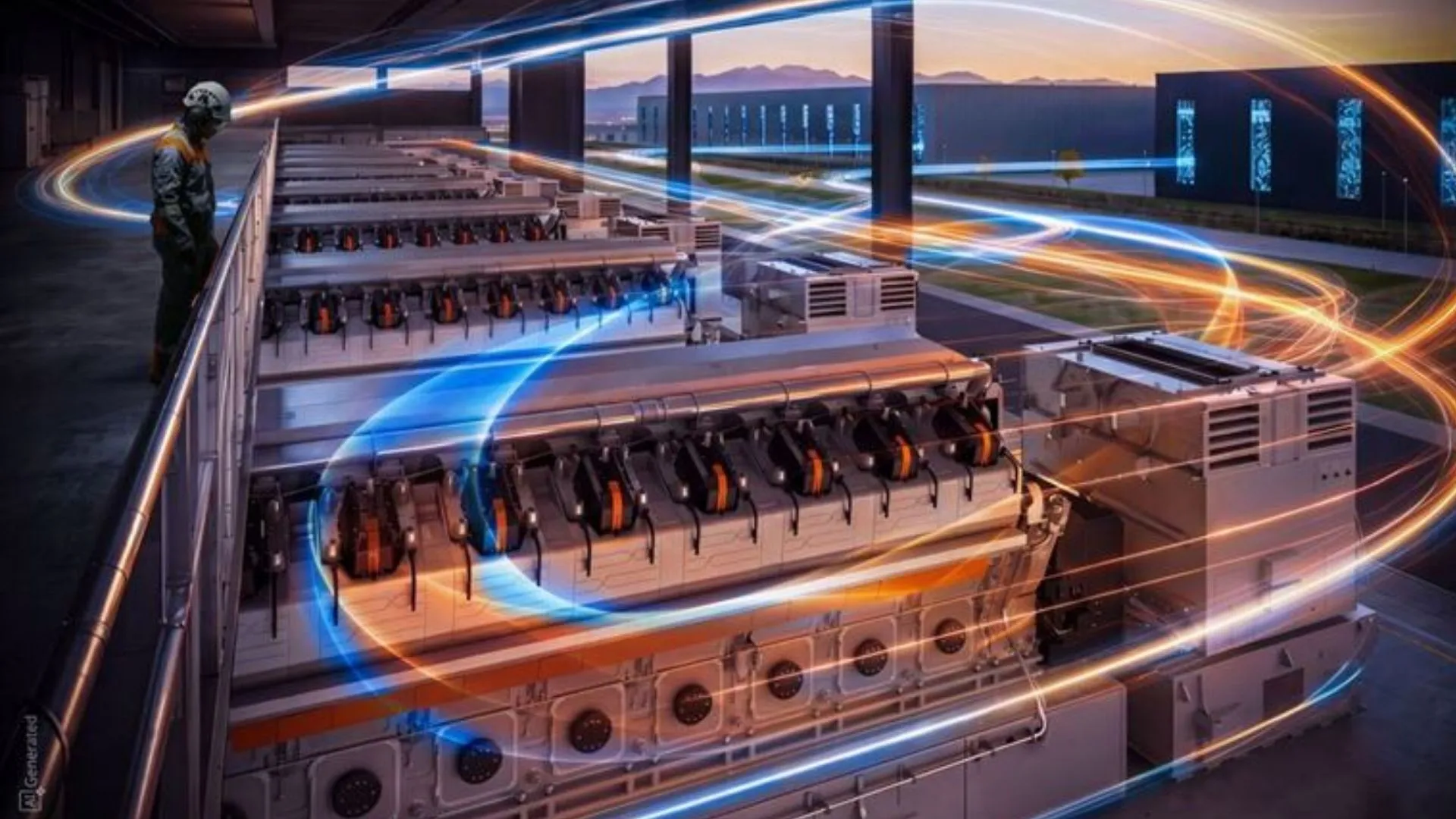
Wärtsilä is proposing a different approach. Power plants are built around flexible reciprocating engines. These engines can start, stop, and adjust their output relatively quickly, allowing operators to respond to changing electricity demand.
That flexibility is particularly relevant to data centers, which require a continuous and reliable power supply. Engine-based plants can be configured alongside energy storage systems to meet demand and provide backup capacity.
Source link