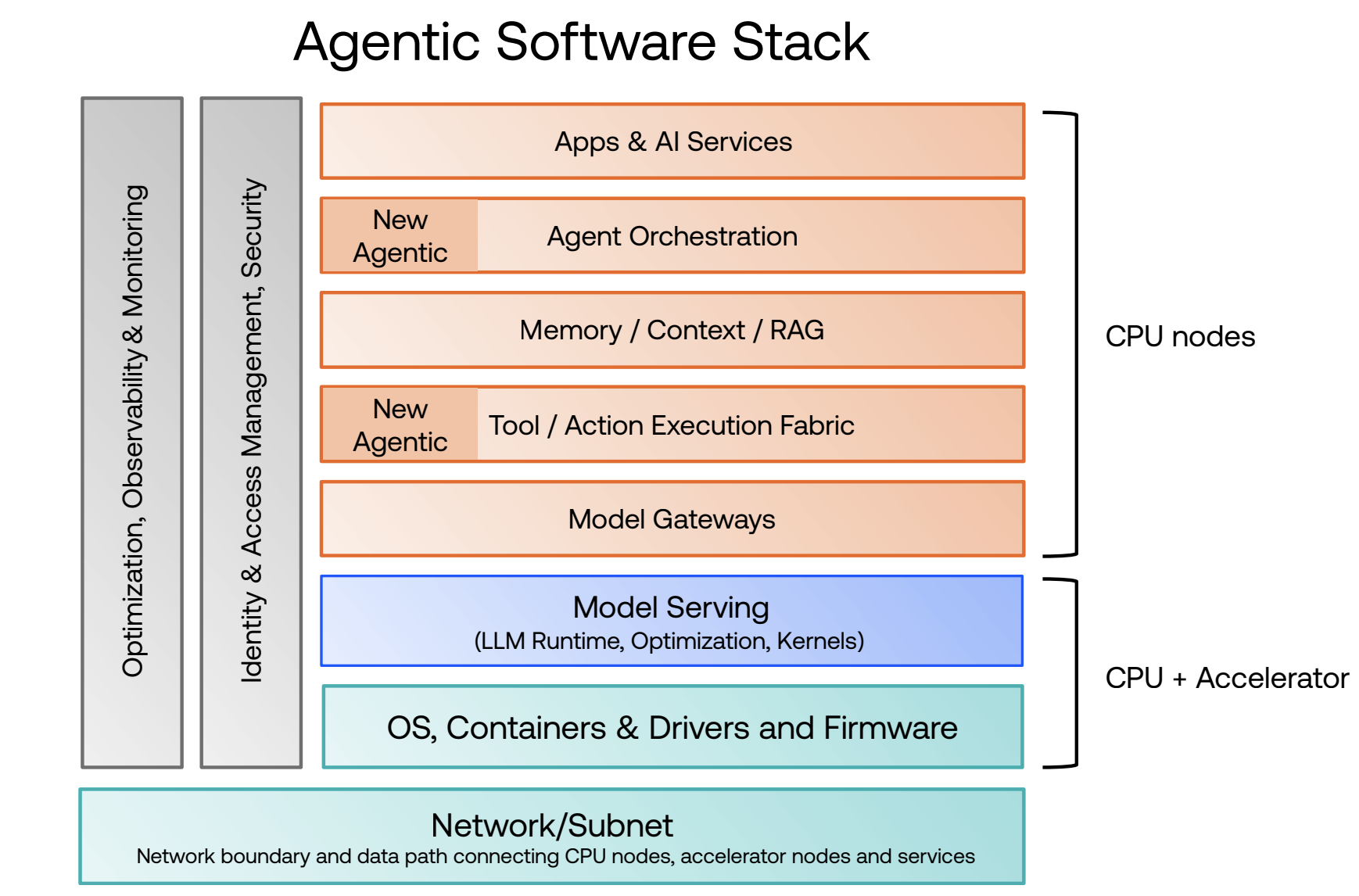
Agentic AI changes the CPU performance problem. A completed task can involve repeated model calls, retrieval, state management, tool execution, application interactions, policy checks and validation loops. Accelerators remain central to model execution, while CPUs coordinate and execute much of the surrounding system path from user intent to completed work.
This paper proposes a use-case-driven framework for evaluating that CPU contribution. It separates CPU-visible work into two complementary areas: common agentic framework functions and use-case-specific tool workloads. Five representative workload archetypes are used to capture distinct deployment venues, tool classes and CPU stress profiles. The paper then describes two complementary measurement approaches: component benchmarking, which emphasizes reproducibility and attribution and end-to-end benchmarking, which emphasizes realistic task-level outcomes.
The objective is not to prescribe a finished benchmark suite or a single figure of merit. It is to define the measurement boundaries, workload categories and methodological gaps that need industry agreement. In particular, replayable agent trajectories offer a path to separating CPU work from model and network effects while reducing the run-to-run variability introduced by non-deterministic agent behavior.
Source link