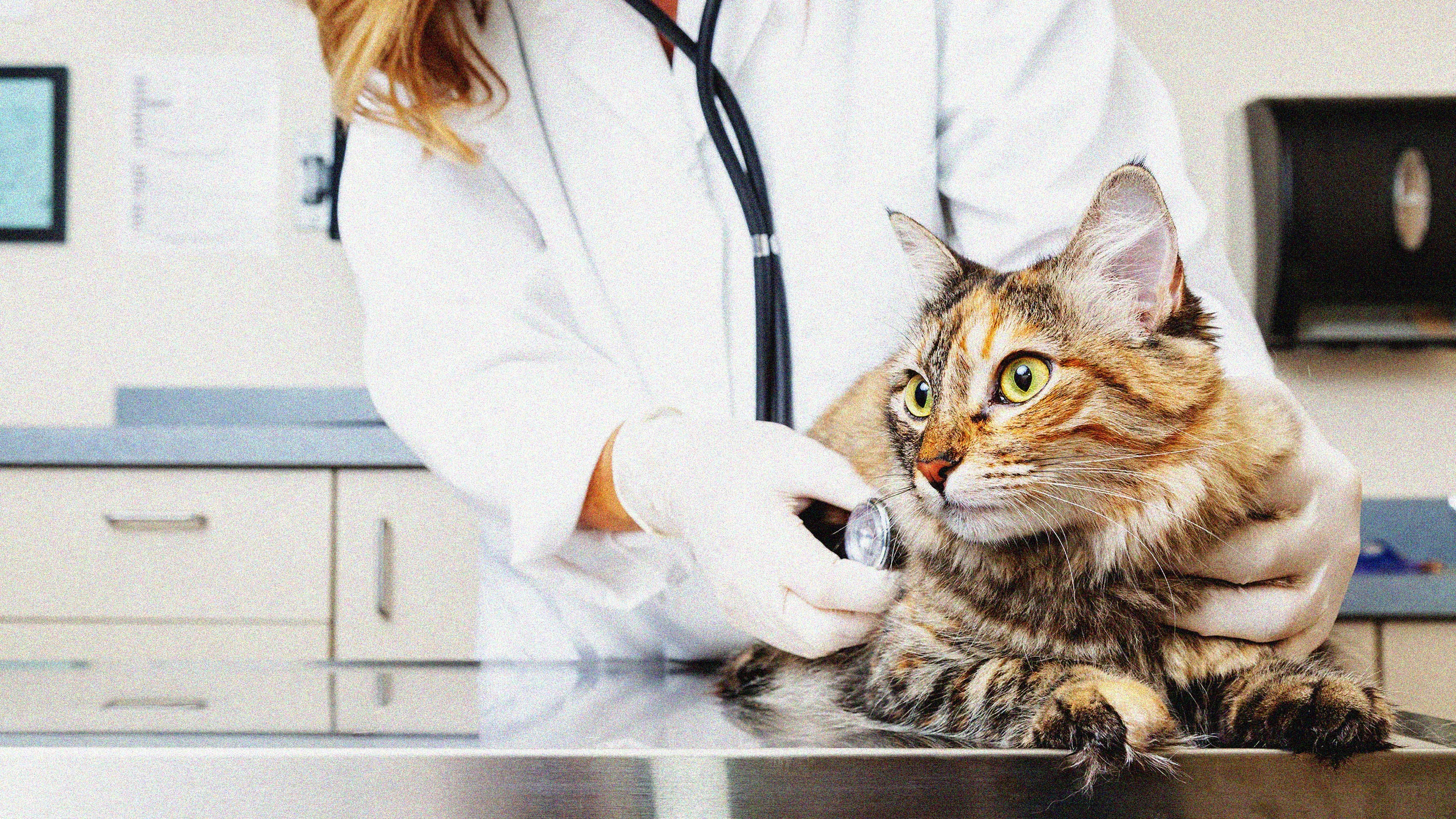
One day in 2024, Justin Laudadio found his cat, Chicken, writhing on the floor of his home in Feasterville, Pennsylvania, apparently in the midst of a seizure. Laudadio put Chicken in a carrier and raced to a veterinary hospital, preemptively grieving the whole way.
The veterinarians were able to stabilize Chicken, a brown tabby who was about 12 years old and diabetic, during a three-day hospital stay. Though he was diagnosed with acromegaly, a hormonal disorder caused by a benign pituitary gland tumor, it never became entirely clear what caused the seizure.
But one thing was very clear: Chicken’s care was going to be costly. Even before extra testing that would add thousands of dollars, the bill was $9,500. It was an eye-watering figure, but Laudadio and his wife, Airy, agreed to cover it before they even knew whether Chicken would make it. “You do what you have to do,” Justin said.
Veterinary care in the United States has grown much more advanced in recent years; Chicken, for example, has his own cardiologist. It’s also become much more expensive, partly because of the costs of more sophisticated medicine. At the same time, vet bills have climbed as the industry has become increasingly consolidated, with more clinics and emergency hospitals now owned by corporate groups and private equity firms.
The consequences of these rising costs vary widely depending on pet owners’ ability to pay. Some can afford human-level care for their pets . Others may be forced to take on debt, forgo treatment, or even surrender or euthanize their animals.
Source link