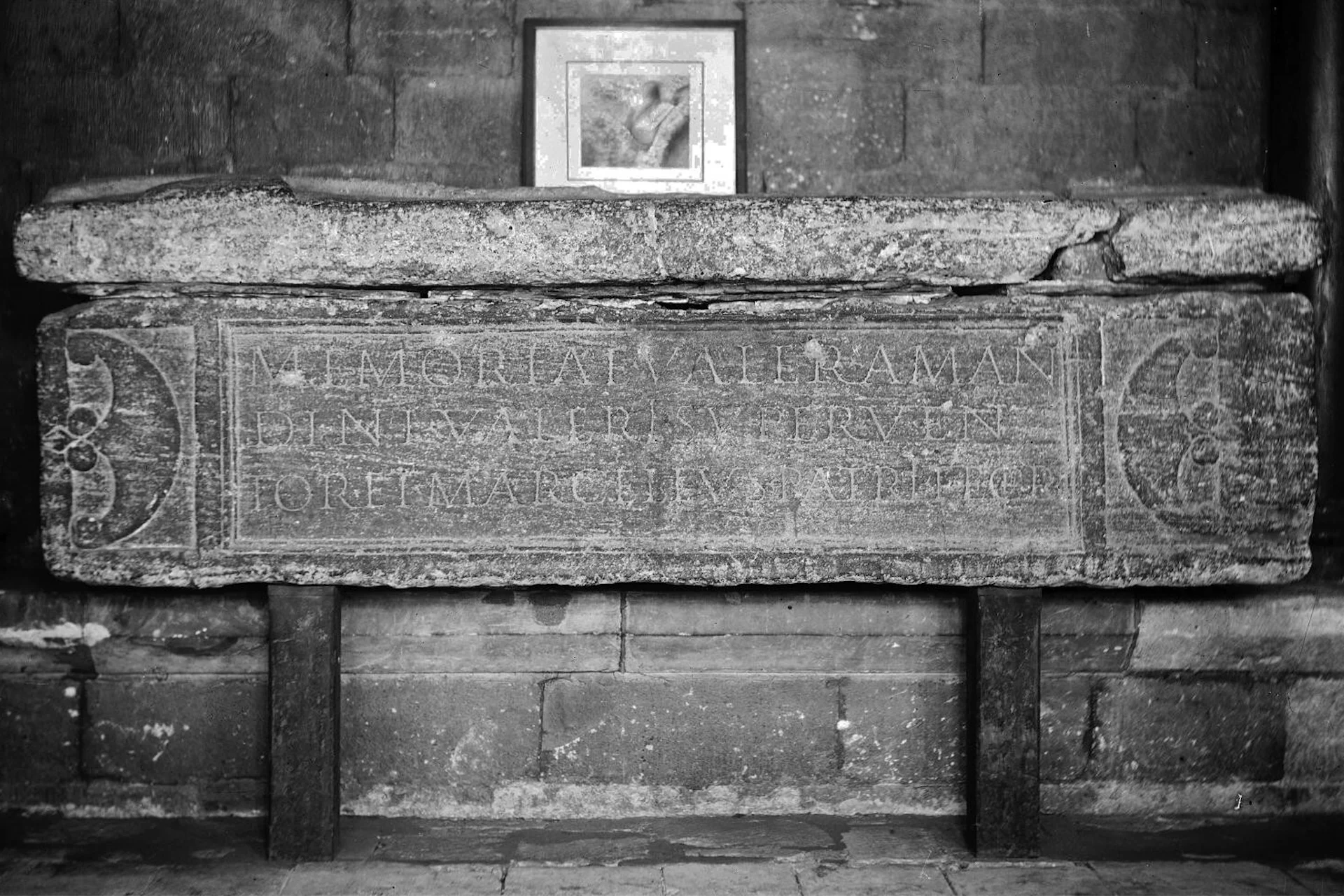
More than a few things have been strange about the large, late Roman-era sarcophagus first unearthed from the grounds beside Britain’s famed Westminster Abbey over 200 years ago. Three lines of Latin, deeply engraved into its limestone exterior, claim that this ancient sarcophagus once entombed Valerius Amandinus, an obscure figure apparently from Rome’s ancient outpost of Londinium—but sometime in the 11th century his body had clearly been replaced.
The first clue was the incongruous lid atop Amandinus’s 4th-century burial container: a single, rectangular slab of sedimentary oölitic limestone tapered in late Anglo-Saxon style and chiseled into a relief-carving of an early medieval cross. But now—thanks to some detailed carbon-14 dating, a dive into the Abbey’s medieval records, and a deeper analysis of the sarcophagus itself—the identity of the coffin’s new occupant has been narrowed down to just two candidates.
Both are former 11th-century abbots of Westminster, according to the Abbey’s consulting archaeologist Warwick Rodwell, one named Ælfwig, who led the monastery in this role from 993 to 1020 CE, and another named Wulfnoth, who succeeded him until 1049 CE. Rodwell’s personal assessment, however, is that Ælfwig is the more likely of the two.
“Ælfwig was already a monk of Westminster when he was elected abbot, and there is no evidence to suggest that he ever left the abbey,” Rodwell wrote in his new study published with the Journal of the British Archaeological Association on Tuesday.
Source link