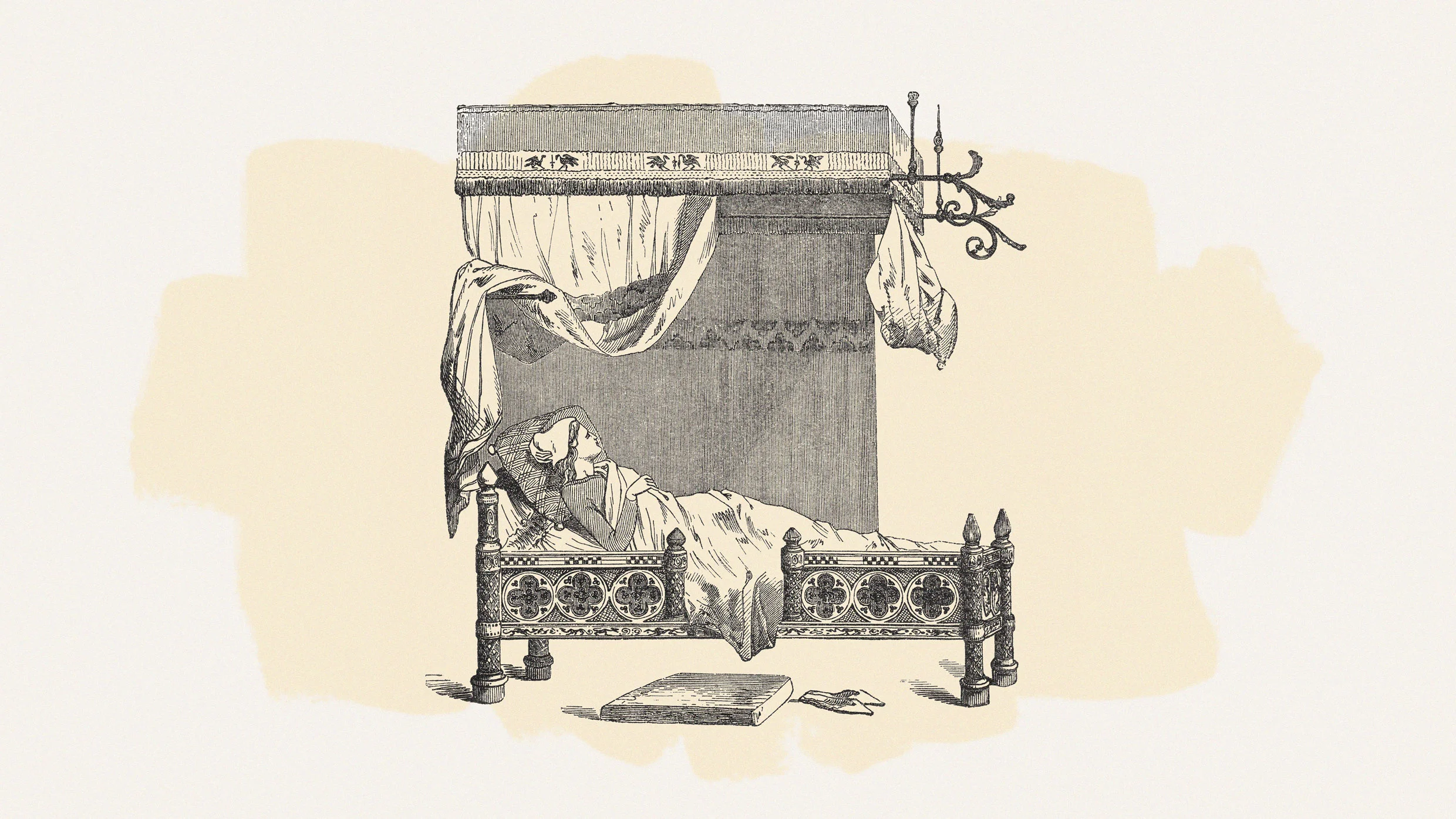
The year is 1600. The sun has just set and you’re tucked up on your canvas sack on the floor.
But shut-eye in medieval times had a twist: instead of the eight-hours-a-night routine we’re familiar with, going to bed in the olden days meant getting up around midnight for a chunk of time known as “the watch” before hitting the hay again until morning.
Maybe you get on with some chores. Maybe ponder or pray for a couple hours. Maybe you pen a letter by candlelight. Maybe you even had sex. Then, back to bed until sunrise.
Unlike our modern goal of one uninterrupted stretch of slumber, in pre-industrial Europe, sleeping in these two distinct stretches—called biphasic sleep, or sleeping in two phases—was common.
This past summer, inspired by her medieval studies, Anna Fox, a graduate student at North Carolina State University, decided to experiment with waking between 1:30 a.m. and 3:30 a.m. In this time, she read books, wrote letters, journalled and worked creatively, documenting her experiment on social media. Thousands tuned in.
“It was kinda just curiosity to see what would happen,” Fox tells Fast Company. “Part of me was secretly hoping I was built for a medieval lifestyle and it would cure my chronic fatigue.”
While that didn’t happen, what Fox didn’t expect was how drastically this time for contemplation would affect her creativity. “I was writing better poetry than I’ve ever written in my life,” she says. Her rules for this experiment: No overhead lighting, no phone, and no to-do list items.
Source link