One of the reasons plastic has become so ubiquitous is that, generally, it’s very chemically stable, meaning it does not readily react with the substances around it. That’s why this material is so often used for food packaging and water bottles.
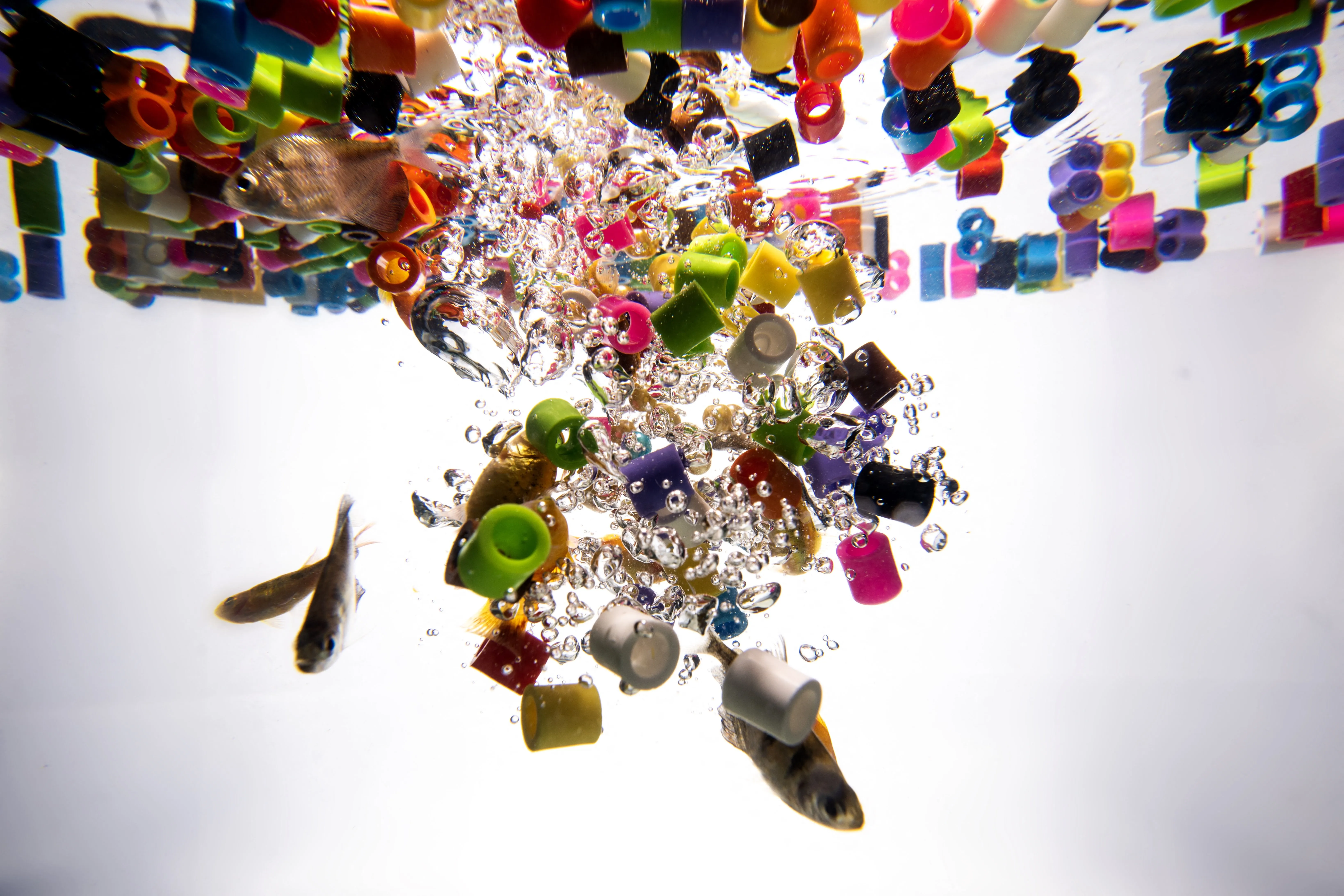
The same was thought to be true of microplastics—those tiny pieces of debris that break off from larger plastic objects and which, according to numerous studies, have spread to virtually every ecosystem on the planet. But scientists at Columbia University and UC Berkeley have just discovered that water can make the surfaces of microplastics chemically active and turn them into a potential hazard.
According to the findings of the article published in Nature, this activity can trigger the spontaneous formation of chemicals capable of altering other molecules, like those that are essential for living organisms. The phenomenon, the authors note, occurs even under normal environmental conditions, without the need for sunlight or other agents that cause plastic degradation.
So how can microplastics be so reactive when bigger plastics generally aren’t? The scientists suggest this has to do with the greater available surface area for these reactions to occur.
“As plastic fragments into smaller and smaller particles, its surface area increases enormously,” Wei Min, a professor of chemistry and biomedical engineering at Columbia University, said in a press release.
Source link