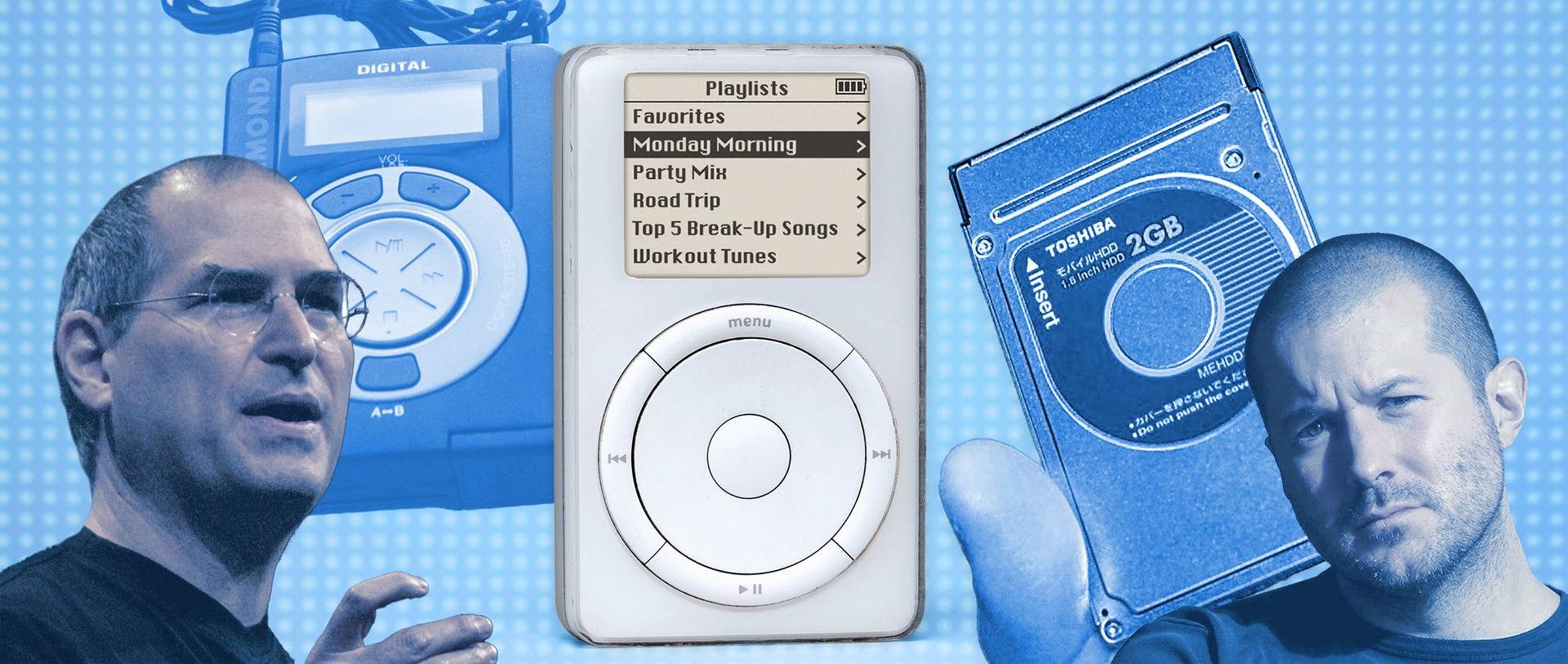
The iPod is long gone now, but it was the product that turned around Apple's fortunes, got PC users to take the Apple brand seriously, established Apple as a player in mobile devices, and went on to revolutionize the music industry and lay the groundwork for the iPhone. And it did all of that in a tiny window of time, from its introduction in the fall of 2001 to the rapid rise of the iPhone beginning in 2007.
Here are 25 things you might not know about how the iPod came to be, and its legacy.
In the year before the iPod began development, Steve Jobs introduced a whole new concept in order to sell Macs: the "Digital Hub." The idea was that a proliferation of new gadgets — most notably digital cameras and digital video camcorders — worked best when connected to a computer, and that meant a Mac. This was the origin of the iMovie app, which exists to this day.
But despite Jobs's personal love of music, he never really noticed the rise of MP3s, Napster, and the new wave of MP3 players (like the Diamond Rio) that were hitting the scene. It was only in late 1999 that Jobs realized that he had been so focused on photos and video that he had missed the digital music revolution.
"I felt like a dope," Jobs told Fortune's Brent Schlender. "I thought we had missed it. " Apple quickly reached out to the developers of SoundJam, as well as another MP3 app called Audion, and made it clear that it was interested in bringing those developers to Cupertino to work on a crash project that became iTunes.
Source link