Information has always shaped human civilisation. From ancient stories and religious texts to newspapers, television and social media, the way people share information influences what they believe, how they make decisions and whom they trust.
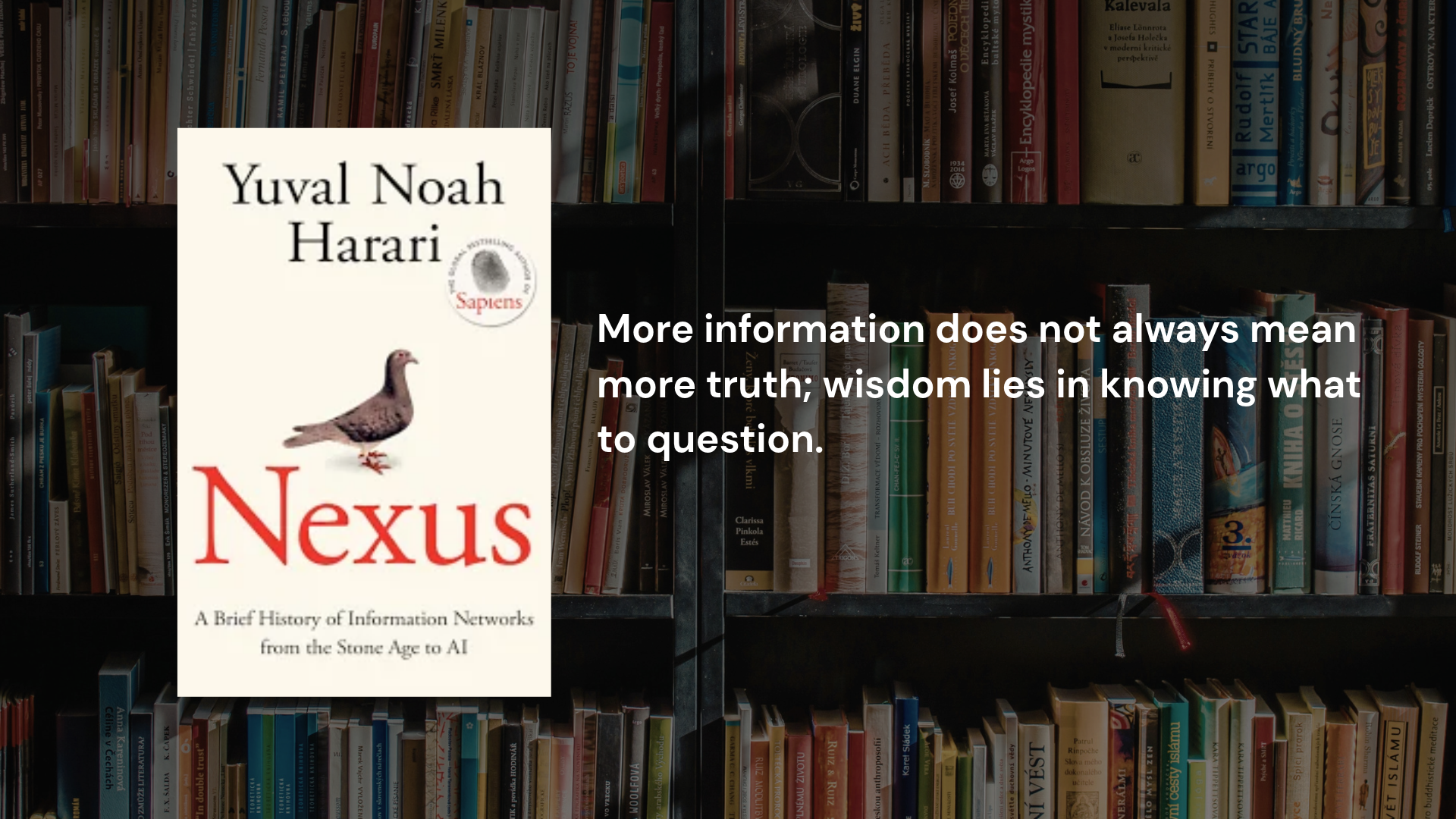
In Nexus, historian and author Yuval Noah Harari examines how information networks have shaped human history and how they may influence our future. Published in 2024, the book explores the relationship between information, power, truth and the development of artificial intelligence.
Harari challenges the assumption that having more information automatically makes societies wiser or better informed.
What matters is how information is organised, who controls it and whether the systems that distribute it help people correct their mistakes. Here are five important lessons to learn from Nexus and how they apply to the world we live in today.
One of the most important lessons from Nexus is that the availability of information does not automatically make people better informed.
We often assume that access to more facts, news and opinions will help us understand the world more accurately. However, information can also be misleading, incomplete or deliberately manipulated.
Throughout history, information networks have helped societies organise themselves, preserve knowledge and cooperate on a large scale. Yet the same networks have also spread myths, propaganda and misinformation.
Harari explores this tension through historical examples ranging from religious institutions to modern political systems. The same challenge exists today. Social media allows us to access information within seconds, but it can also expose us to misleading headlines, unverified claims and content designed to provoke emotional reactions.
Source link