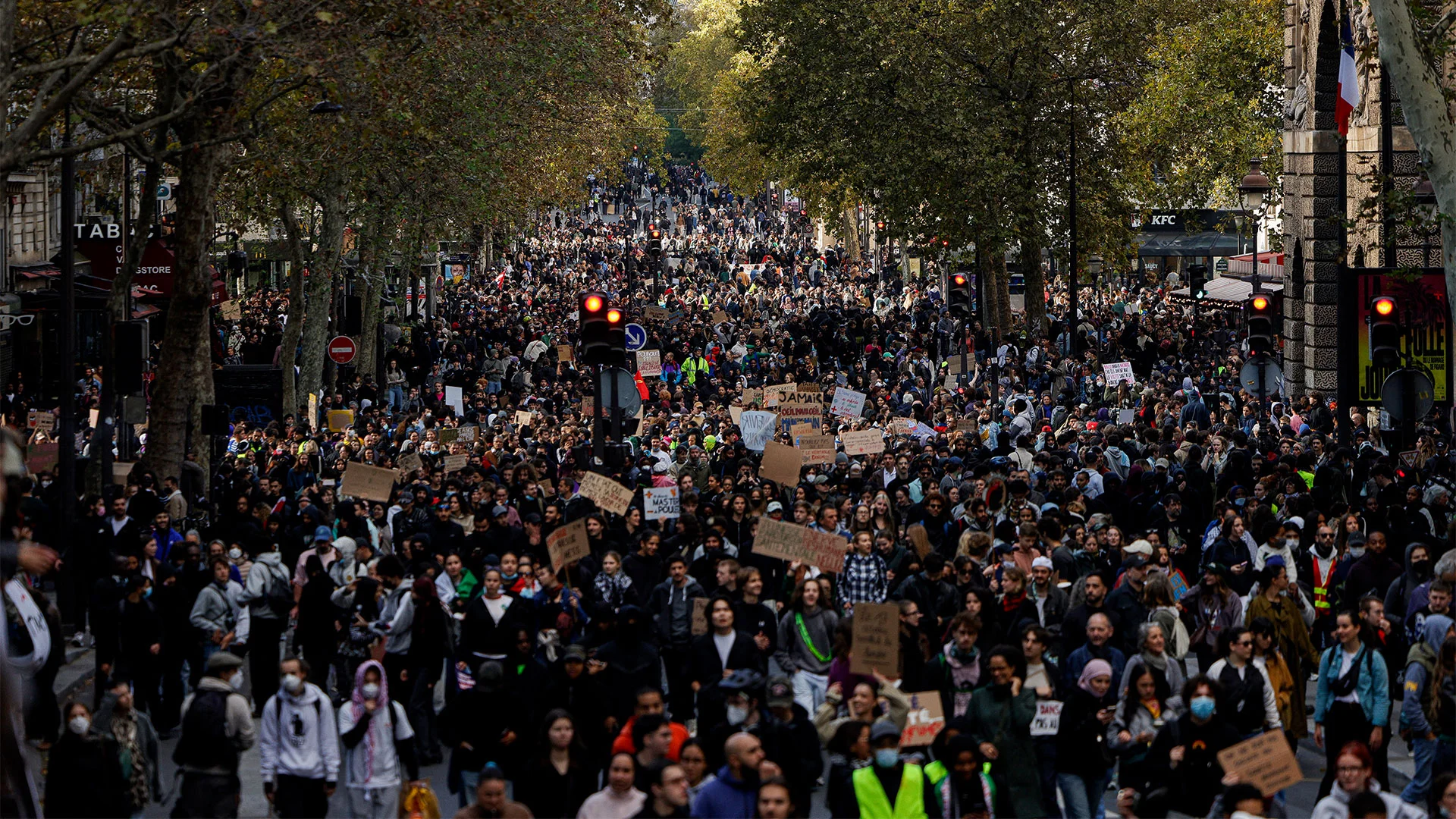
Over the weekend, images of burnt-out cars and smashed-in store windows across France swept across social media, as hundred of thousands of protestors took to the streets.
On Saturday, that same day, a fresh round of 3,000 “No Kings” events took place in the U.S. as Americans gathered in all 50 states to encourage early voting, with many showing up at local precincts to cast their ballot ahead of the upcoming November 3 midterm elections.
The disparity in political activity is startling, leaving many asking why so many young people are taking to the streets across Europe—not only in France, but also in Belgium, Spain, and Portugal.
The short answer is: While the poor conditions plaguing France’s high schools were the initial catalyst for the massive nationwide protests, they have since expanded into a much larger movement, sparking unrest across Europe over the skyrocketing cost of living. From high housing costs, to higher food prices, and now fuel, Europeans, like Americans, are suffering through an affordability crisis.
Along with their teachers, French high school students are demanding better funding for their education amid a massive teacher shortage, which has led to ballooning teacher absences. France’s largest labor union, who support the protests, are calling for lower prices and increased wages, The Guardian reported.
In France, President Emmanuel Macron has vowed to restore calm and meet this week with protestors, but the movement is already gaining ground in Belgium, Portugal, Spain, and Italy.
In Belgium, 150 people were arrested over the weekend in Brussels, after riots broke out on Saturday amid protests to cuts in French-speaking education, according to The Brussels Times .
Source link