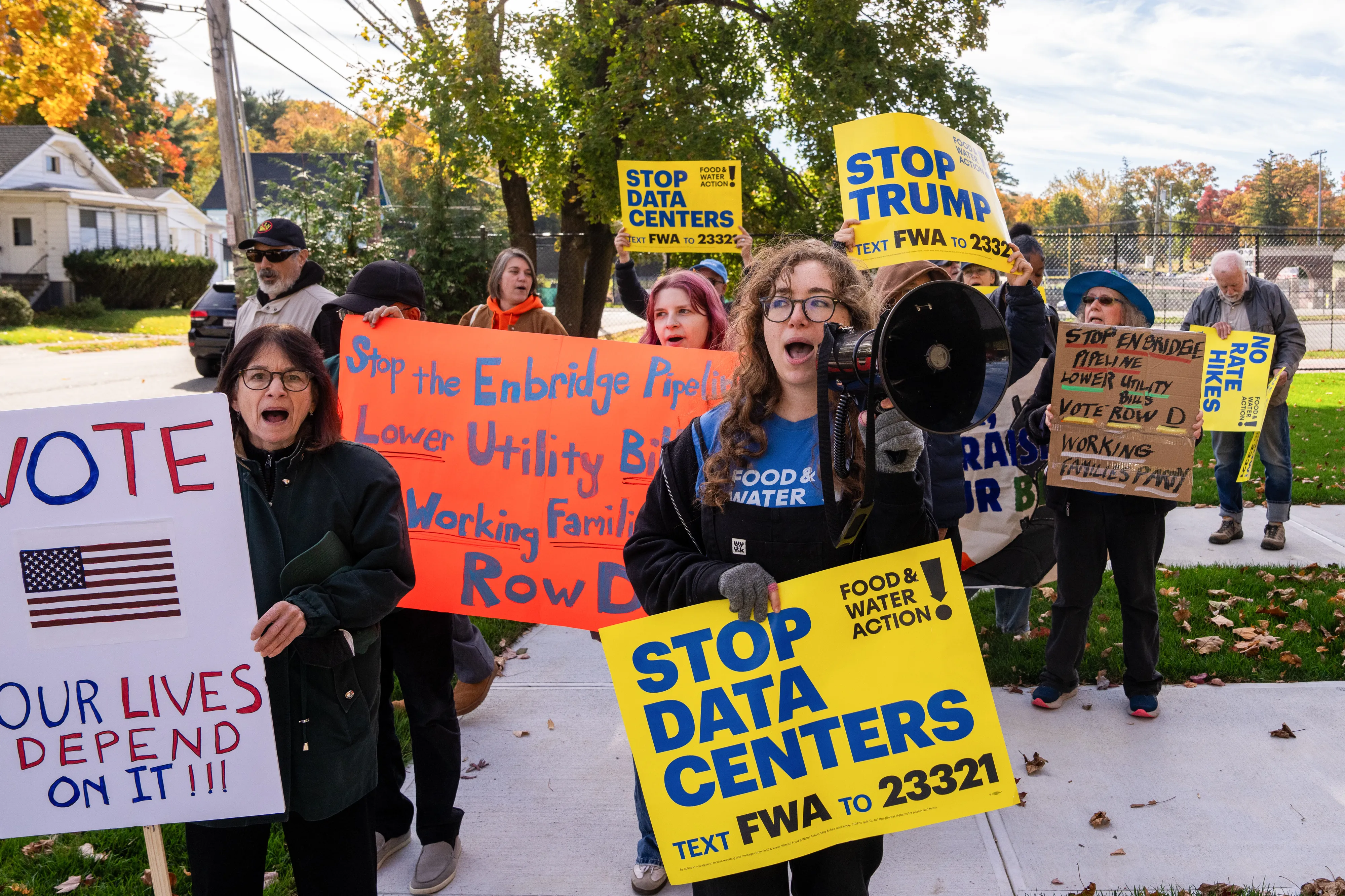
More than 40 voting initiatives yielded almost nothing but resistance to data-center projects.
The 2026 midterm election blue wave, which shifted the balance of power in Congress and across state races toward Democrats, can be seen as a repudiation of AI and the controversial data centers that provide its computing power. Data center proponents have heavily backed President Donald Trump and Republican candidates, underscored by xAI CEO Elon Musk investing hundreds of millions of dollars into Texas midterm campaigns to support the industry.
But in many parts of the country, voters didn’t need to make their voices on data centers heard through candidates. They had direct initiatives on the ballot this week that would decide whether data center projects would move ahead in their districts.
In line with a growing backlash against data centers and AI, voters supported about 40 election-day measures that would restrict the construction of new data centers, with only one result — in Harwood, North Dakota — favoring data center expansion.
(Disclosure: Ziff Davis, CNET’s parent company, in 2025 filed a lawsuit against OpenAI, alleging it infringed Ziff Davis copyrights in training and operating its AI systems.)
As broken down by the website Data Centers on the Ballot, Ohio had the most number of voting measures: 21, all of which were in favor of restrictions.
Maine, Illinois, Kansas, New Jersey, California, Florida, Nevada, North Dakota and Wisconsin were the other states with data center voting.
Six elections were held earlier in 2026 in California, Michigan, New Hampshire and Wisconsin, with all of them finding voters opposed to allowing data center builds to continue without new restrictions.
Source link