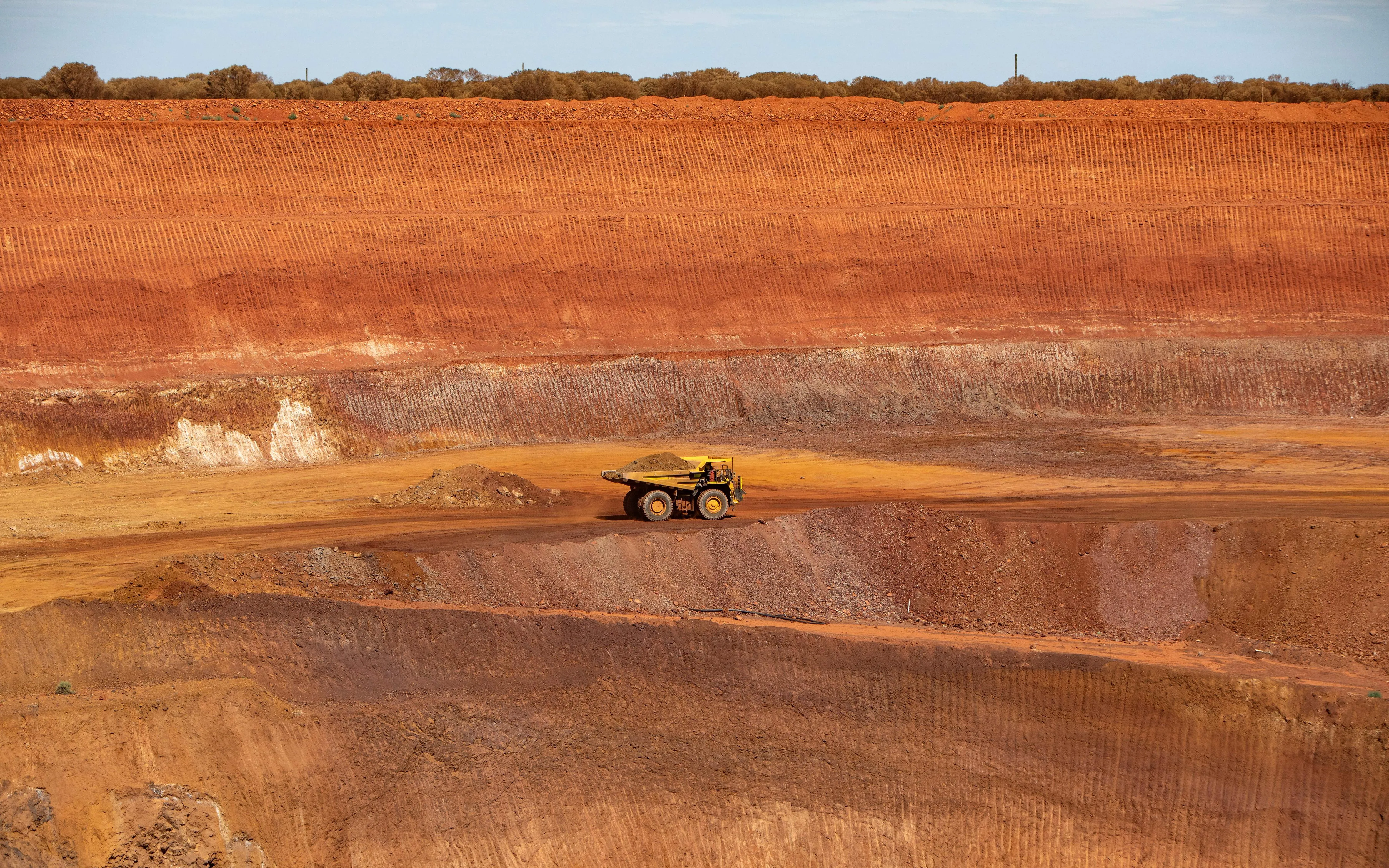
The global campaigns to break China’s dominance of vital rare-earth markets are shaping up into one of the signature geostrategic struggles of the early 21st century. Hundreds of mining companies, government agencies, and industrial facilities scattered across North America, Australasia, and Europe are striving to wrest share from Chinese firms, which control roughly 90 percent of the markets for rare-earth oxides and rare-earth metals.
Rare earths are the ingredients on which vast and crucial manufacturing categories depend: semiconductors, LEDs, lasers, displays, metal alloys, optical lenses, and catalysts for petroleum and chemical processing. Most important, though, are permanent magnets. Essentially all powerful electric motors are based on rare-earth permanent magnets. These motors are the heart of electric vehicles, heating and cooling systems, robots, appliances, and tools. rare-earth magnets are also in the motors for military systems ranging from tactical drones to ballistic-missile submarines.
This article is a collaboration between Foreign Policy, the global magazine of politics and ideas, and IEEE Spectrum, the flagship magazine of the IEEE.
Succinctly put, any industrial power that wants to remain competitive in vital, high-tech industries must have access to a steady supply of rare-earth elements or products based on them. ” The countries that are now scrambling to piece together alternative supply chains, whether by themselves or in cooperation with each other, face daunting odds. Never mind the sheer momentum of the Chinese rare earths juggernaut. Few industries can match the rare earths business for instability, risk, intrigue, and sheer frustration.
Source link