Life probably sucked for Shanidar A, a Neanderthal who lived around 75,000 years ago. First, they hurt their face so bad that the injury split a tooth and rotated others. But they survived. Later, a wooden spear punctured their shoulder blade—presumably punching a hole through their lung and major arteries. And that was it for Shanidar A.
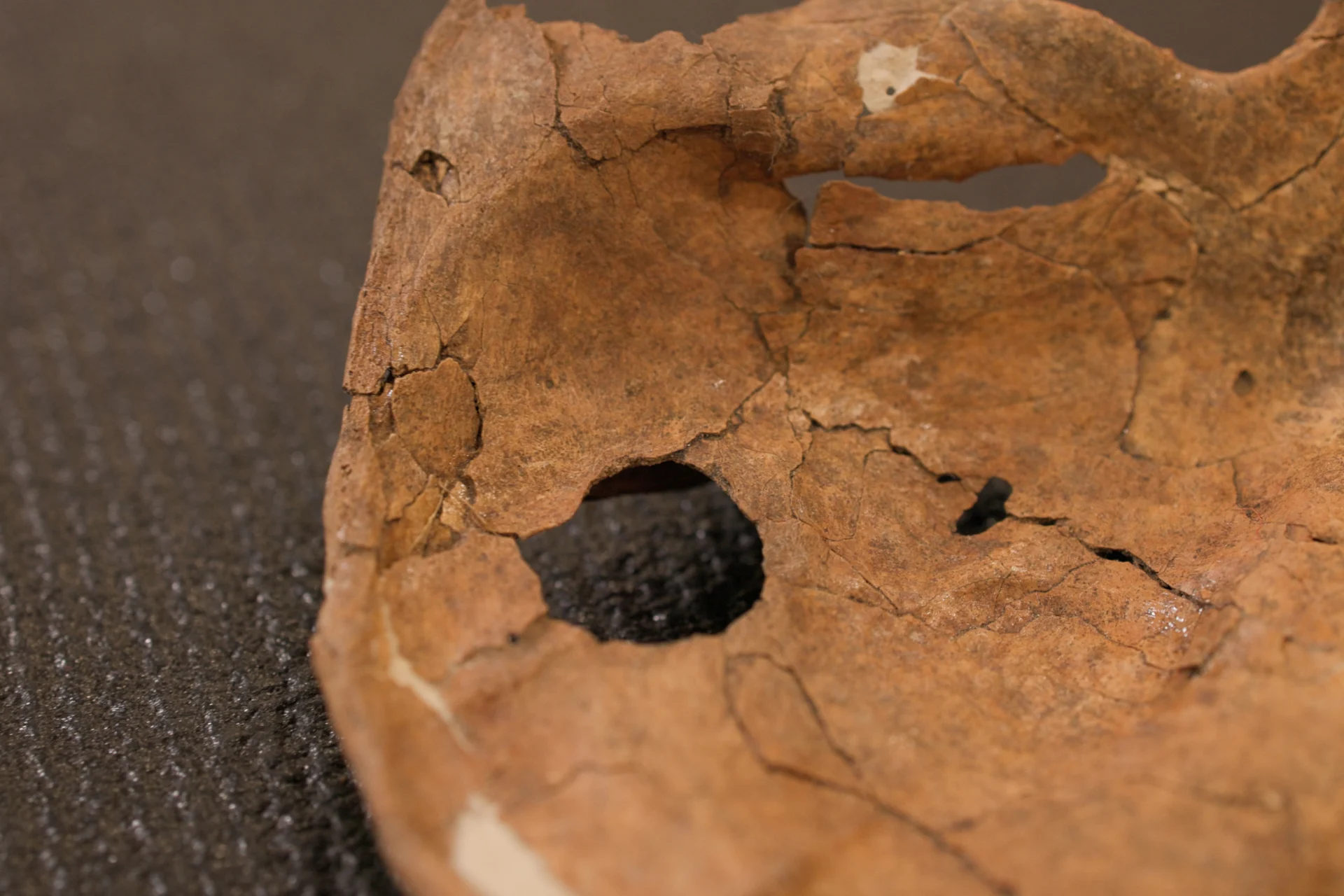
But their remains did survive the test of time—allowing researchers to retrieve Shanidar A’s bones and share their story. In a study published today in Scientific Reports, archaeologists describe unusual wounds on Shanidar A, one of five Neanderthals individuals buried together at Shanidar Cave in Iraqi Kurdistan. The remains were fragmented but well-preserved enough for the team to identify a right hand, two left ribs, a right-rib fragment, and seven teeth—some of which were split or rotated inward. There was a scapula (a broad, flat bone in the shoulder blade) with a clear, round hole about 0.6 inches (15 millimeters) wide, very likely caused by a spear. Further investigations showed the facial injuries were incurred while the individual was alive, whereas the shoulder wound was likely lethal.
“What is particularly remarkable is that we see evidence of two contrasting facets of human nature—care and violence—juxtaposed in the same individual,” Emma Pomeroy, the study’s first author and a bioanthropologist at the University of Cambridge in the U.K., told Gizmodo.
Cambridge archaeologist Graeme Barker has been directly involved in excavations at sites of prehistoric human occupation that archaeologists have been exploring since the 1950s.
Source link