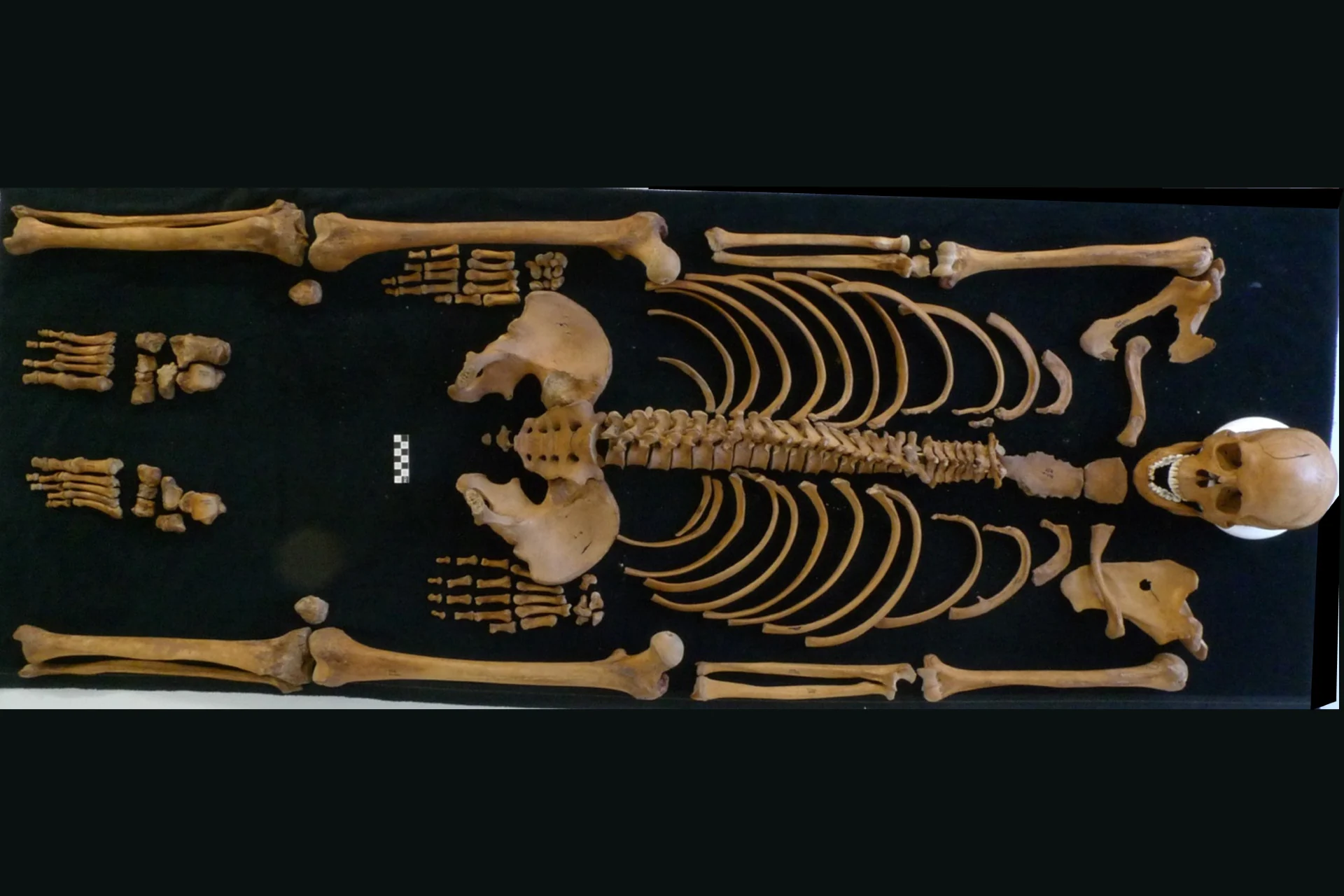
Around 2,000 years ago, a Roman soldier, presumably off duty, was stabbed to death. His body lay on the ground for a while and was eventually chucked down a well with broken weapons. Then, for good measure, someone—who must have really disliked this guy—threw in 165 pounds (75 kilograms) of millstones and a stick.
When archaeologists uncovered his remains in 1977, they were understandably stunned—just what had gone on here? Initial research linked his death with the Frisian revolt in 28 CE, which didn’t seem right to Mark Driessen and Carol van Driel-Murray, both archaeologists at Leiden University in the Netherlands. So, the pair reopened this ancient murder mystery, inviting experts in archaeology, history, and forensics to chip in—a collection that’s now available in the book the pair edited, Victims of Violence from the Early Roman Fort Velsen 1. After considering new evidence, the researchers now believe it is unlikely that the Roman soldier was killed in the tax revolt and was likely the victim of unusually cruel interpersonal violence.
In a joint comment to Gizmodo, Driessen and Van Driel-Murray explained that the goal was to compile the evidence and present a “multiple-scenario approach” as opposed to a single theory on how the “murder” unfolded. As a result, the book doesn’t subscribe to a specific theory. However, the fresh round of research both revealed new data and provided a detailed assessment of each scenario, they explained.
“At the end we brought it together in the six-scenario approach,” Driessen and Van Driel-Murray added.
Source link