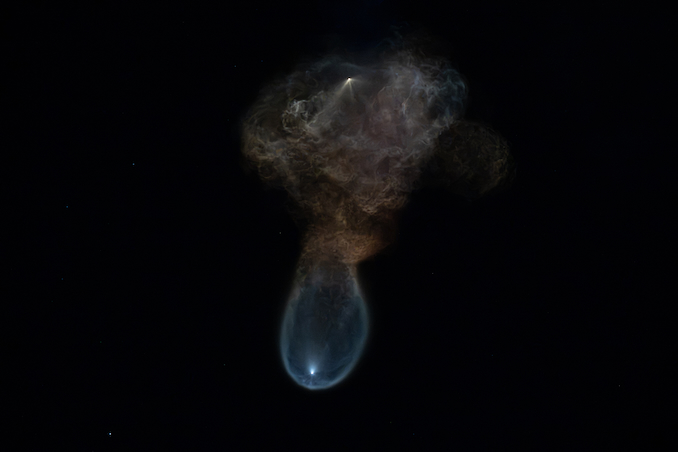
Under the soft glow of sunrise Tuesday morning, SpaceX’s Falcon 9 rocket roared away from pad 40 at Cape Canaveral Space Force Station at 6:33 a.m. EDT (1033 UTC) to begin a cargo run to the International Space Station.
The 35th Commercial Resupply Services (CRS-35) is carrying more than 6,300 pounds of science and supplies to the orbiting outpost when it docks to the space-facing port of the Harmony module on Thursday morning.
Fewer than 7.5 minutes after leaving the launch pad, the first stage booster, tail number B1096, wrapped up its eighth trip to space and back with a landing at Landing Zone 40 adjacent to the pad. A thunderous sonic boom rang across the spaceport and beyond, signaling its return.
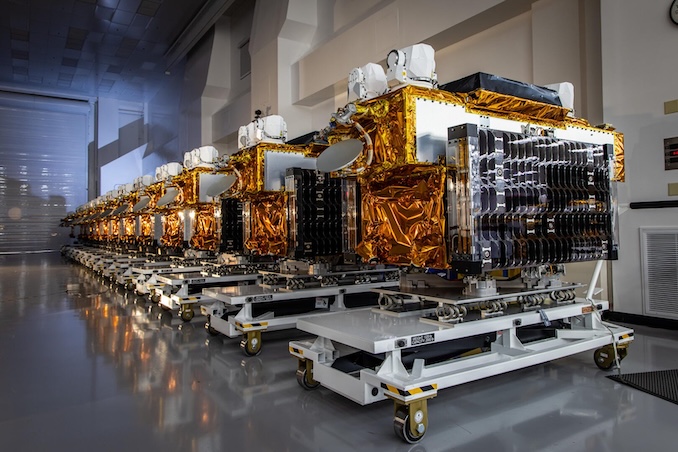
Two minutes later, the Cargo Dragon spacecraft, tail number C211, separated from the Falcon 9 rocket’s upper stage to begin a two-day journey to the space station. Onboard cameras showed views of two Roll-Out Solar Array (ROSA) wings, nestled inside Dragon’s unpressurized trunk, that will be installed to augment the power of the ISS.
Built by Redwire Space, these were the fourth and final pair of ROSAs bound for the space station. Each are capable of providing more than 20 kW of power for more than 10 years. NASA has been preparing for their installation with a series of spacewalks.
“It’s been quite the journey. Folks may remember back in 2017 when we launched the ROSA on CRS-11 and that’s really where we demonstrated this innovative approach to deploying a solar array,” said Gaurang Patel, NASA’s operations integration manager of its Low Earth Orbit Program, during post-launch remarks on the agency’s broadcast.
Source link