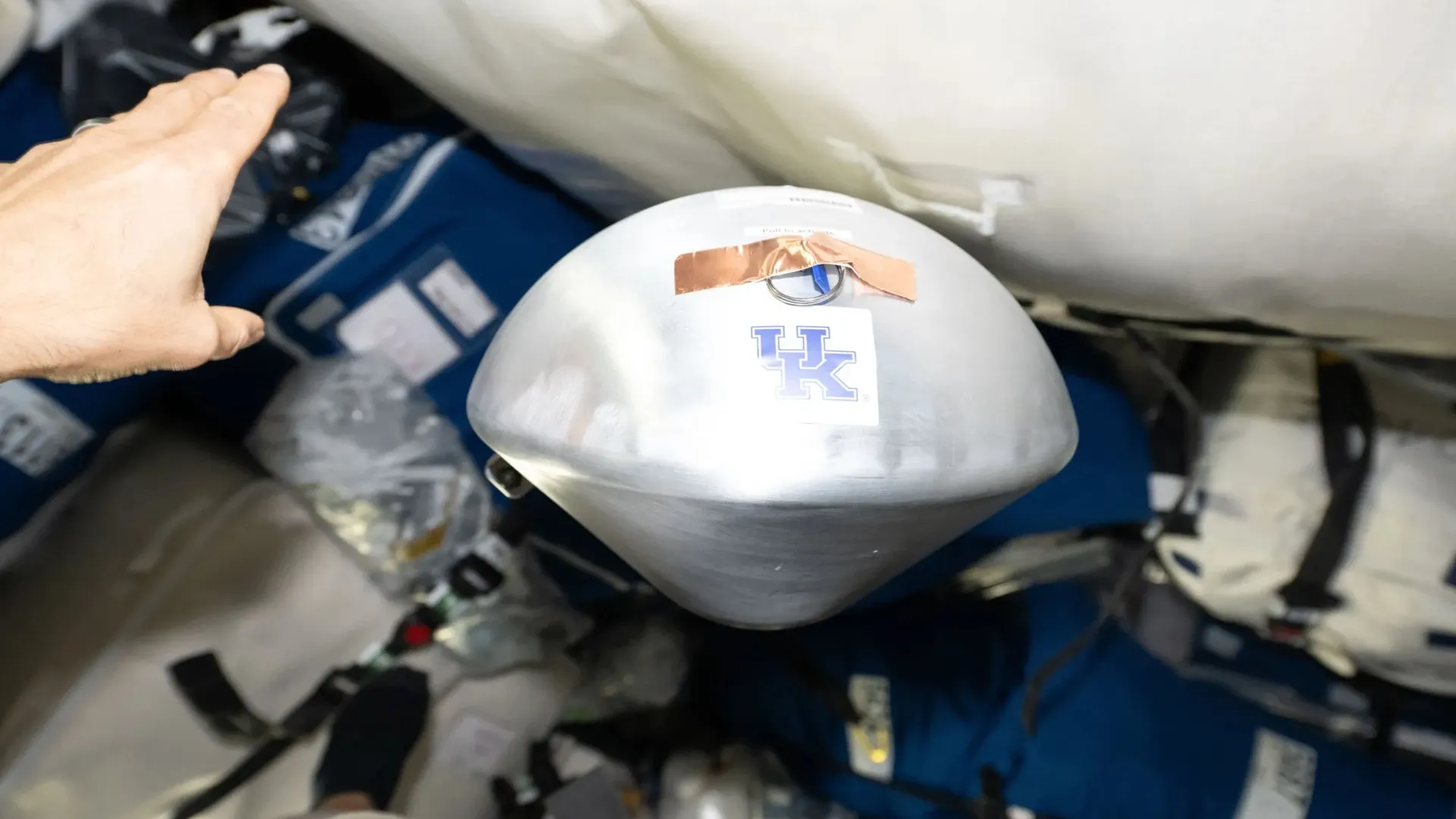
NASA is preparing to test 12 experimental heat shield capsules during the fiery destruction of a cargo spacecraft that departed the International Space Station on Friday, October 9. The tests could help develop thermal protection systems for future missions to the Moon, Mars and beyond.
Northrop Grumman’s Cygnus XL spacecraft was released from the station’s Canadarm2 robotic arm at 12:44 p.m. EDT, carrying thousands of pounds of discarded equipment and waste alongside the experimental capsules.
NASA plans to send the spacecraft into Earth’s atmosphere on October 12, where it will break apart during a controlled re-entry. The capsules will separate from the vehicle and collect data on how different heat shield materials withstand extreme conditions.
The experiment, known as Kentucky Reentry Probe Experiment-3 (KREPE-3), is a collaboration involving NASA, the University of Kentucky and other research partners. It uses spacecraft already scheduled for disposal to conduct relatively inexpensive tests of advanced thermal protection technologies.
The 12 capsules, designed by University of Kentucky students, contain sensors to measure temperature, pressure, movement, magnetic fields and light during atmospheric re-entry.
The capsules will transmit their measurements through satellite signals, allowing researchers to study how the materials perform under actual flight conditions.
“It’s a smart way to get flight data on materials that are still in development,” said Keith Peterson, a materials engineer at NASA’s Ames Research Center. “We’re essentially hitching a ride on a vehicle that’s already coming back to Earth.”
Among the technologies being tested is a 3D-printed heat shield developed through a project involving NASA’s Johnson Space Center and Oak Ridge National Laboratory.
Source link