The race for cheap, lightning-fast access to orbit has a new, giant metallic contestant.
On Monday, Chinese commercial startup Deep Blue Aerospace announced that the 5-meter-diameter (16ft) stainless steel propellant tank for its Nebula-2 rocket has rolled off the assembly line.
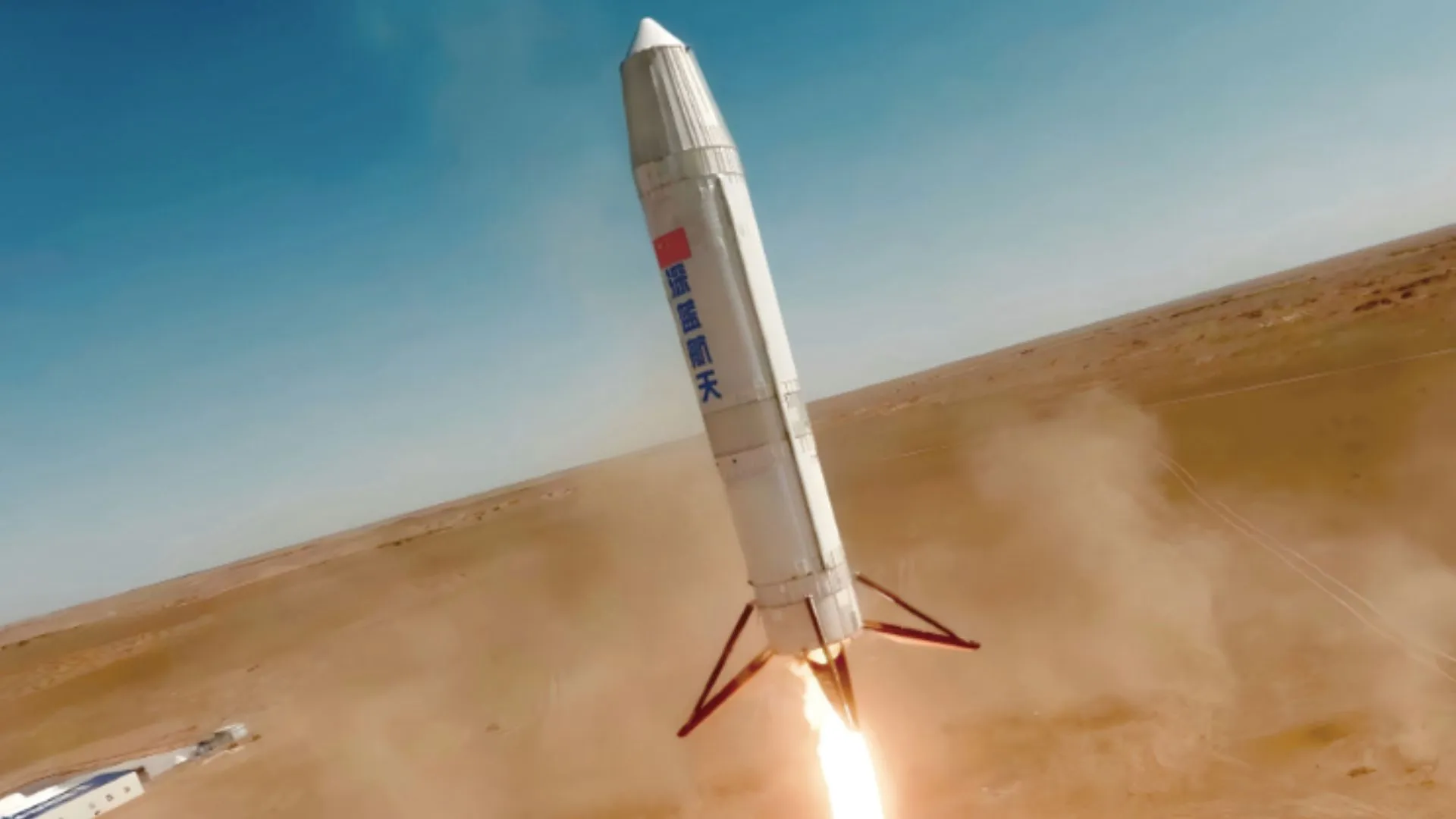
It is a massive piece of technology. Above all, it shows that China’s private space sector is ready to clone one of the most audacious tricks in modern rocketry: catching a returning booster mid-air with giant mechanical “chopsticks.”
Reusability and rapid turnaround times remain the core measures of success in modern commercial spaceflight. Deep Blue Aerospace is narrowing the technological gap with Western space leaders through its pad-captured, stainless-steel rocket design.
Designed to haul up to 25 tons into low Earth orbit, Nebula-2 is built for high-tempo commercial work. The first stage packs 11 Thunder-RS engines generating an immense 12,446 kilonewtons of liftoff thrust, while a single vacuum-optimized engine carries the upper stage.
Global Times reported that the Nebula-2 has been designed for over 20 reuses. It aims to become the workhorse for China’s expanding satellite internet network and commercial payload demands.
The newly completed 5-meter propellant tank sets a record for large-diameter stainless steel tank manufacturing in China’s private space sector. Tanks form the structural backbone of any rocket. Completing this component paves the way for a second-stage propulsion system test slated for the end of the year.
Designed for high payload capacity and cost efficiency, Nebula-2 can support a wide range of space missions. The rocket will deploy large-scale satellite internet constellations.
Source link