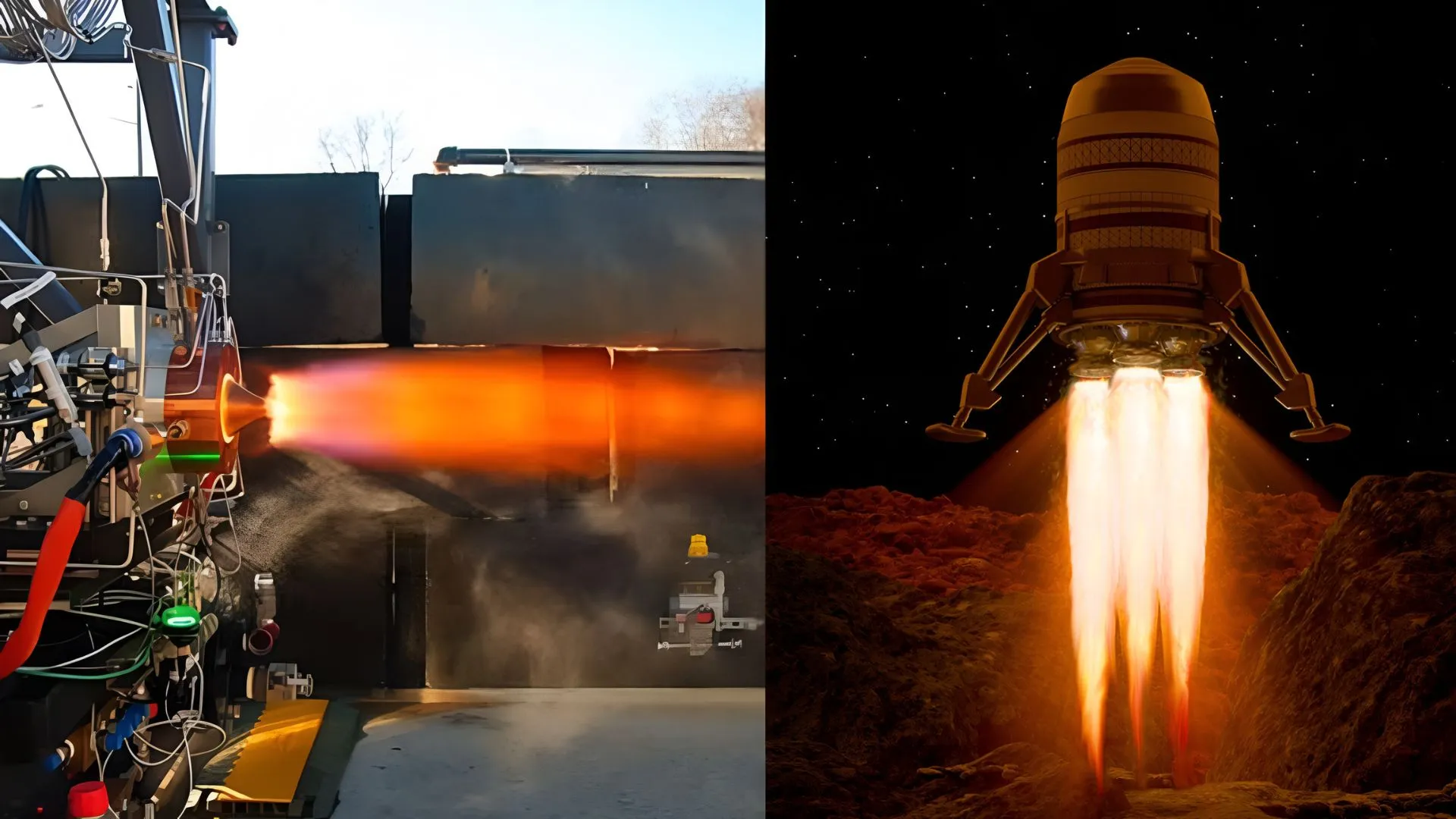
Venus Aerospace has opened a new propulsion test stand at Houston Spaceport as it pushes its rotating detonation rocket engine through increasingly demanding ground tests.
The new facility gives engineers more room to run higher-thrust firings and extend test durations. That allows Venus to examine how the engine behaves under conditions that more closely resemble flight.
The company demonstrated the capability on September 10 with a live hot-fire test at the newly opened stand. The event also brought together Texas aerospace officials, Houston leaders and representatives from the local space industry.
Rotating detonation engines have attracted interest because they can produce combustion through rapidly moving detonation waves. That process differs from the combustion used in most conventional rocket engines.
Getting the concept to work in a laboratory is only one part of the challenge. Engineers must also show that the hardware can withstand sustained operation at useful thrust levels.
The new stand gives Venus additional capacity for that work. It can support longer tests and higher-thrust operations than some of the company’s existing infrastructure.
That extra testing time can reveal problems that short firings might miss. It also gives engineers more data as they refine the engine and its supporting systems.
Venus CEO and co-founder Sassie Duggleby said propulsion programs need infrastructure that can keep pace with their technical development. “Building and testing propulsion systems at this pace requires the right infrastructure around the technology,” Duggleby said.
She also credited the Texas Space Commission and the State of Texas for helping fund the facility.
Source link