Before our planet had oceans, air, or even a solid surface, the raw ingredients for life were already brewing in the dark, freezing fringes of the early Solar System.
Researchers led by Daniel Crocker and David Johnston from Harvard University examined carbonaceous chondrite meteorites using precise measurements of three distinct oxygen isotopes.
It was discovered that the organic material inside these ancient space rocks contains pristine chemical signatures from the earliest days of our Solar System. As these isotope signatures have remained unchanged for billions of years, the findings prove that extraterrestrial organic matter shares a direct, uninterrupted connection to the cosmic environment where the Solar System was born.
“A study uncovers isotope signatures suggesting ancient origins for the oxygen in organic matter from the early Solar System. Organic matter, of the type found in carbonaceous chondrite meteorites, may have provided important chemical ingredients for the development of life on Earth,” the researchers noted.
The mystery of how life began on Earth has long hinged on a simple question: Where did the building blocks come from?
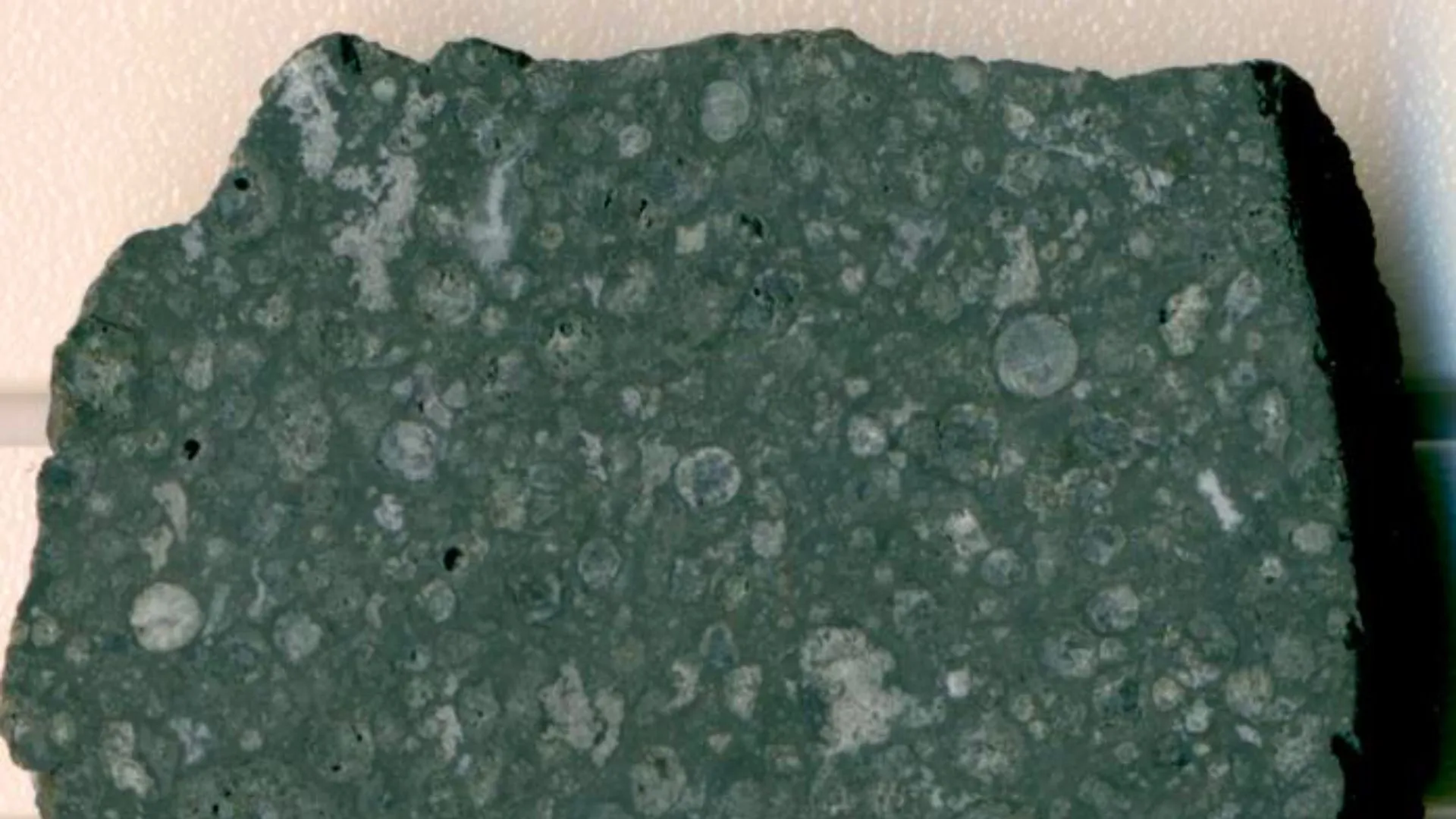
Carbonaceous chondrites are rare, ancient stony meteorites rich in water, carbon, and complex organic matter like amino acids. Formed over 4.5 billion years ago directly from the protoplanetary dust cloud, these dark space rocks contain tiny mineral spheres called chondrules.
Their pristine state has preserved a chemical record largely untouched by melting or extreme heat. Space scientists view them as time capsules for understanding the early Solar System and how the building blocks of life reached Earth.
Source link