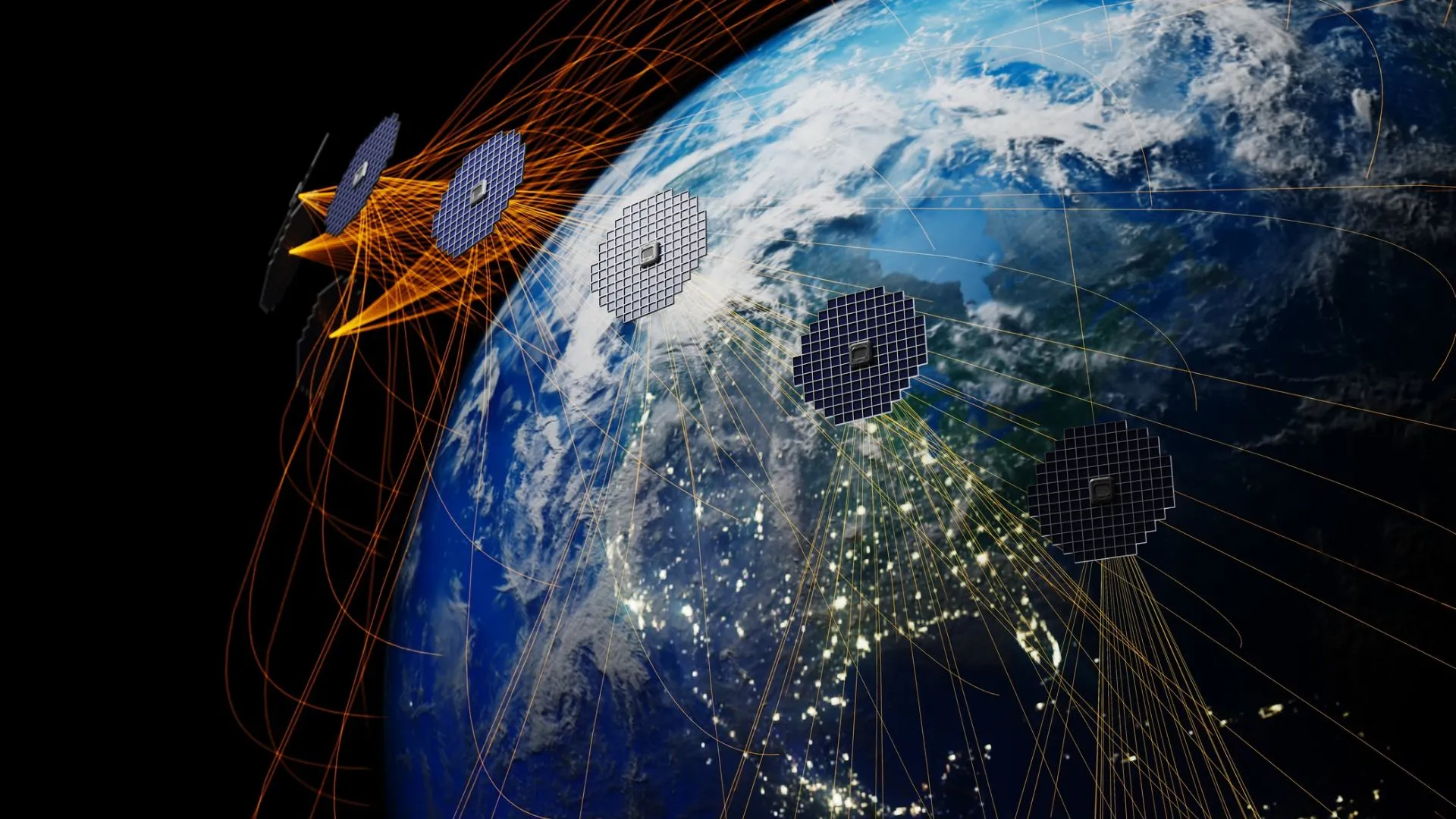
Getting a reliable radio signal to a satellite parked 22,000 miles above Earth is one of the hardest problems in spaceflight. Northwood Space Corp. just proved its commercial ground hardware can handle it.
Northwood Space has proven that its commercial ground antennas can reliably communicate with and control U.S. military satellites orbiting 22,000 miles above Earth
The El Segundo-based startup announced that it has successfully established mission-grade, full-duplex telemetry, tracking, and control (TT&C) links with a U.S. Government satellite in geosynchronous orbit (GEO).
Achieved under a U.S. Space Force Space Systems Command prototype contract, this milestone is important for how the military communicates with its most vital satellites.
Geosynchronous orbit (GEO) satellites sit roughly 22,236 miles above the equator, matching Earth‘s rotation to hover over a fixed spot on the ground.
This stationary vantage point makes these spacecraft indispensable for critical national security communications, missile warning systems, and global commercial broadcasts.
Establishing a stable radio connection — known as “closing the link” — at such extreme distances presents a hurdle. Signals weaken over the long journey, requiring ground antennas to deliver immense transmission power, pinpoint accuracy, and high sensitivity to maintain uninterrupted command and control.
Facing growing congestion and security risks within its aging Satellite Control Network, the Pentagon is working to change how it manages spacecraft. The Space Force is actively partnering with commercial vendors to replace this vulnerable legacy system with a more resilient, next-generation ground architecture.
Northwood delivered. Using its Portal phased array antenna, the company met every technical benchmark required to command and control the high-altitude spacecraft within just one year of winning the contract.
Source link