When engineers build a rover for the Moon’s South Pole, sunlight is the enemy of a good schedule. Unlike Mars, where solar-powered rovers can get away with daily charging cycles or a quick nap, a lunar night stretches for roughly 14 Earth days in pitch darkness, and inside permanently shadowed polar craters, the sun never shines at all.
To beat that deep freeze without building a multi-billion-dollar rover from scratch, NASA is raiding its own Mars garage. The agency is moving forward with PROMISE. Short for Polar Rover for Observation, Mapping, and In-Situ Exploration, this SUV-sized, six-wheeled nuclear rover is assembled largely from spare parts and engineering testbeds built for the Curiosity and Perseverance Mars missions.
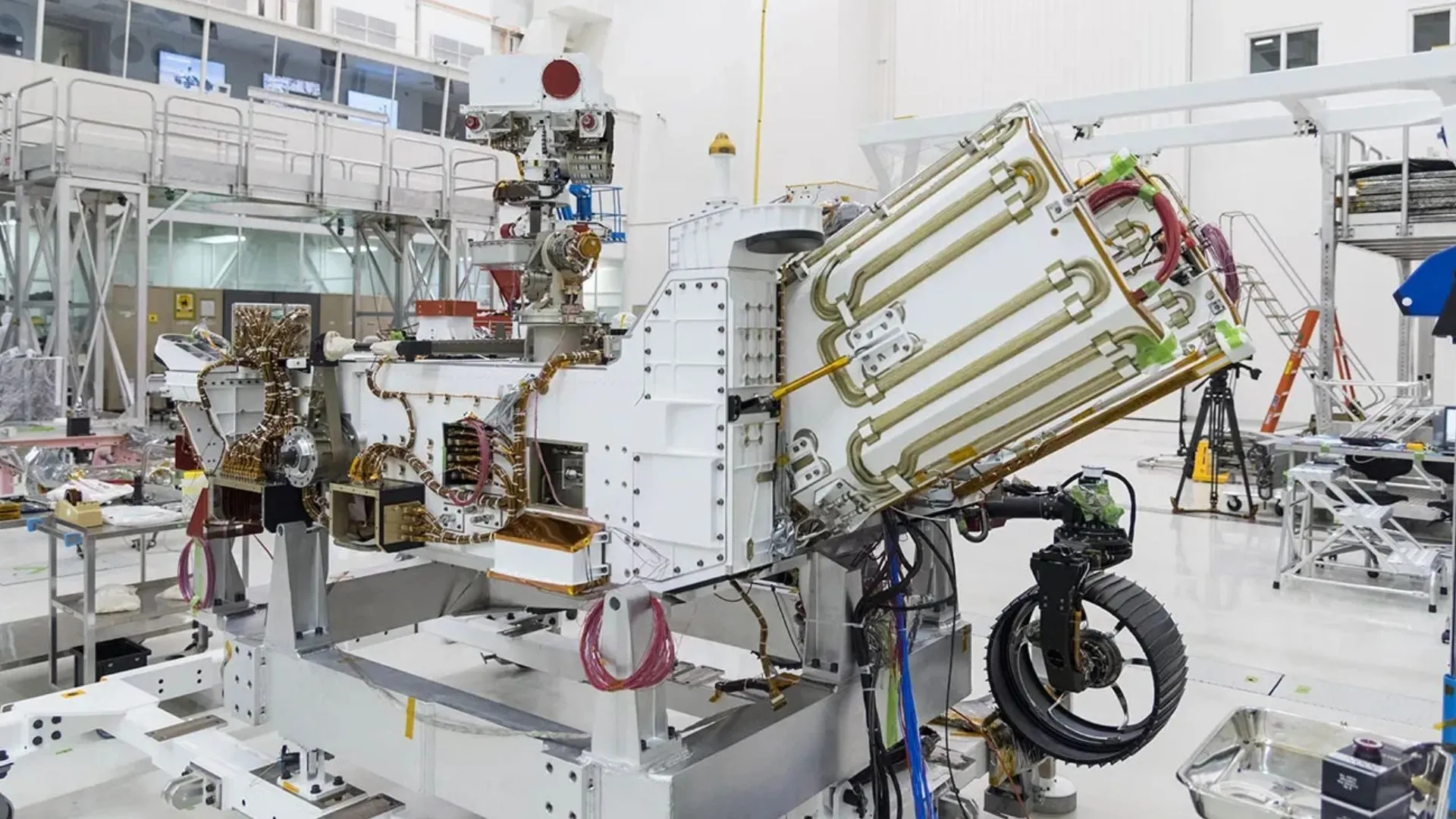
According to NASA’s mission overview and a November 7, 2026, Moon Base program announcement, engineers at NASA’s Jet Propulsion Laboratory (JPL) in Southern California are constructing PROMISE using flight-spare components and ground-based testbed hardware originally built for Curiosity and Perseverance.
Measuring roughly 9.5 feet (2.9 meters) long and weighing about 2,260 pounds (1,025 kilograms) dry, the rover borrows JPL’s proven rocker-bogie suspension and mobility heritage rather than starting from a clean sheet.
Repurposing Earth-bound test hardware and spare Mars avionics is a deliberate shortcut to slash development time and cost ahead of a targeted late-2028 launch. Blue Origin is slated to deliver the vehicle to the lunar South Pole aboard a Blue Moon Mark 1 lander, kicking off an 18-month primary mission to scout terrain, map subsurface resources, and help pick safe landing zones for future astronauts.
Source link