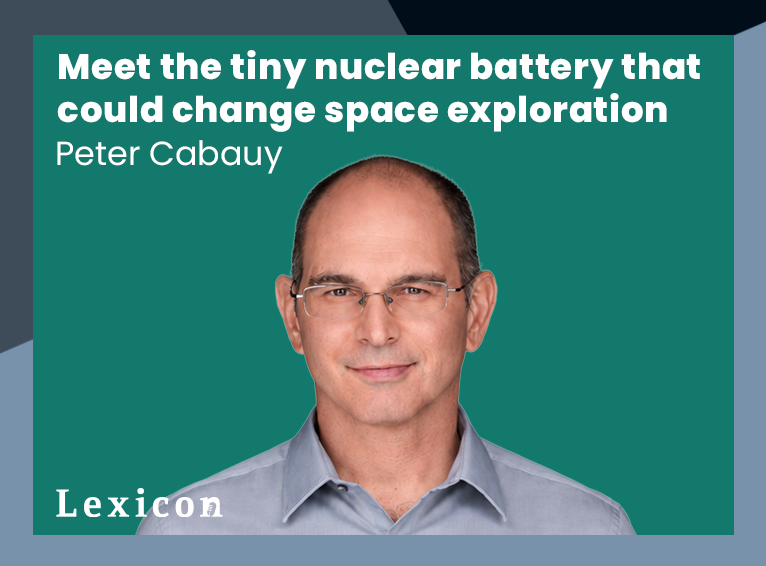
In our latest episode of Lexicon, we sat down with Peter Cabauy, CEO and founder of City Labs, to explore why power, rather than propulsion, could become the defining technology of the next era of space exploration.
Cabauy explains how the Moon’s extreme environment, particularly its 14-day-long nights and brutally cold temperatures, presents a major challenge for long-term lunar operations, and why nuclear micropower could be the key to keeping rovers, equipment, and future lunar outposts running.
“The moon is a very inhospitable environment,” Cabauy told us. “Your rover is only going to last 14 days because that’s the length of the lunar day,” he added.
After that comes the lunar night, another 14 Earth days of darkness where temperatures plunge to levels colder than liquid nitrogen. “We’ve all seen what happens when you drop a flower inside liquid nitrogen and hit it with a hammer,” he said. “Imagine trying to make a rover survive in that type of environment,” he added.
That, he explained, is where nuclear micropower comes in. Unlike conventional nuclear reactors, City Labs develops microscopic power sources that generate electricity and heat through the natural decay of tritium.
“The easiest visual is a solar cell,” Cabauy said. “Instead of receiving light, we receive beta radiation.”
Those electrons generate a tiny but continuous electrical current. While the output is measured in nanowatts or microwatts rather than kilowatts, the systems never need recharging and continue operating for decades.
Source link