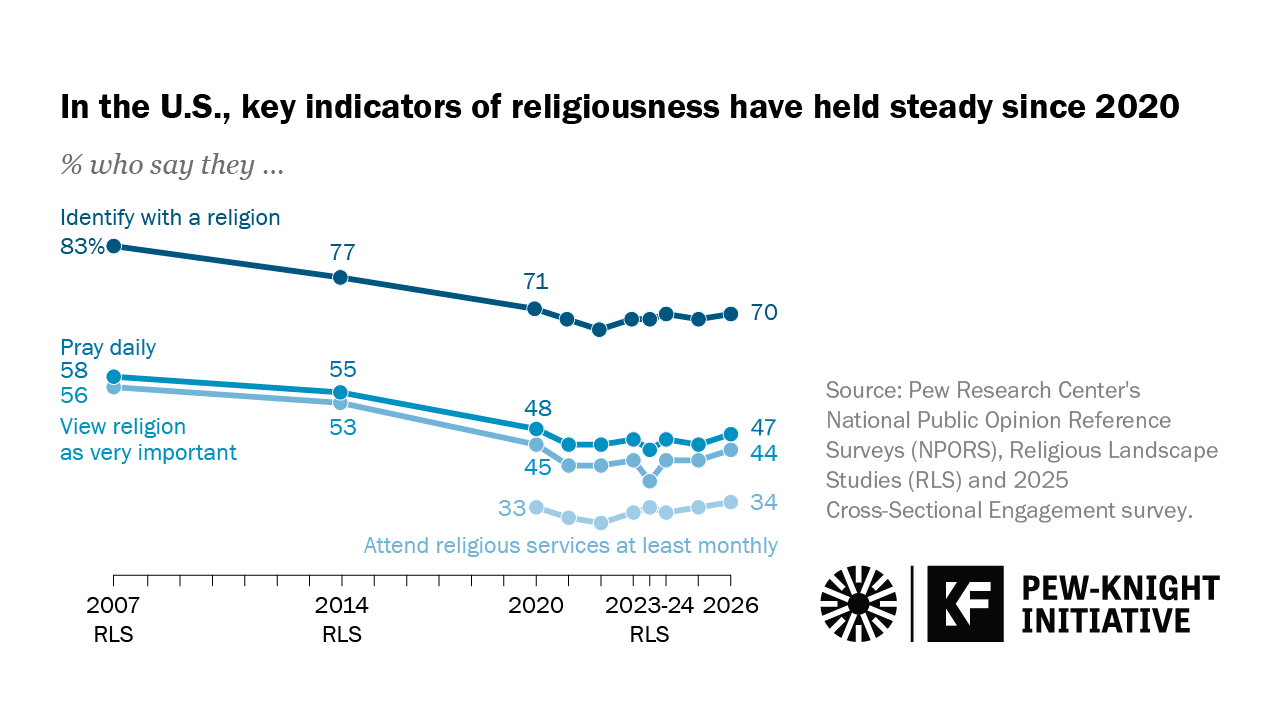
For the past several years, Pew Research Center surveys have shown stability in U.S. religious life. As a whole, Americans have not clearly grown more or less religious.
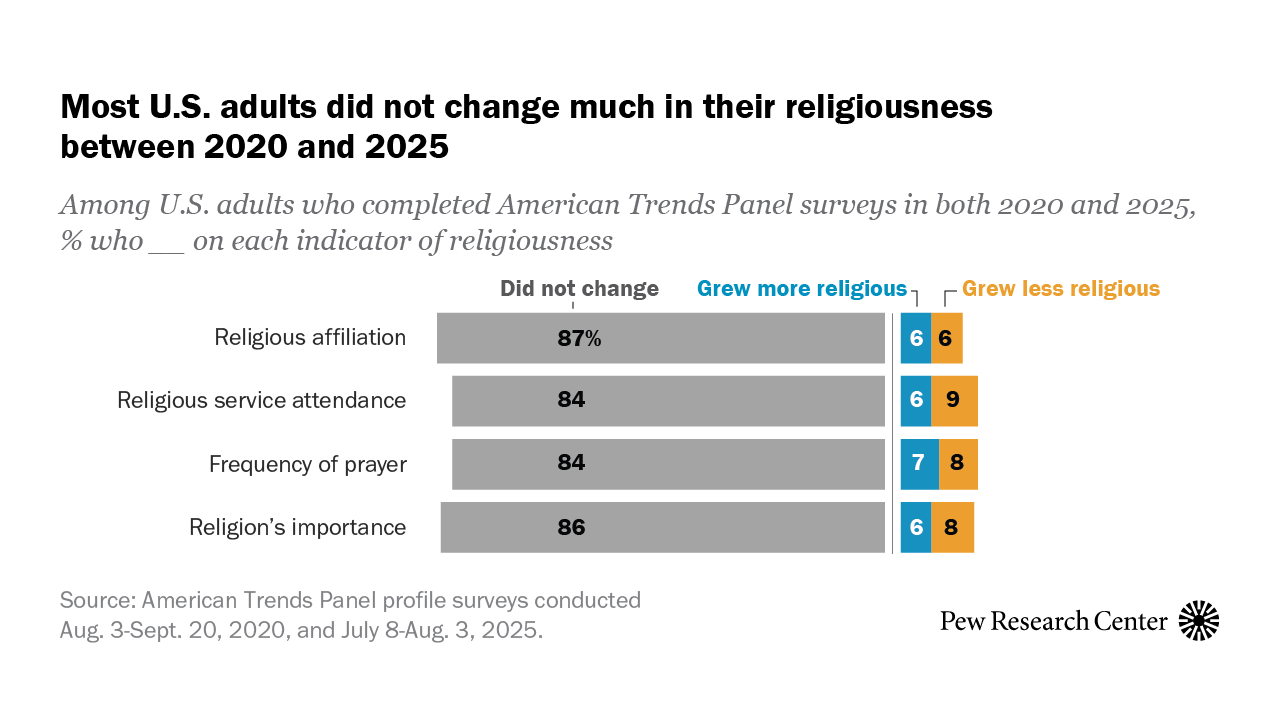
Steady national numbers could mean that most people’s religious lives haven’t changed. They could also mean that some Americans are becoming more religious while others are becoming less religious, effectively canceling each other out. Or it could be some of both.
This Pew Research Center analysis examines how U.S. adults changed in their religiousness between 2020 and 2025 by following the same survey respondents over time.
Pew Research Center conducts high-quality research to inform the public, journalists and leaders. Studying trends in U.S. religion is a key part of the Center’s long-standing research agenda.
This report is based on an analysis of 5,835 U.S. adults who are part of the Center’s American Trends Panel (ATP) and completed the ATP’s profile surveys in both 2020 and 2025.
The 2020 profile survey was conducted Aug. 3-Sept. 20, 2020. The 2025 profile survey was conducted July 8-Aug. 3, 2025.
The data is weighted to be representative of the U.S. adult population in 2020, with an adjustment for panelists who left the panel between 2020 and 2025. The margin of sampling error for the full sample of 5,835 respondents is plus or minus 1.8 percentage points.
The analysis looks at how respondents answered questions about key indicators of religiousness in 2020 and 2025. We did not analyze the years between 2020 and 2025.
Here are the religion questions used from the 2020 survey , along with the methodology .
Source link