This article has been reviewed according to Science X's editorial process and policies. Editors have highlighted the following attributes while ensuring the content's credibility:
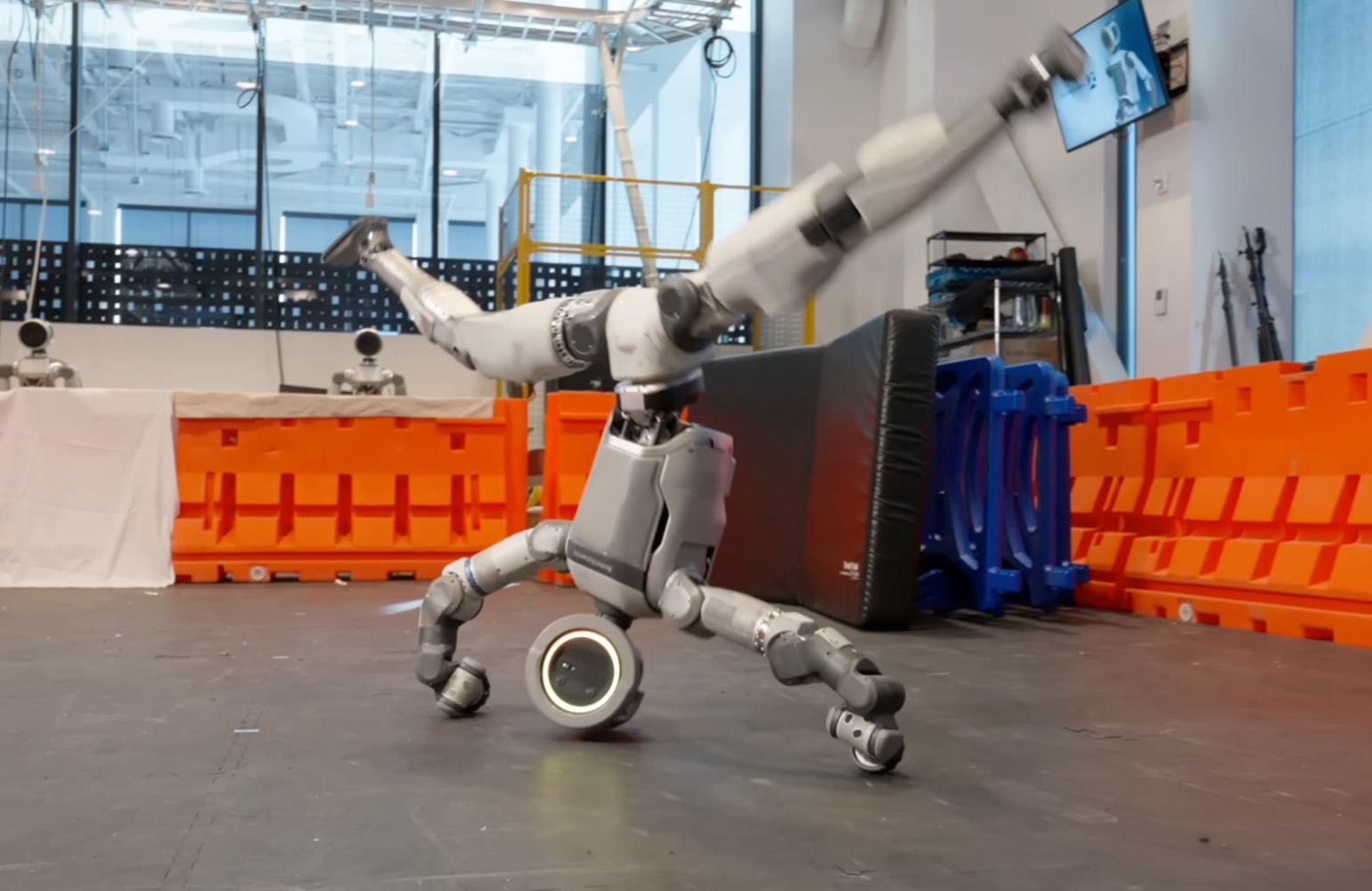
Humans can move their limbs very rapidly and coordinate their movements with high precision to tackle specific manual tasks. While robots have become increasingly advanced in recent years, many of them remain less agile than humans and struggle to interact with moving objects of different shapes, weights and textures.
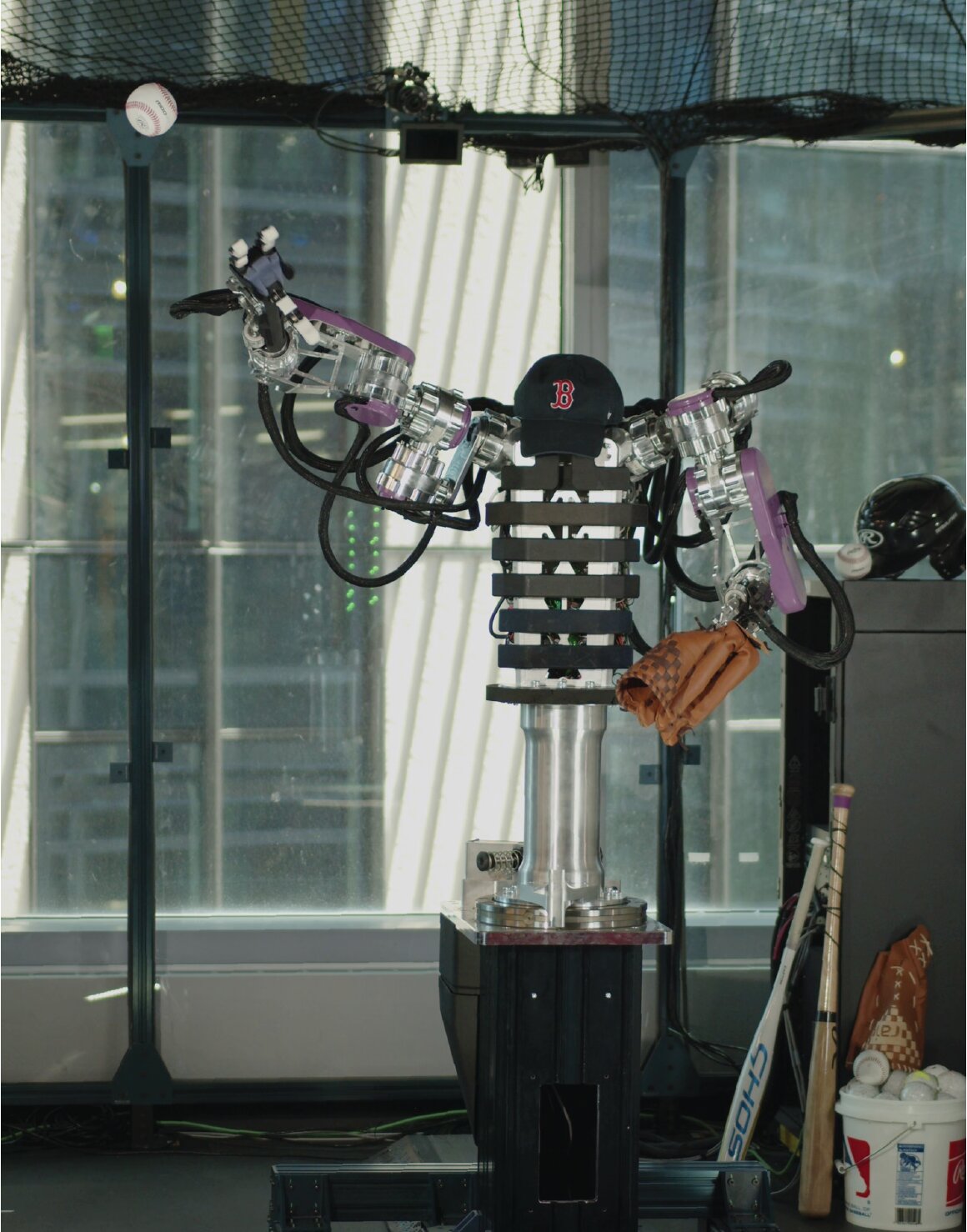
Roboticists from the Robotics and AI Institute (RAI), headquartered in Cambridge, Massachusetts, recently developed AthenaZero, a new robotic system with two arms that could perform agile, humanlike movements. Their robot, introduced in a paper published in Science Robotics, successfully completed three baseball-inspired tasks: throwing balls, catching them and hitting them with a bat.
"Manipulation has been a challenge in robotics since the inception of our field," Andrew S. Morgan, first author of the paper, told Tech Xplore.
"Although there has been some incremental progress, we have yet to see an explosion of capabilities in this subfield as compared to locomotion or image segmentation/perception, for instance. Grounded in a mechanics-based approach, we wanted to explore what it takes to build a rigid robot that shares mass and torque (force) properties similar to those of a human."
AthenaZero, the new robot developed by Morgan and his colleagues, consists of a central body (torso), two robotic arms with hands at their ends, motors and gears. While the structural segments of the arms are rigid, the arms' joints can yield to external forces, allowing controlled movements when the robot makes contact with an object or surface.
Source link